Clipping

The Guidance and Supervision Council of the RN21 Project met at the Mealhada Innovation Space

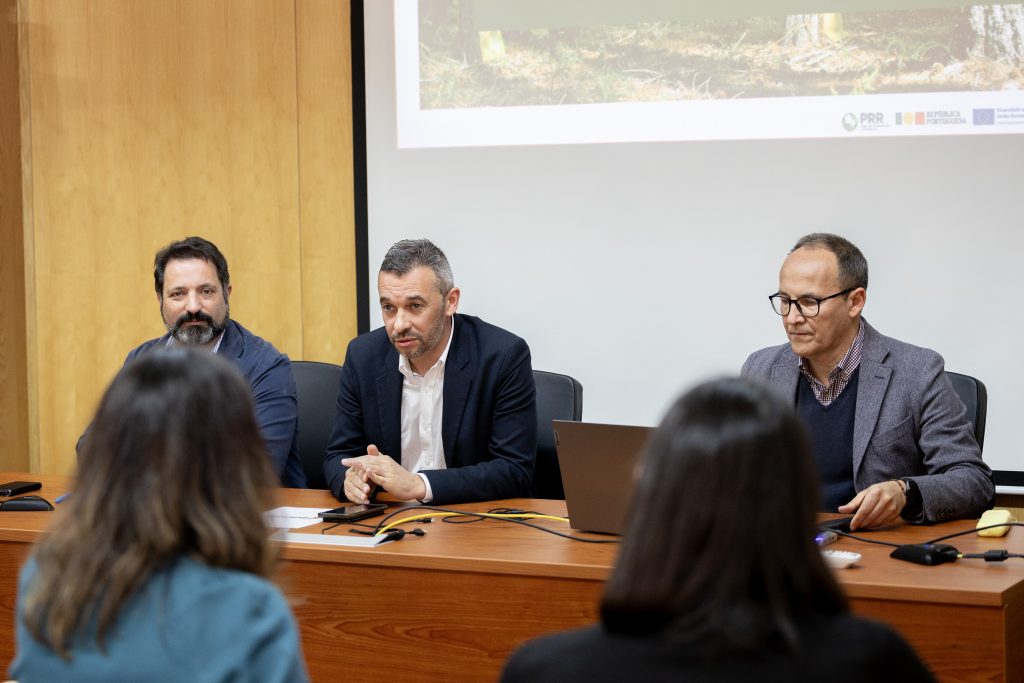
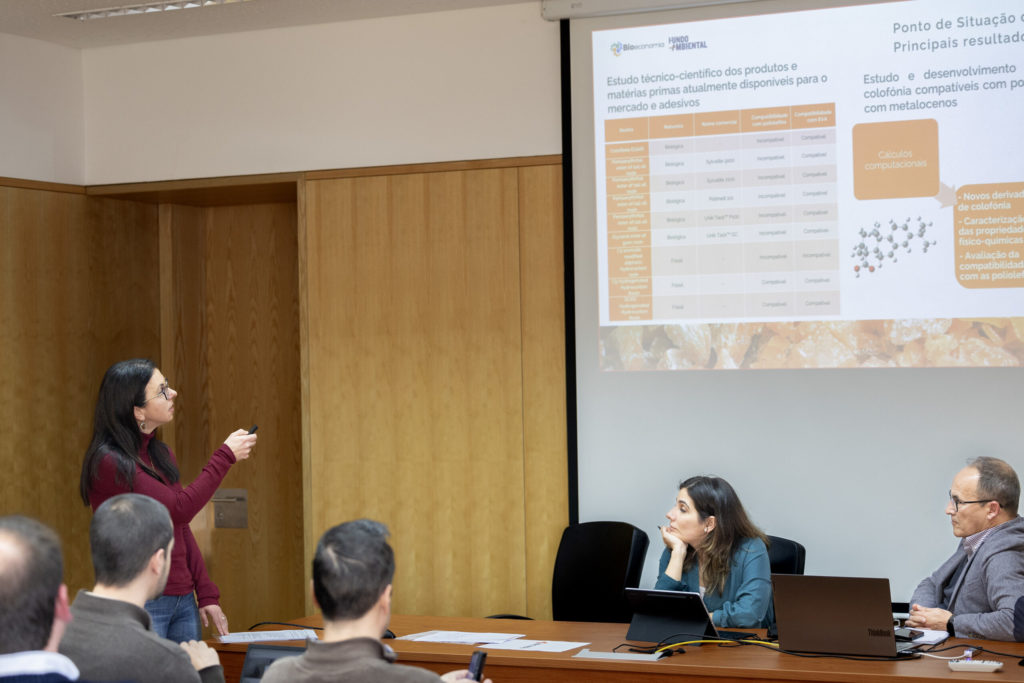
The Guidance and Supervision Council (COF) of the RN21 Integrated Project, the highest body of the consortium structure, met on February 28 at Espaço Inovação Mealhada, to address various issues within the scope of the management of the Integrated Project. CoLAB ForestWISE®, the leader of this aggregating consortium, hosted the meeting in which the first ordinary session of the Advisory Board also took place.Opening the session was the Councilor of the Municipal Executive of Mealhada, Ricardo Santos, the Project Director, Rogério Rodrigues, and the CTO of CoLAB ForestWISE®, Carlos Fonseca, who reinforced the “importance of showing the good that is being done in this consortium that is essential to share with the partners who accompany us”.This was followed by the presentation of more than 20 measures, which are part of the three pillars on which the RN21 Integrated Project is based, namely: the promotion of the production of national natural resin (pillar I); strengthening the sustainability of manufacturing (pillar II); and the positive differentiation of Natural Resin and derived products (pillar III).The “Training and Professionalization of the Resin Worker” was one of the measures presented for Pillar I, which has as its main objective to develop an Academy capable oftraining resin extraction professionals.For Pillar II, one of the measures presented was the “Transition to renewables and efficient use of water and energy”, which aims to prepare a study and Roadmap on best practices in the sustainable use of these resources, with a view to minimizing environmental impacts.At this meeting, the status of the “Creation of a “seal” and the technical dissemination on the entire value chain”, inserted in pillar III, which arose from the need to affirm Natural Resin as a product of renewable origin, which can replace petroleum derivatives and become one of the successful examples of the Bioeconomy in Portugal. The first phase of brand creation began in the last half of 2023, and at the meeting, some of the next steps under this initiative were presented. To promote natural resin to consumers and business decision-makers, communication and marketing actions have been carried out with some already evident results, namely the podcast and the biannual publication of the magazine Resinae®.Also at the meeting, the Interim Technical Monitoring Report of the RN21 | 2023, carried out by the Portuguese Environment Agency,which describes the progress achieved by the Integrated Project in terms of performance indicators – KPIs, and the work carried out in each of the measures defined in the project until the reporting date. From the analysis carried out, it was concluded that the Project is proceeding as planned, taking into account the developments described for the 22 measures contained in the Project.The meeting was attended by the members of the Advisory Board, composed of three external personalities of recognized merit and independent, who will meet annually to comment on the activities developed, propose corrective measures, and promote partnerships. The Advisory Board includes Aida Rodrigues Garcia, currently coordinator of several projects related to non-wood forest products; Álvaro Picardo, Technical Coordinator of the SMURF Horizont Europe project, on “Sustainable Management Models and Value Chains for Forests”; and Rui Miguel Rosmaninho, Director of the Department of Management of Public Forest Areas, of the Institute for Nature Conservation and Forests, IP. Learn more here
The Guidance and Supervision Council of the RN21 Project met at the Mealhada Innovation Space Read More »

New resin extraction techniques demonstrated in Vila Pouca de Aguiar

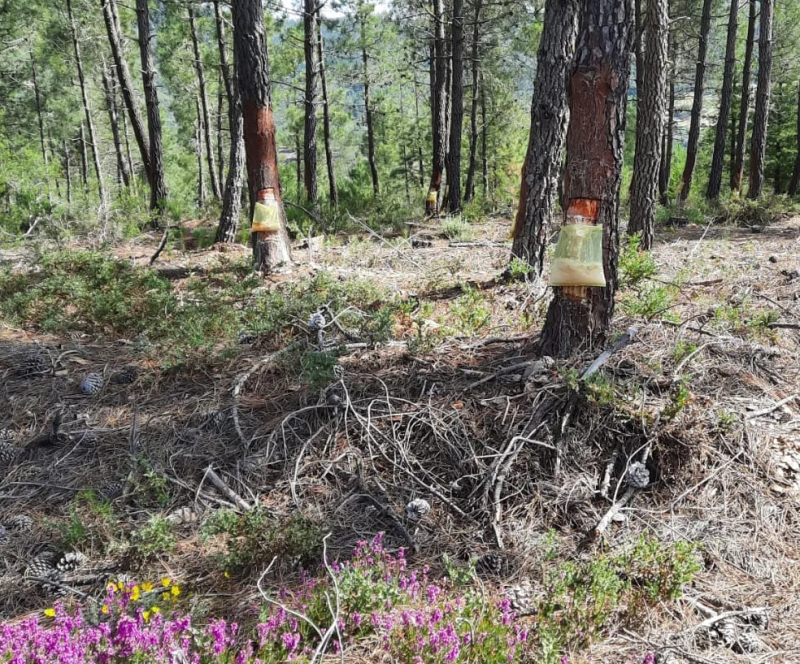
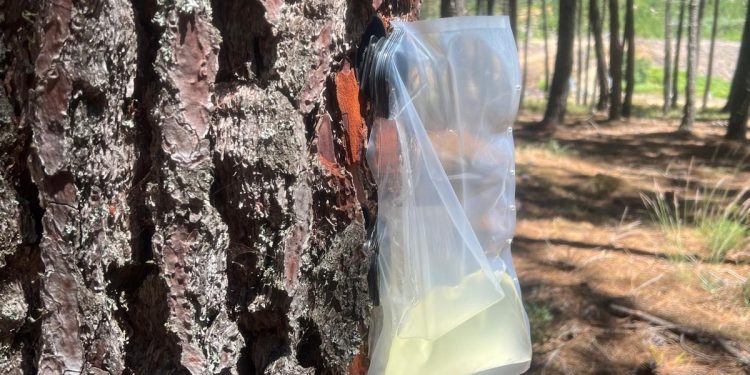
Resin workers and representatives of companies linked to the sector attended today, in Vila Pouca de Aguiar, demonstrations of new extraction techniques for closed bags that will allow a greater appreciation of the resin and the profitability of the activity. “We are showing extraction techniques that are being developed and aim at modernization and greater efficiency compared to traditional methods,” the president of the Association of Resin Distillers and Explorers (Resipinus), Marco Ribeiro, told the Lusa agency. This is one of the 37 entities that are part of the consortium that is developing the RN21 – Natural Resin 21 project, financed by the Recovery and Resilience Plan (PRR), and which, among other objectives, wants to improve the efficiency of resin collection. The consortium is led by the ForestWise Collaborative Lab. It is within the scope of this project that resin extraction techniques are being developed, whose demonstration took place today, in a pine forest in Tresminas, Vila Pouca de Aguiar, district of Vila Real. Marco Ribeiro explained that traditional methods are “very demanding in terms of labor” and use a púcaro or bag in an open system, which allows the entry of impurities, water, and the loss of volatile components of the characteristics of the resin that are highly valued in the market. In the new system, the resin is extracted into a púcaro (plastic container) or closed bag. The extraction is done through a nozzle that is placed in the pine, in a hole made with a drill with a drill. “They allow us to have fewer impurities, have greater appreciation of the raw material and then generate greater profitability for the resin maker”, he stressed. Among the positive aspects, Marco Ribeiro pointed out that it can help attract new people to the sector, enable more income for pine forest owners, and provide more raw material for the industry. “We have three perspectives here: to improve the work of the resin worker, to improve the culture of maritime pine for the owners, and to improve the relationship with the industry”, he stressed. Resin exploration represents a turnover of around 10 million euros per year in Portugal, with about 500 resin workers resin between 20 thousand and 25 thousand hectares. According to official data, there are about 600 thousand hectares of pine forest in the country. “We are talking about a very large growth margin,” said Marco Ribeiro. For the use of these new “closed methods”, it will be necessary to make a change to the legislation, which is currently under review. The current used, open plastic bag costs between three and four cents, while the bag with a mouthpiece, closed, can cost between 15 and 20 cents. For Rui Salgado, who has a resin company based in Chaves, this is an investment that will pay off, because from this extraction a higher quality product will come out, adding that, in the current bags, there is a percentage of 12% that goes to waste because it collects water or nozzles from the pine trees. “It can help a lot. The work that is being done now should have been done 20 years ago. This activity has to be modernized and mechanized or we will not have people to work,” he stressed. The entrepreneur has 11 people working and extracts 300 tons of resin per year. Teresa Magalhães is a forest and resin worker and believes that the new method could be beneficial for workers. “It avoids desencarrasque [consists of removing the superficial layer of bark], which represents a lot of physical effort and is also good for the quality of production, because it is a resin that will come out clean, and I think it has another value in the market,” he said. This month, two more workshops will be held in Oleiros and Nazaré. The RN21 project runs until 2025, represents an investment of 26 million euros, and a grant of 17.5 million. Learn more here

New resin extraction techniques demonstrated in Vila Pouca de Aguiar Read More »

Natural resin sector is experiencing a key moment

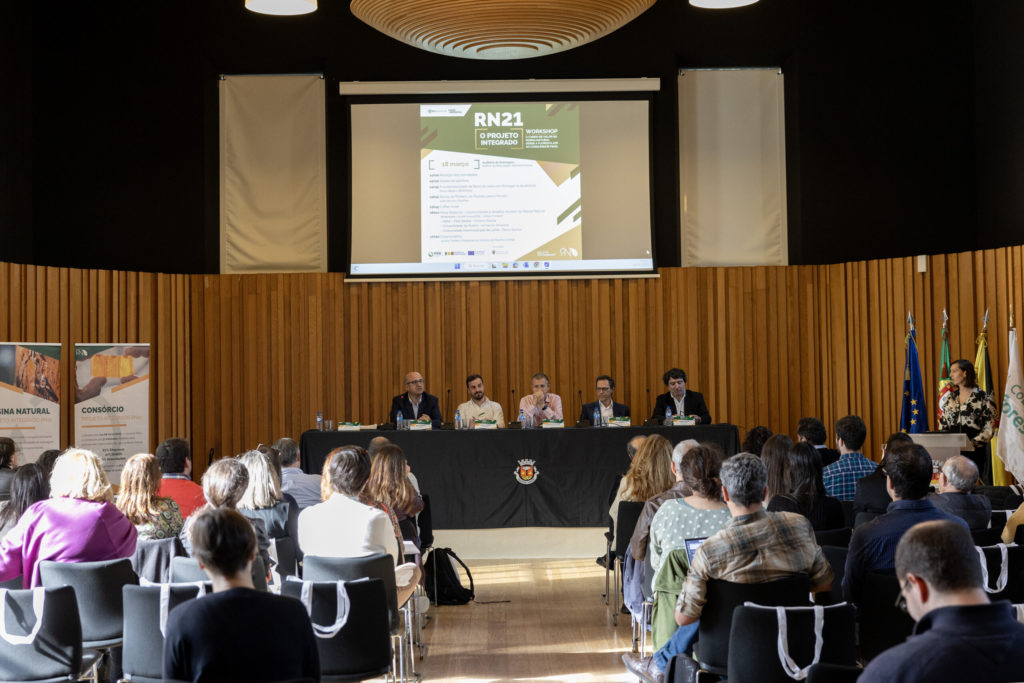
Professionals from the natural resin sector met in Marinha Grande, on March 18, in a workshop of the RN21 Integrated Project, organized by CoLAB ForestWISE, where they expressed their concern about the future MARINHA GRANDE HOSTED MEETING In the 1970s, Portugal became the world’s second largest exporter of resin, but this activity has registered a drastic decline, and there are currently about 500 resin workers in the country, according to Marco Ribeiro, president of the Association of Resin Distillers and Explorers (Resipinus).Among the constraints that the sector faces is the fact that production costs are higher than revenues, along with the “lack of forest management in the national territory, the disorderly growth of the pine forest, the average age of the resin workers, which is 60 years old, and the lack of information on the number of resinhectares in Portugal”.With the RN21 Integrated Project, which brings together, for the first time, the entire value chain of the sector in an integrated and mobilizing research and innovation consortium where the modernization and revitalization of one of the most traditional sectors of the national economy is promoted, the conditions are created to leverage the activity.“This is a key moment to decide what the future is. Whether you want to invest in resin or not”, underlined the president of Resipinus, considering that the way forward involves “genetic improvement, training and professionalization of the resin worker, mechanization of the activity, creation of adapted stimulatingpastes, use of closed containers, remuneration of positive externalities, traceability, certification, valorization of raw material, and implementation of a joint strategy”.Carlos Fonseca, from CoLAB ForestWISE, considered that the RN21 Integrated Project is a “unique opportunity” to make a transformation in the Natural Resin sector in Portugal.It should be noted that natural resin is used in the composition of various products, including paints, varnishes, chewing gum, hot glue, rubber, adhesive tapes, among others. Learn more here

Natural resin sector is experiencing a key moment Read More »

Natural resin value chain analyzed by experts in Pampilhosa da Serra

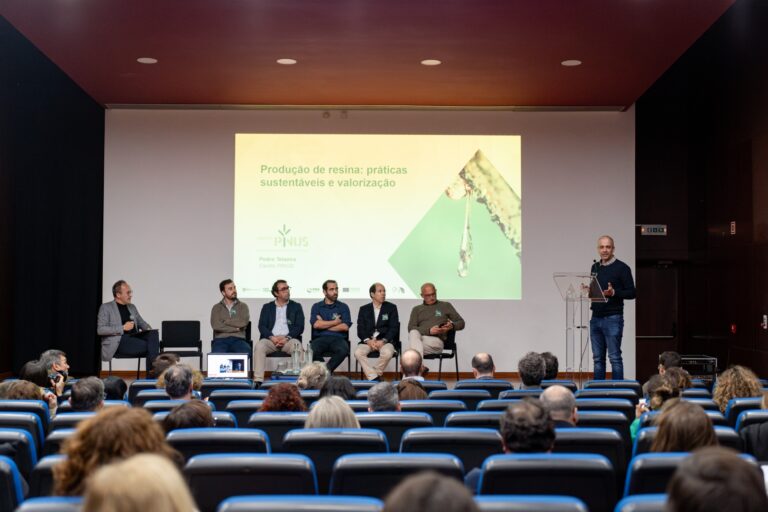
Entrepreneurs, producers, researchers, and institutional representatives met today in Pampilhosa da Serra, as part of the Resinae Ignite event, promoted by the RN21 Integrated Project, with the aim of exploring all links in the value chain of the natural resin sector. In the opening session, the Mayor of Pampilhosa da Serra, Jorge Custódio, stressed the relevance of the initiative, highlighting that “it is very important to put the focus back on this activity and work in collaboration with local agents and producers, who continue to play an active role in the development of the region”. “The success of the resin and the forestry sector is certainly the success of these inland territories”, he added. The event, which was a catalyst for new ideas and initiatives in the sector, was marked by the official launch of the “Resinae” brand, a symbol of quality, traceability, and environmental commitment, which aims to highlight the natural Pinus Pinaster resin in the global market as a product of excellence. The program included interventions and debates on sustainable practices, innovation in production, transformation, and expansion into new markets, promoting a constructive dialogue around viable and sustainable solutions. Pedro Teixeira (Centro Pinus Association), Marco Ribeiro (Association of Resipinus distillers and explorers), Ricardo Gomes (Nares company), Pedro Gil (Gum Rosin), João Koehler (Colquímica company), Jávier Calvo (Cesefor company), were the protagonists of the thematic sessions. The work continued with the debate on “The value chain of natural resin”, “Economic sustainability of resination”, and “Challenges and opportunities”, with the participation of Rogério Rodrigues and Joana Vieira, both from CoLAB ForesWISE, and Miguel Freitas, from the University of Algarve. The presentation of the “Resinae” brand was the responsibility of Jani Pires and Juliana Salvation, from CoLAB ForestWISE. It should be recalled that the RN21 Integrated Project – Innovation in the Natural Resin Sector to Strengthen the National Bioeconomy -, led by CoLAB ForestWISE, is a consortium that brings together the entire natural resin value chain in Portugal. The project is committed to the modernization and revitalization of the sector, valuing resin as an ecological product with vast potential for application in the global market. The CoLAB ForestWISE – Collaborative Laboratory for the Integrated Management of Forest and Fire, is an organization that brings together entities linked to research, innovation, and knowledge and technology transfer, which aims to contribute to a more sustainable forest management, the valorization of forest products, and the reduction of the consequences of large fires.

Natural resin value chain analyzed by experts in Pampilhosa da Serra Read More »

Pine nut and resin: is it possible to reconcile the two productions?

Although there are already forest producers reconciling the production of pine nut and resin in their stone pine (Pinus pinea L.) areas, the implications that resin can have on the quantity and properties of pine nuts are little known, which is why the topic has begun to attract the attention of Portuguese researchers. In this context, a study carried out at Herdade da Esteveira, in Alcochete, indicates that it is feasible to produce pine nuts and resin, without the resin affecting the chemical composition and food safety of the pine nut. The conclusions were made known in the master’s thesis “Effect of resin on the chemical composition of stone pine”, carried out at ISA – Instituto Superior de Agronomia of the University of Lisbon, after several years of trials in which pine cones were collected from resinated and non-resinated trees, and the chemical composition of the respective pine nuts was analyzed. “No differences were observed in the chemical composition of pine nuts from resin and non-resinated trees,” says José dos Lóios Angelino in his thesis, carried out under the supervision of professors Paula Soares and Ana Alves. The most common resin method in Portugal (and Europe) requires the application of a stimulant to delay crystallization and thus increase the resin runoff time. This stimulant, which is applied to the incision area, may contain sulfuric acid, so another of the questions under study was to determine whether there were traces of this acid in the pine nuts of resinous trees. Here, too, the answer was negative: “no traces of sulfuric acid were observed in the spectra of pine nuts from resin-bearing trees”, which reinforces the possibility of producing pine nuts and resin in the same tree. The stimulating paste applied to the incisions to make the resin flow contains sulphuric acid, although biological acids that may have the same stimulating effect and that pose less risk to the activity are already being tested. This is a work that is being developed by the Integrated RN21 project – Innovation in the Natural Resin Sector to Strengthen the National Bioeconomy. In parallel, more effective resin methods that promote greater purity of the collected resin are also being tested, such as closed bag resin. Is the yield of pine nuts influenced by resining? More data is needed Another hypothesis studied was whether the resining of stone pine would affect the yield in terms of pine nut kernels. For this purpose, the production of resin and non-resinated trees was analyzed, considering the yield of white pine nuts in relation to the weight of the respective green pine cones. Interestingly, resin trees have a higher yield than non-resinated trees. However, this result needs to be validated with more data, because in this study, it was not possible to analyze the yield of resin trees before starting resining, in order to know the yield differences of each one before and after. Thus, to deepen the effect of resin on yield in pine nut kernels (also called white pine nuts), the study suggests the installation of permanent plots in stone pine stands, so that this comparative evaluation can be made over several years. As a pine cone takes three years to form, and this trial ended in the 2021/22 campaign, it was not possible to collect enough pine nuts to carry out palatability (taste) tests, as this campaign corresponded to a year of counter-harvest, that is, of low production. It should be remembered that several species, including stone pines, intersperse counter-harvest years with others of greater fruit production – the harvest years. Therefore, additional studies are also needed in this area, including sensory analysis and palatability studies to determine whether differences in appearance and taste are identified between resin and non-resin pine nuts. Although there are still some questions to be deepened and confirmed, the results of this study have shown that it is safe and feasible to reconcile two productions, creating a double source of return for owners who invest in stone pine. Another study from 2022 – the Potential of Resin Harvesting in Portugal – reinforces the idea that the joint exploitation of pine cone, pine nut, and resin is a source of income to be considered, in a logic of multifunctionality of forest spaces, but warns that there is a lack of forestry models specifically oriented to the co-production of pine nuts and resin. Resin with increasing appreciation In Portugal, maritime pine is, par excellence, the resin species, but with the increase in the stone pine plantation area – which went from 120 thousand hectares to 194 thousand between 1995 and 2015, according to the 6th National Forest Inventory (IFN6) – there has been an increase in the resin of this species: it was estimated that 2 thousand hectares of stone pine were already resinated in Portugal (about 7.7% of the total resinated area), in 2021. “It is expected that the proportion of stone pine resin will continue to increase in the coming years in Portugal,” says Resipinus – Association of Distillers and Resin Explorers, which justifies the trend with the need to compensate for the reduction in the area of maritime pine. As part of another project – SustForest Plus – plots were also installed and some stone pines were resined in two locations. At Herdade da Esteveira, in Alcochete, resinated stone pines produced an average of 4.6 kilograms of resin per tree in 2018 and 5.2 kilograms in 2019, although with very significant variations from tree to tree. In Chamusca, the average value of resin obtained was lower, 2.1 kg per tree, as revealed by the study “Potential of Resin in Portugal”. The average price per kilogram of resin has evolved positively, according to data from INE – National Statistics Institute: it remained above 1.3 euros between 2021 and 2023, a threshold never reached until then, and which denotes a significant appreciation compared to what was recorded in the previous 20 years. For example, in 2003, the price per kilogram was only

Pine nut and resin: is it possible to reconcile the two productions? Read More »

New resin extraction techniques demonstrated in Vila Pouca de Aguiar

Resin workers and representatives of companies linked to the sector attended today, in Vila Pouca de Aguiar, demonstrations of new extraction techniques for closed bags that will allow a greater appreciation of the resin and the profitability of the activity. “We are showing extraction techniques that are being developed and aim at modernization and greater efficiency compared to traditional methods,” the president of the Association of Resin Distillers and Explorers (Resipinus), Marco Ribeiro, told the Lusa agency. This is one of the 37 entities that are part of the consortium that is developing the RN21 – Natural Resin 21 project, financed by the Recovery and Resilience Plan (PRR), and which, among other objectives, wants to improve the efficiency of resin collection. The consortium is led by the ForestWise Collaborative Lab. It is within the scope of this project that resin extraction techniques are being developed, whose demonstration took place today, in a pine forest in Tresminas, Vila Pouca de Aguiar, district of Vila Real. Marco Ribeiro explained that traditional methods are “very demanding in terms of labor” and use a púcaro or bag in an open system, which allows the entry of impurities, water, and the loss of volatile components of the characteristics of the resin that are highly valued in the market. In the new system, the resin is extracted into a púcaro (plastic container) or closed bag. The extraction is done through a nozzle that is placed in the pine, in a hole made with a drill with a drill. “They allow us to have fewer impurities, have greater appreciation of the raw material and then generate greater profitability for the resin maker”, he stressed. Among the positive aspects, Marco Ribeiro pointed out that it can help attract new people to the sector, enable more income for pine forest owners, and provide more raw material for the industry. “We have three perspectives here: to improve the work of the resin worker, to improve the culture of maritime pine for the owners, and to improve the relationship with the industry”, he stressed. Resin exploration represents a turnover of around 10 million euros per year in Portugal, with about 500 resin workers resin between 20 thousand and 25 thousand hectares. According to official data, there are about 600 thousand hectares of pine forest in the country. “We are talking about a very large growth margin,” said Marco Ribeiro. For the use of these new “closed methods”, it will be necessary to make a change to the legislation, which is currently under review. The current used, open plastic bag costs between three and four cents, while the bag with a mouthpiece, closed, can cost between 15 and 20 cents. For Rui Salgado, who has a resin company based in Chaves, this is an investment that will pay off, because from this extraction a higher quality product will come out, adding that, in the current bags, there is a percentage of 12% that goes to waste because it collects water or nozzles from the pine trees. “It can help a lot. The work that is being done now should have been done 20 years ago. This activity has to be modernized and mechanized or we will not have people to work,” he stressed. The entrepreneur has 11 people working and extracts 300 tons of resin per year. Teresa Magalhães is a forest and resin worker and believes that the new method could be beneficial for workers. “It avoids desencarrasque [consists of removing the superficial layer of bark], which represents a lot of physical effort and is also good for the quality of production, because it is a resin that will come out clean, and I think it has another value in the market,” he said. This month, two more workshops will be held in Oleiros and Nazaré. The RN21 project runs until 2025, represents an investment of 26 million euros, and a grant of 17.5 million. Learn more here

New resin extraction techniques demonstrated in Vila Pouca de Aguiar Read More »

INEGI invests in sustainability in the resin sector

INEGI intends to create solutions to improve the energy efficiency of production processes and decarbonize the use of energy in the resin sector. The resin sector challenged INEGI to create solutions to improve the energy efficiency of its production processes and decarbonize energy use, contributing to the reduction of the sector’s environmental footprint. The team of experts got to work and outlined 6 measures with an impact on reducing energy consumption and Greenhouse Gas (GHG) emissions. Waste heat recovery and the integration of renewable energy sources are two of them. Both, explains Francisco Lázaro, responsible for the project at INEGI, “promote significant reductions in energy use and, consequently, in associated GHG emissions“. Reductions of between 25% and 30% in energy use and between 11% and 70% in polluting gas emissions are estimated. The electrification of processes, namely through the integration of heat pumps for industrial use, is another solution towards energy efficiency and decarbonization of the sector. It has the potential to reduce annual energy use by 28% and GHG emissions by 20%. However, warns Francisco Lázaro, “its effectiveness in decarbonization depends on the use of renewable energy sources for electricity production”. In addition to these measures, the application of thermal insulation, the valorization of by-products and the retrofitting of equipment and processes. “It is possible to conclude that thermal insulation is easy to implement and has a quick return, but its impact is usually reduced. The energy recovery of by-products, on the other hand, reduces the use of Natural Gas, without major investments“, says Francisco Lázaro. Measures strengthen this industry This work is being developed within the scope of the RN21 Integrated Project, which brings together a consortium of 37 entities – including INEGI – to revitalize one of the traditional sectors of the national economy and innovate throughout the value chain. From the forest to the final consumer, including the moment of resination. With an investment of more than 26 million euros and financial support from the European Union of more than 17.6 million euros, the project has a duration of about three years and is based on three pillars: the promotion of the production of national natural resin, the strengthening of the sustainability of the manufacturing industry and the commitment to the positive differentiation of natural resin and derived products. INEGI is responsible for coordinating the working group that is developing solutions for the efficient use of water and energy, as well as leading the sector’s transition to renewable energy. The RN21 Integrated Project is co-financed by the European Union, under the Bioeconomy program of the Recovery and Resilience Plan (RRP). It is one of the 23 innovation agendas that has the contribution of INEGI. Learn more here

INEGI invests in sustainability in the resin sector Read More »

“We are clearly differentiators in production and installed technology”

In October last year, United Resins, a resin production unit installed in the Industrial Zone of Figueira da Foz, hosted the national presentation of the RN21 project, a ceremony presided over by the then Minister of the Environment, Duarte Cordeiro. It was not by chance that the presentation of RN21 took place there. United Resins is a national leader in the sector and is strongly committed to innovation and development, being an international reference. Among its business areas, which are diverse, the group also innovates in the replacement of plastic with natural and biodegradable materials. And in the media, being one of the reference shareholders of the Global Media group.António Mendes Ferreira is the leader of the business group. The businessman was the main guest of this week of Dez&10.Starting with resins, United Resins, in terms of knowledge, development, technology, and innovation, “has a say in it, to the point that the Chinese are unable to be competitive,” said António Mendes Ferreira. Learn more here

“We are clearly differentiators in production and installed technology” Read More »

Resin provides employment and still protects the forest

In Tresminas, a land of intense gold mining activity between the first and second centuries AD, the natural resin of maritime pine is the new gold, which, in the form of rosin and turpentine, generates employment, gives income to the commons, and also prevents rural fires. We are in the land of the Roman Mining Complex of Tresminas, where the Romans explored gold for more than 200 years. However, now, the gold that is extracted is different. The Parish Council of Tresminas, which manages two common lands, and the commoners of two other villages, ceded several hectares of maritime pine forest to a consortium formed by a company in the sector and other partners for the extraction of resin and complementary activities, such as fuel management. The consortium is locally supported by the forestry association Aguiarfloresta. The business, which gives 20 percent of the revenue to local communities, generates employment and also keeps a forest area clean that, for years, was at the mercy of the voracity of fires. Prevention begins with the preparation of the land for the exploitation of the resin. “In the area where we are, we had to reduce the density of pine trees to improve the productivity of each one”, explains André Ferreira, a 22-year-old agronomist, born in the land, who coordinates the exploration of naturalresin in the community pine forest areas of four villages. Next to a maritime pine tree in which the “spout” was opened a few days ago, the first incision or wound was torn in the trunk. “We start at the bottom and work our way up. We can do up to seven renovations a year”, he adds, noting that “if a good practice is done, you can explore the same face for three years”. If the diameter of the trunk allows, another side of the pine tree is cut, and the process is repeated with the same sequence, from bottom to top. “There are pine trees that give resin for six, nine, or even 12 years. It all depends on the diameter”, he clarifies.The extraction method, contrary to popular belief, “does not harm the tree”. “It may take a few years, but the tree regenerates. Resin does not lead to the death of the pine tree, nor does it affect the value of the wood. In this pine forest, we will be able to remove the resin for years and, in the end, we still have the product here”, explains the technician.In Tresminas, eight people work full-time, in a rural parish where agricultural and livestock activity predominates. “Three are full-time resin workers, and the other five areresin workers and sappers, because they manage fuel for a good part of the year”, says André, since “during the winter the pine tree does not produce, because it is in vegetative pause, it is like in fruit trees”. Teresa Magalhães is one of the oldest to work in the forest. She started as a resin worker 12 years ago, but now she supports the team of forest sappers who reconcile their time with the exploitation of resin. “This work can seem heavy, and sometimes it is, but I’m used to it”, recalls the team leader.Resin sector leveraged by RRPfunds The “liquid gold” that slowly flows into púcaros or bags between the months of March and October after the natural distillation process gives rise to two products: rosin and turpentine. Once transformed, it can be used in glues, varnishes, paints… and even chewing gum.Portugal, which once had fifty active resin factories, experienced “golden years” of the transformation of this product. “We were oncethe second largest producer of resin in the world”, recalls Duarte Marques, who chairs the Forestry and Environmental Association of Vila Pouca de Aguiar (Aguiarfloresta), referring to the 70s and 80s of the last century, with productions in the order of 100 thousand tons/year. “More than that, for reasons of competitiveness, production has dropped a lot”, he continues.Today, because of climate change, “which has led to the replacement of raw materials with more sustainable alternatives”, Portugal has once again invested in the natural resin sector, one of the three, along with footwear and textiles, supported by the Recovery and Resilience Plan (PRR) in the context of the climate transition.It is in this context that the RN21 consortium emerges, based at the University of Trás-os-Montes and Alto Douro (UTAD), led by CoLAB ForestWISE, which covers the entire value chain and focuses on the “transition to a more sustainable economy”. Focused on training and innovation, the project brings together 37 entities, such as resin processing companies, producer organizations, intermunicipal communities, universities, and laboratories, among others.According to Resipinus – Resin Distillers and Explorers Association, the annual production of resin in Portugal today is around seven thousand tons, which does not reach 10 percent of the industry’s needs. The raw material is imported, above all, from South American countries. Learn more here

Resin provides employment and still protects the forest Read More »

Guidance and Supervision Council of the RN21 Integrated Project met to present the results of each measure and analyze agenda topics

The Guidance and Supervision Council (COF) of the RN21 Integrated Project, the highest body of the consortium structure, met on February 28, at Espaço Inovação Mealhada, to address several issues within the scope of the management of the Integrated Project. CoLAB ForestWISE®, the leader of this aggregating consortium, hosted the meeting in which the first ordinary session of the Advisory Board also took place. Opening the session was the Councilor of the Municipal Executive of Mealhada, Ricardo Santos, the Project Director, Rogério Rodrigues, and the CTO of CoLAB ForestWISE®, Carlos Fonseca, who reinforced the “importance of showing the good that is being done in this consortium that is essential to share with the partners who accompany us”. This was followed by the presentation of more than 20 measures, which are part of the three pillars on which the RN21 Integrated Project is based, namely: the promotion of the production of national natural resin (pillar I); strengthening the sustainability of manufacturing (pillar II); and the positive differentiation of Natural Resin and derived products (pillar III). The “Training and Professionalization of the Resin Worker” was one of the measures presented for Pillar I, which has as its main objective to develop an Academy capable of training resin extraction professionals. For Pillar II, one of the measures presented was the “Transition to renewables and efficient use of water and energy”, which aims to prepare a study and Roadmap on best practices in the sustainable use of these resources, with a view to minimizing environmental impacts. At this meeting, the status of the “Creation of a “seal” and the technical dissemination on the entire value chain”, inserted in pillar III, which arose from the need to affirm Natural Resin as a product of renewable origin, which can replace petroleum derivatives and become one of the successful examples of the Bioeconomy in Portugal. The first phase of brand creation began in the last half of 2023 and at the meeting some of the next steps under this initiative were presented. To promote natural resin to consumers and business decision-makers, communication and marketing actions have been carried out with some already evident results, namely the podcast and the biannual publication of the magazine Resinae®. Also at the meeting, the Interim Technical Monitoring Report of the RN21 | 2023, carried out by the Portuguese Environment Agency, which describes the progress achieved by the Integrated Project in terms of performance indicators – KPIs, and the work carried out in each of the measures defined in the project up to the reporting date. From the analysis carried out, it was concluded that the Project is proceeding as planned, taking into account the developments described for the 22 measures contained in the Project. The meeting was attended by the members of the Advisory Board, composed of three external personalities of recognized merit and independent, which will meet annually to comment on the activities developed, propose corrective measures and promote partnerships. The Advisory Board includes Aida Rodrigues Garcia, currently coordinator of several projects related to non-wood forest products; Álvaro Picardo, Technical Coordinator of the SMURF Horizont Europe project, on “Sustainable Management Models and Value Chains for Forests”; and Rui Miguel Rosmaninho, Director of the Department of Management of Public Forest Areas, of the Institute for Nature Conservation and Forests, IP.

Guidance and Supervision Council of the RN21 Integrated Project met to present the results of each measure and analyze agenda topics Read More »