Andrew Fernandes

RN21 consortium aims to give new strength to the natural resin sector in Portugal

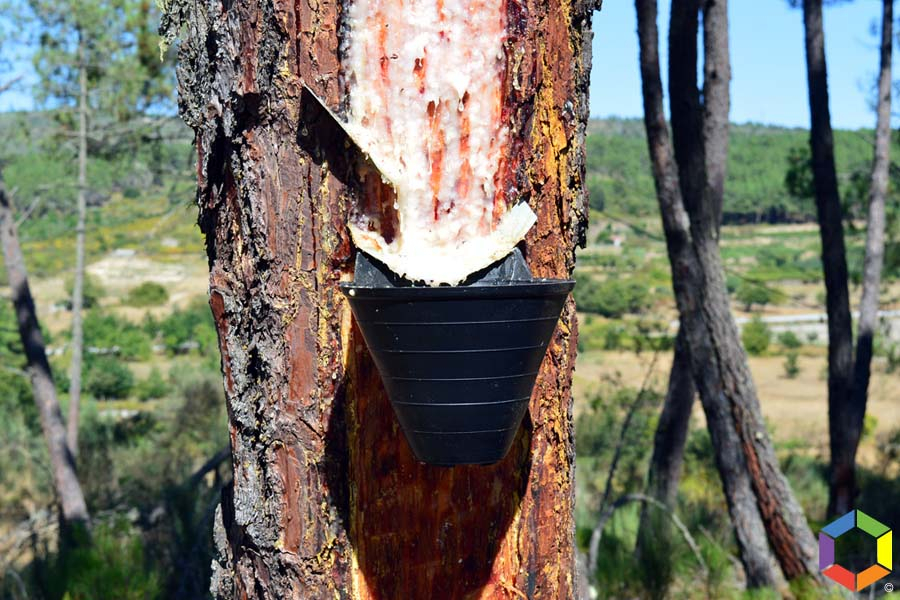
The Natural Resin 21 (RN21) – ForestWISE consortium, which the Agrarian School of the Polytechnic of Coimbra (ESAC-1PC) is part of, wants to restore natural resin to its importance in the national economy. Useful in the automotive, textile, footwear, and food industries, especially concerning the manufacture of biodegradable packaging, lighter and more sustainable components for cars, more durable footwear, and better color fixation in fabric dyes, resin is shown to be a raw material with high economic potential, including for export. After, in the 70s, having been the third most exported raw material in the country, the natural resin is once again in the spotlight through the RN2 Integrated Project, which aims to modernize and make the product more sustainable in Portugal, covering the entire value chain, from the forest to the final consumer, by involving a total of 37 different entities located, most of them are in the North and Center of the country, where there is more maritime pine. In addition to higher education institutions, such as ESAC, the RN21 consortium, led by CoLAB ForestWISE, includes: entities from the resin processing industry, which brings together names such as TECMEAT, Simoldes Plásticos, S.A., Tintex, and CTCP; resin producing companies, such as Raízes Independentes; AI and 2nd processing companies, such as Pinopine; Intermunicipal Communities; and forestry associations.This Integrated Project also aims to promote the sustainable development of the regions where Natural Resin is produced, involving local communities and strengthening the regional economy. With a focus on increasing the productivity and quality of Natural Resin, as well as the diversification of derived products, the project aims to create new business opportunities for national companies and producers, while promoting the certification of Natural Resin and ensuring its origin and quality, which will contribute to competitiveness in the global market value chain. Contributing to the bioeconomy, economic resilience, carbon neutrality, territorial cohesion, and strengthening the investment in science and technology in Portugal are also ambitions of this project, and to achieve the objectives mentioned, the RN21 consortium works on 22 key measures, divided into three pillars of action and different activities. 2025 is the last year of the project, which is being developed under the Recovery and Resilience Plan, and of which you can find out everything at https://rn2lforestwise.pt/. Learn more here

RN21 consortium aims to give new strength to the natural resin sector in Portugal Read More »
Natural resin value chain analyzed by experts in Pampilhosa da Serra

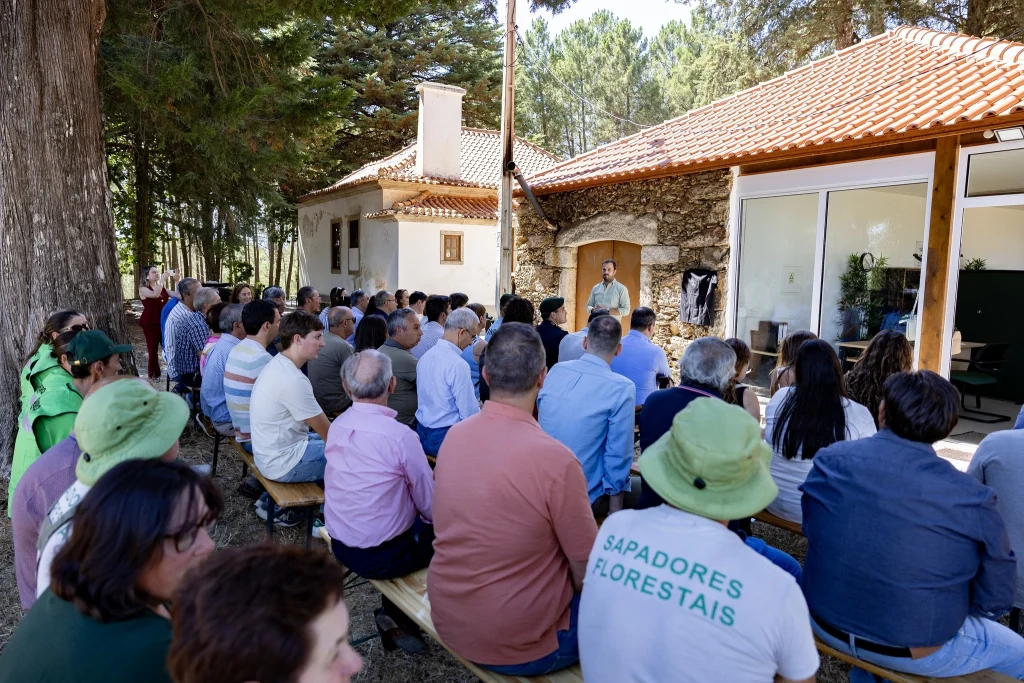
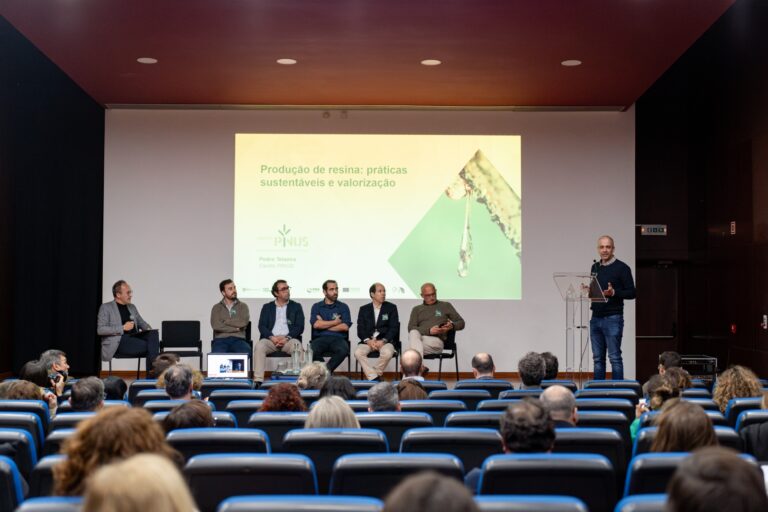
Natural resin value chain analysed by specialists in Pampilhosa da Serra. Entrepreneurs, producers, researchers and institutional representatives met today in Pampilhosa da Serra, as part of the Resinae Ignite event, promoted by the RN21 Integrated Project, to explore all links in the value chain of the natural resin sector. In the opening session, the Mayor of Pampilhosa da Serra, Jorge Custódio, stressed the relevance of the initiative, highlighting that “it is very important to put the focus back on this activity and work in collaboration with local agents and producers, who continue to play an active role in the development of the region”. “The success of the resin and the forestry sector is certainly the success of these inland territories”, he added. The event, which was a catalyst for new ideas and initiatives in the sector, was marked by the official launch of the “Resinae” brand, a symbol of quality, traceability, and environmental commitment, which aims to highlight the natural Pinus Pinaster resin in the global market as a product of excellence. The program included interventions and debates on sustainable practices, innovation in production, transformation, and expansion into new markets, promoting a constructive dialogue around viable and sustainable solutions. Pedro Teixeira (Centro Pinus Association), Marco Ribeiro (Association of Resipinus distillers and explorers), Ricardo Gomes (Nares company), Pedro Gil (Gum Rosin), João Koehler (Colquímica company), Jávier Calvo (Cesefor company), were the protagonists of the thematic sessions. The work continued with the debate on “The value chain of natural resin”, “Economic sustainability of resination”, and “Challenges and opportunities”, with the participation of Rogério Rodrigues and Joana Vieira, both from CoLAB ForesWISE, and Miguel Freitas, from the University of Algarve. The presentation of the “Resinae” brand was the responsibility of Jani Pires and Juliana Salvation, from CoLAB ForestWISE. It should be recalled that the RN21 Integrated Project – Innovation in the Natural Resin Sector to Strengthen the National Bioeconomy -, led by CoLAB ForestWISE, is a consortium that brings together the entire natural resin value chain in Portugal. The project is committed to the modernization and revitalization of the sector, valuing resin as an ecological product with vast potential for application in the global market. The CoLAB ForestWISE – Collaborative Laboratory for the Integrated Management of Forest and Fire, is an organization that brings together entities linked to research, innovation, and knowledge and technology transfer, which aims to contribute to a more sustainable forest management, the valorization of forest products, and the reduction of the consequences of large fires. Learn more here

Natural resin value chain analyzed by experts in Pampilhosa da Serra Read More »

Pampilhosa da Serra: Evaluated the natural resin value chain

Entrepreneurs, producers, researchers and institutional representatives met yesterday in Pampilhosa da Serra, as part of the Resinae Ignite event, promoted by the RN21 Integrated Project, with the aim of exploring all links in the value chain of the natural resin sector. In the opening session, the mayor of Pampilhosa da Serra, Jorge Custódio, highlighted that “it is very important to refocus on this activity and work in collaboration with local agents and producers, who continue to play an active role in the development of the region”. “The success of the resin and the forestry sector is certainly the success of these inland territories”, he added. Learn more here

Pampilhosa da Serra: Evaluated the natural resin value chain Read More »

Pampilhosa da Serra: Natural resin value chain under analysis by experts

The event, which was a catalyst for new ideas and initiatives in the sector, was marked by the official launch of the “Resinae” brand, a symbol of quality, traceability, and environmental commitment, which aims to highlight the natural Pinus Pinaster resin in the global market as a product of excellence. entrepreneurs, producers, researchers and institutional representatives met today in Pampilhosa da Serra, as part of the Resinae Ignite event, promoted by the RN21 Integrated Project, to explore all links in the value chain of the natural resin sector. In the opening session, the Mayor of Pampilhosa da Serra, Jorge Custódio, stressed the relevance of the initiative, highlighting that “it is very important to refocus on this activity and work in collaboration with local agents and producers, who continue to play an active role in the development of the region”. “The success of the resin and the forestry sector is certainly the success of these inland territories”, he added. The event, which was a catalyst for new ideas and initiatives in the sector, was marked by the official launch of the “Resinae” brand, a symbol of quality, traceability, and environmental commitment, which aims to highlight the natural Pinus Pinaster resin in the global market as a product of excellence. The program included interventions and debates on sustainable practices, innovation in production, transformation, and expansion into new markets, promoting a constructive dialogue around viable and sustainable solutions. Pedro Teixeira (Centro Pinus Association), Marco Ribeiro (Association of Resipinus distillers and explorers), Ricardo Gomes (Nares company), Pedro Gil (Gum Rosin), João Koehler (Colquímica company), Jávier Calvo (Cesefor company), were the protagonists of the thematic sessions. The work continued with the debate on “The value chain of natural resin”, “Economic sustainability of resination”, and “Challenges and opportunities”, with the participation of Rogério Rodrigues and Joana Vieira, both from CoLAB ForesWISE, and Miguel Freitas, from the University of Algarve. The presentation of the “Resinae” brand was the responsibility of Jani Pires and Juliana Salvation, from CoLAB ForestWISE. It should be recalled that the RN21 Integrated Project – Innovation in the Natural Resin Sector to Strengthen the National Bioeconomy -, led by CoLAB ForestWISE, is a consortium that brings together the entire natural resin value chain in Portugal. The project is committed to the modernization and revitalization of the sector, valuing resin as an ecological product with vast potential for application in the global market. The CoLAB ForestWISE – Collaborative Laboratory for the Integrated Management of Forest and Fire, is an organization that brings together entities linked to research, innovation, and knowledge and technology transfer, which aims to contribute to a more sustainable forest management, the valorization of forest products, and the reduction of the consequences of large fires. Learn more here

Pampilhosa da Serra: Natural resin value chain under analysis by experts Read More »

PAMPILHOSA DA SERRA: Experts analyze the value chain of natural resin

Entrepreneurs, producers, researchers and institutional representatives met today in Pampilhosa da Serra, as part of the Resinae Ignite event, promoted by the RN21 Integrated Project, to explore all links in the value chain of the natural resin sector.The mayor of Pampilhosa da Serra, Jorge Custódio, was present at the opening session, who stressed “the relevance of the initiative”, highlighting that “it is very important to put the focus back on this activity and work in collaboration with local agents and producers, who continue to play an active role in the development of the region”. “The success of the resin and the forestry sector is certainly the success of these inland territories”, he added.The event, which was a catalyst for new ideas and initiatives in the sector, was marked by the official launch of the “Resinae” brand, a symbol of quality, traceability, and environmental commitment, which aims to highlight the natural Pinus Pinaster resin in the global market as a product of excellence.The program included interventions and debates on sustainable practices, innovation in production, transformation, and expansion into new markets, promoting a constructive dialogue around viable and sustainable solutions.Pedro Teixeira (Centro Pinus Association), Marco Ribeiro (Association of Resipinus distillers and explorers), Ricardo Gomes (Nares company), Pedro Gil (Gum Rosin), João Koehler (Colquímica company), Jávier Calvo (Cesefor company), were the protagonists of the thematic sessions.The work continued with the debate on “The value chain of natural resin”, “Economic sustainability of resination”, and “Challenges and opportunities”, with the participation of Rogério Rodrigues and Joana Vieira, both from CoLAB ForesWISE, and Miguel Freitas, from the University of Algarve. The presentation of the “Resinae” brand was in charge of Jani Pires and Juliana Salvation, from CoLAB ForestWISE.It should be recalled that the RN21 Integrated Project – Innovation in the Natural Resin Sector to Strengthen the National Bioeconomy -, led by CoLAB ForestWISE, is a consortium that brings together the entire natural resin value chain in Portugal. The project is committed to the modernization and revitalization of the sector, valuing resin as an ecological product with vast potential for application in the global market.The CoLAB ForestWISE – Collaborative Laboratory for the Integrated Management of Forest and Fire, is an organization that brings together entities linked to research, innovation and knowledge and technology transfer, which aims to contribute to a more sustainable forest management, valorization of forest products, and reduction of the consequences of large fires. Learn more here

PAMPILHOSA DA SERRA: Experts analyze the value chain of natural resin Read More »

Natural resin value chain analyzed by experts in Pampilhosa da Serra

Entrepreneurs, producers, researchers, and institutional representatives met yesterday in Pampilhosa da Serra, as part of the Resinae Ignite event, promoted by the RN21 Integrated Project, to explore all links in the value chain of the natural resin sector. In the opening session, the Mayor of Pampilhosa da Serra, Jorge Custódio, stressed the relevance of the initiative, highlighting that “it is very important to refocus on this activity and work in collaboration with local agents and producers, who continue to play an active role in the development of the region”. “The success of the resin and the forestry sector is certainly the success of these inland territories”, he added. The event, which was a catalyst for new ideas and initiatives in the sector, was marked by the official launch of the “Resinae” brand, a symbol of quality.traceability and environmental commitment, which aims to highlight the natural resin of Pinus Pinaster in the global market as a product of excellence. The program included interventions and debates on sustainable practices, innovation in production, transformation, and expansion into new markets, promoting a constructive dialogue around viable and sustainable solutions. Pedro Teixeira (Centro Pinus Association), Marco Ribeiro (Association of Resipinus distillers and explorers), Ricardo Gomes (Nares company), Pedro Gil (Gum Rosin), João Koehler (Colquímica company), Jávier Calvo (Cesefor company), were the protagonists of the thematic sessions. The work continued with the debate on “The value chain of natural resin”, “Economic sustainability of resination”, and “Challenges and opportunities”, with theparticipation of Rogério Rodrigues and Joana Vieira, both from CoLAB ForesWISE, and Miguel Freitas, from the University of Algarve. The presentation of the “Resinae” brand was the responsibility of Jani Pires and Juliana Salvation, from CoLAB ForestWISE. It should be recalled that the RN21 Integrated Project – Innovation in the Natural Resin Sector to Strengthen the National Bioeconomy -, led by CoLAB ForestWISE, is a consortium that brings together the entire natural resin value chain in Portugal. The project focuses on the modernization and revitalization of the sector, valuing resin as an ecological product with vast potential for application in the global market. The CoLAB ForestWISE – Collaborative Laboratory for the Integrated Management of Forest and Fire, is an organization that brings together entities linked to research, innovation, and knowledge and technology transfer, which aims to contribute to a more sustainable forest management, valorization of forest products, and reduction of the consequences of large fires. Learn more here

Natural resin value chain analyzed by experts in Pampilhosa da Serra Read More »

Inauguration of the Resin Academy in Tresminas

Last Friday, in the São Miguel Rural Park, in Tresminas, the Resin Maker Academy was inaugurated, a new space entirely dedicated to the training, enhancement, and sustainable development of the resin production activity in Portugal. The initiative is promoted by Resipinus (Association of Resin Distillers and Explorers) within the scope of the Natural Resin 21 project, funded by the Recovery and Resilience Plan (PRR). The main objective of the project is to contribute to the revitalization of the resin sector, reinforcing its relevance in the economic, social, and environmental panorama of the country. According to Resipinus, the Resin Maker Academy aims to “promote the professionalization of workers, encourage good environmental practices and foster the recognition of the economic and social importance of resin extracted from pine and other forest species”. The new Academy proposes to be a center of excellence for the sector, with a focus on four fundamental axes: Learn more here

Inauguration of the Resin Academy in Tresminas Read More »

Dissemination of the I1 project. M1 “Genetic improvement program for resining” of the Natural Resin 21 (RN21) consortium

The I1. M1: “Genetic improvement program for resining” inserted in the RN21 Consortium is being financed by the RRP. It aims to strengthen the productive capacity of the pine forest, acting at the level of genetic selection of trees “plus” for the amount of resin, through the establishment of clonal orchards producing forest material for reproduction (seeds and forks) of maritime pine (Pinus pinaster Ait.) and the creation of a platform for assisted selection. Genetic selection and quantification of genetic parameters will be carried out based on a trial that is being installed in the Alva de Pataias Forest Perimeter, an area under the management of the ICNF. In this test, about 420 trees identified in the seven regions of provenance of maritime pine will be represented. The reproduction of these individuals is being carried out by terminal full cleft grafting, which began in 2024 and will run until the end of the project. The individuals with the best genetic performance will later also be reproduced by grafting in seed-producing orchards, thus promoting the production of material of superior genetic quality.

Dissemination of the I1 project. M1 “Genetic improvement program for resining” of the Natural Resin 21 (RN21) consortium Read More »

Trial in the Alva forest perimeter reveals a new generation of maritime pine

PATAIAS SCIENCE BOOSTS MORE PRODUCTIVE SPECIES IN RESIN An experience in the Alva forest perimeter, in Pataias, shows the new generation of pine trees that is being born with the genetic improvement program applied to the resin.The announcement was made by the PINUS Center, through the dissemination of an informative video, with footage that accompanies the grafts started in 202k for the installation of the clonal assay. The experiment was implemented in a six-hectare plantation of maritime pine located in the forest perimeter, in an area provided by the Institute for Nature Conservation and Forests.“The RN21 project – Innovation in the Natural Resin Sector to Strengthen the National Bioeconomy – marks a turning point in the history of resin in Portugal”, reads the publication of the PINUS Centre, with the title “Pines of the future: more resin production with RN21”.From forest production to transformation, the purpose of the consortium integrated by the PINUS Centre is to make the ancestral practice, inseparable from maritime pine, more efficient, innovative, and attractivefor the management and enhancement of the maritime pine forest.The video explains the national genetic improvement program that promises maritime pines will be more productive in resin and features one of the experienced grafting technicians of the Association of Forest Producers of the Municipalities of Alcobaça and Nazaré, who shows the “art” of grafting the maritime pine. Learn more here

Trial in the Alva forest perimeter reveals a new generation of maritime pine Read More »

Science drives maritime pines to be more productive in resin

The PINUS Center discloses in a new informative video the new generation of maritime pines that is being born with the genetic improvement program applied to the resin. The RN21 project – Innovation in the Natural Resin Sector to Strengthen the National Bioeconomy – marks a turning point in the history of resin in Portugal. From forest production to transformation, the purpose of this consortium, integrated by the PINUS Centre, is to make this ancestral practice, inseparable from maritime pine, more efficient, innovative, and attractive for the management and enhancement of maritime pine. This PINUS TV followed the first stages of the national genetic improvement program that promises maritime pines to be more productive in resin. The filming follows the grafts started in 2024 for the installation of the clonal assay. This takes place in a 6-hectare maritime pine plantation located in the Alva de Pataias Forest Perimeter, an area provided by the ICNF. The glaciers that reach the field contain the forks (branches) for grafting. These arrive from various regions of maritime pine origin, where more than 400 trees were previously identified and selected by an ESAC team. Researcher Isabel Carrasquinho explains how the multiplication of these trees selected by grafting will make it possible to test the performance of the clones under well-defined conditions and evaluate the genetic gain of resin production. The report also interviews one of APFCAN’s experienced grafting technicians, who demonstrates in the video the “art” of grafting maritime pine, unusual in this forest species and different from that carried out in stone pine. This spring the grafting continued, involved in a complex logistical operation coordinated by the PINUS Center in conjunction with partners, in addition to the continuous dissemination of the activities and evolution of this genetic improvement program. In parallel with the test in Alva de Pataias, the DNA extracted from the needles of the selected trees was analyzed in the laboratory by UTAD researchers. The next updates on this promising topic for the Pine Sector will continue to be disseminated on the communication channels of the PINUS Centre, along with the maritime pine genetic improvement programme for volume and form, also under development, and with the participation of this association.

Science drives maritime pines to be more productive in resin Read More »