Clipping

Experts analyzed the natural resin value chain

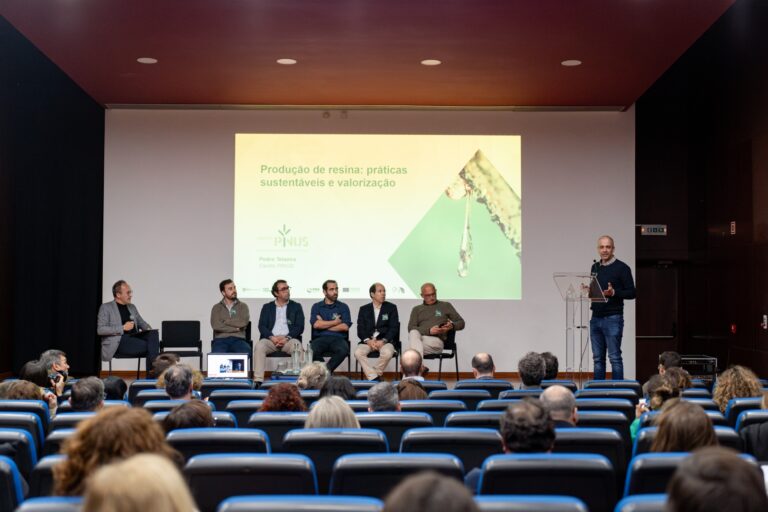
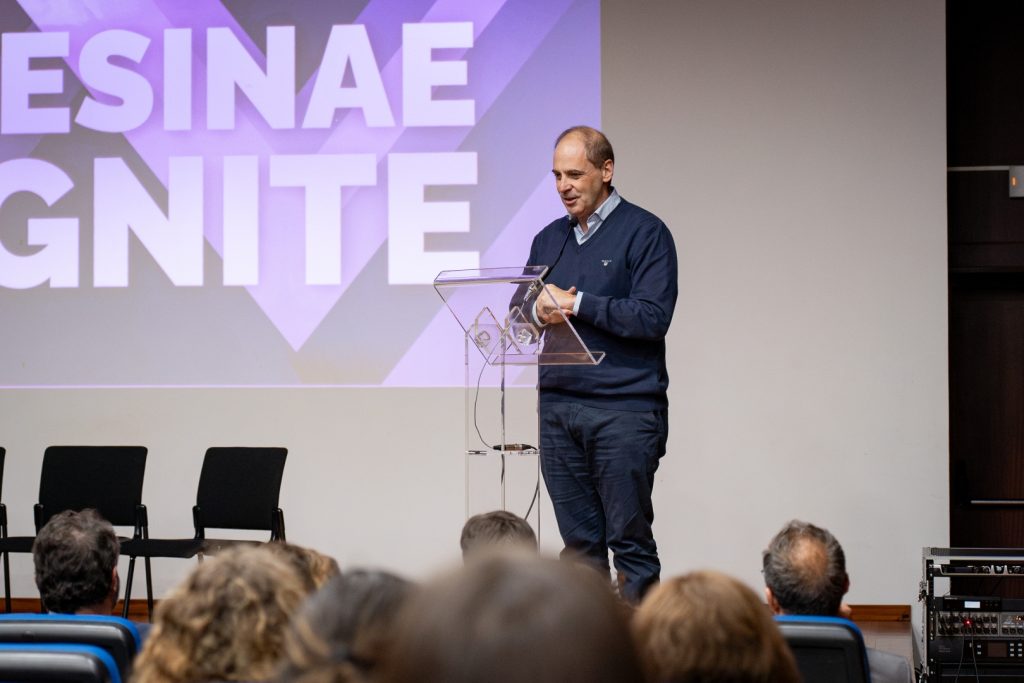
Entrepreneurs, producers, researchers, and institutional representatives were gathered in Pampilhosa da Serra, as part of the Resinae Ignite event, promoted by the RN21 Integrated Project, to explore all links in the value chain of the natural resin sector.In the opening session, the mayor, Jorge Custódio, stressed the relevance of the initiative, highlighting that “it is very important to put the focus back on this activity and work in collaboration with local agents and producers, who continue to play an active role in the development of the region. The success of the resin and the forestry sector is certainly the success of these inland territories”.The event, which was a catalyst for new ideas and initiatives in the sector, was marked by the official launch of the “Resinae” brand, a symbol of quality, traceability, and environmental commitment, which aims to highlight the natural Pinus Pinaster resin in the global market as a product of excellence.The program included interventions and debates on sustainable practices, innovation in production, transformation, and expansion into new markets, promoting a constructive dialogue around viable and sustainable solutions, with the protagonists of the thematic sessions, Pedro Teixeira (Centro Pinus Association), Marco Ribeiro (TheResipinus Distillers and Explorers Association), Ricardo Gomes (Nares company), Pedro Gil (Gum Rosin), João Koehler (Colquímica company), and Jávier Calvo (Cesefor company).The work continued with the debate on “The value chain of natural resin”, “Economic sustainability of resination” and “Challenges and opportunities”, with the participation of Rogério Rodrigues and Joana Vieira, both from CoLAB ForesWISE, and Miguel Freitas, from the University of Algarve. The presentation of the “Resinae” brand was the responsibility of Jani Pires and Juliana Salvation, from CoLAB ForestWISE.It should be recalled that the RN21 Integrated Project – Innovation in the Natural Resin Sector to Strengthenthe National Bioeconomy, led by CoLAB ForestWISE, is a consortium that brings together the entire natural resin value chain in Portugal. The project is committed to the modernization and revitalization of the sector, valuing resin as an ecological product with vast potential for application in the global market.The CoLAB ForestWISE – Collaborative Laboratory for the Integrated Management of Forest and Fire, is an organization that brings together entities linked to research, innovation, and knowledge and technology transfer, which aims to contribute to a more sustainable forest management, valorization of forest products, and reduction of the consequences of large fires. Learn more here

Experts analyzed the natural resin value chain Read More »
Portugal can double the value generated by the resin sector – Resipinus

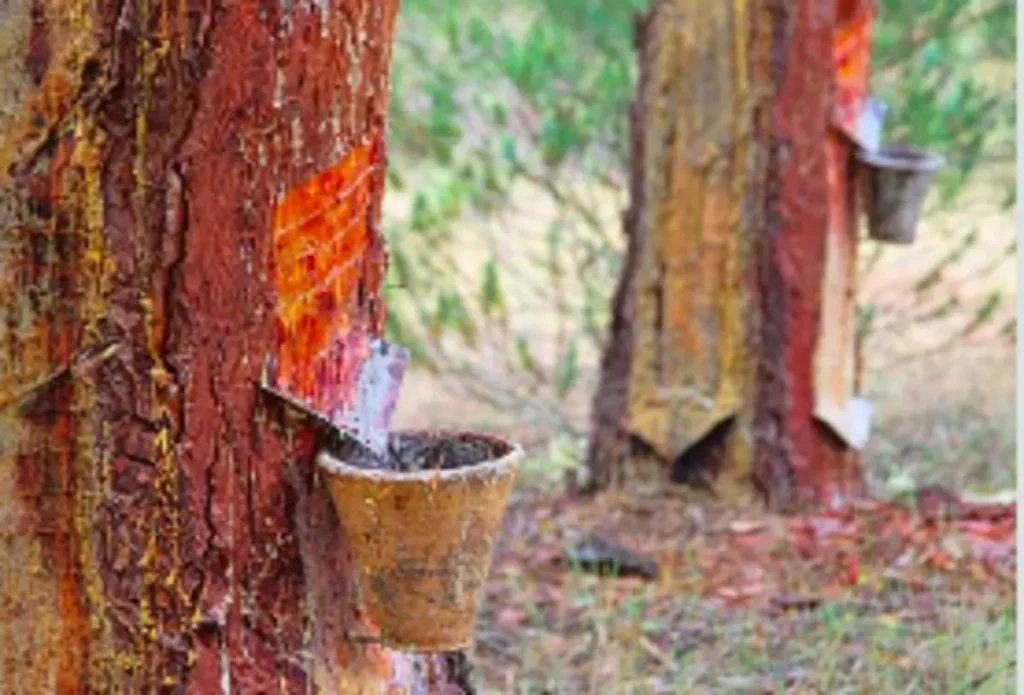
Portugal may double the current 250 million euros (ME) per year generated by the resin sector in the coming years, said today the president of Resipinus – Association of Resin Distillers and Explorers.“The industry has this capacity to achieve this goal in two or three years, but it needs to have raw materials and to have resinated pine forests,” said Marco Ribeiro, who was speaking to the Lusa agency after the “Resinae Ignite” meeting, which took place this afternoon in Pampilhosa da Serra, as part of the RN21 integrated project.In the initiative, which brought together entrepreneurs, producers, researchers, and institutional representatives, the association leader pointed out that Portugal resin between 20 and 25 thousand hectares of pine forest, when, according to statistics, the country has between “600 and 700 thousand hectares, which gives a large margin”.According to the president of Resipinus, within the scope of the RN21 project, which ends in December, but which can be extended a few more months, new extraction methods are being studied, which are less expensive, since currently the costs of extracting the resin are high.The RN21 project brings together, for the first time, the resin sector in Portugal, in a consortium that aims to invest in research and innovation to modernize and revitalize one of the most traditional sectors of the national economy, in order to value natural resin as a “bio” product.“We are taking the opportunity to develop some modernization, to bring new extraction models, more efficient, with some parts even mechanized, which until now was not possible, so that we can be more efficient in the extraction process,” explained Marco Ribeiro.The objective is to reduce the travel of resin workers to the pine forests and to have an equivalent production, to reduce the necessary labor, increase the quality of the final product, through a container that allows the characteristics of the resin to be maintained, and to train new resin workers with new methods.“The market is demanding, it wants quality products, and we currently, with the traditional method, do not get that product and, therefore, these new methods, which are more attractive, we can bring positive aspects for the future,” he said.For the association leader, if there is no economic valorization of this type of work, it will be difficult to attract “anyone to the sector and, therefore, we have to take this step of modernization”.Also within the scope of the RN21 project, the PINUS Centre – Association for the Enhancement of the Pine Forest, which brings together the main agents in the pine sector, announced today that, together with several partners, it is starting a project to improve the genetic improvement of maritime pine to produce more resin.“It is intended to select the trees that may exist in the country and that are more productive in resin. From a current average of two kilos per pine tree, we have some that produce four kilos, and through a field trial, we intend to test whether this productivity is genetic”, stressed Pedro Teixeira.If the tests confirm that the higher production is associated with a genetic issue, seeds and genetic material will be removed to replicate in new plants “that, from the outset, will be more productive”, which can happen within a decade, being “an advantage for the entire value chain”, explained the technician.At the “Resinae Ignite” meeting, it was officially presented the “Resinae” brand, a symbol of quality, which aims to strengthen the position of the sector and boost natural resin to a level of competitiveness that responds to the demands of a market increasingly focused on sustainability.“The brand turns out to be the culmination of a joint effort to have public recognition and extra appreciation of the natural resin, which is used in a series of products that we use daily”, underlined Rogério Rodrigues, coordinator of the RN21 project, which has an investment of more than 26 million euros and a subsidy of 17.5 million euros, supported by the Recovery and Resilience Plan.The project is led by CoLAB ForestWISE (Collaborative Laboratory for Integrated Forest and Fire Management) and involves 37 entities, which will combine public and private investments, based on three pillars: promotion of the production of national natural resin, strengthening the sustainability of the manufacturing industry, and positive differentiation of natural resin and derived products. Learn more here

Portugal can double the value generated by the resin sector – Resipinus Read More »

Portugal may double the value generated by the resin sector

RN21 Sector project was under discussion at the “Resinae Ignite” meeting, which brought together entrepreneurs, producers, researchers, and institutional representatives yesterday afternoon in Pampilhosa da Serra Portugal, may double the current 250 million euros per year generated by the resin sector in the coming years, said yesterday the president of Resipinus – Association of Resin Distillers and Explorers. “The industry has this capacity to be able to reach this goal in two or three years, but it needs to have raw material and to have resinated pine forests», said Marco Ribeiro, speaking to Lusa after the “Resinae lgnite” meeting, which took place yesterday in Pampilhosa da Serra within the scope of the RN21 integrated project.In the initiative, which brought together entrepreneurs, producers, researchers, and institutional representatives, the association leader pointed out that Portugal resin between 20 and 25 thousand hectares of pine forest, when, according to statistics, the country has between “600 and 700 thousand hectares, which gives a large margin”.According to the president of Resipinus, within the scope of the RN21 project, which ends in December, but which can be extended a few more months, new extraction methods are being studied, which are less expensive, since currently the costs of extracting the resin are high.The RN21 project brings together, for the first time, the resin sector in Portugal, in a consortium that aims to invest in researchand innovation to modernize and revitalize one of the most traditional sectors of the national economy, to value natural resin as a “bio” product. «We are taking the opportunity to develop some modernization, to bring new extraction models, more efficient, with some parts even mechanized, which until now was not possible, so that we can be more efficient in the extraction process», explained Marco Ribeiro.The objective is to reduce the travel of resin workers to the pine forests and have an equivalent production, to reduce the necessary labor, increase the quality of the final product, through a container that allows maintaining the characteristics of the resin, and train new resin workers with new methods. “The market is demanding, it wants quality products, and we currently, with the traditional method, cannot achieve this product and, therefore, these new methods, which are more attractive, can bring positive aspects for the future”, he said.For the association leader, if there is no economic valorization of this type of work, it will be difficult to attract «anyone to the sector and, therefore, we have to take this step of modernization».Also within the scope of the RN21 project, the PINUS Centre – Association for the Enhancement of the Pine Forest, which brings together the main agents in the pine sector, announced yesterday that, together with several partners, it is starting a project for the genetic improvement of the wild pine tree to produce more resin «It is intended to select the trees that may exist in the country and that are more productive in resin From a current average of two kilos per pine we have some that produce four kilos and through a field trial we intend to test whether this productivity is genetic”, stressed Pedro Teixeira.Portugal resin between 20 and 25 thousand hectares of pine forest. The sector currently generates 250 million euros per year If the tests confirm that the higher production is associated with a genetic issue, sSeeds and genetic material will be removed to replicate in new plants «that, from the outset, will be more productive», which can happen within a decade, being «an advantage for the entire value chain», explained the technician.At the opening of the meeting, the Mayor of the Câmara de Pampilhosa da Serra, Jorge Custódio, highlighted the relevance of the initiative, considering it “very important to refocus on this activity and work in collaboration with local agents and producers, who continue to play an active role in the development of the region”. «The success of the resin and the forestry sector is certainly the success of these inland territories», defended the mayor. “Resinae” brand aims to strengthen the sector’s position At the “Resinae Ignite” meeting, the “Resinae” brand was officially presented, a symbol of quality, which aims to strengthen the sector’s position and boost natural resin to a level of competitiveness that responds to the demands of a market increasingly focused on sustainability. «The brand turns out to be the culmination of a joint effortto have public recognition and extra appreciation of the natural resin, which is used in a series of products that we use daily», underlined Rogério Rodrigues, coordinator of the RN21 project, which has an investment of more than 26 million euros and a subsidy of 17.5 million euros, supported by the Recovery and Resilience Plan. The project is led by CoLAB ForestWISE (Collaborative Laboratory for the Integrated Management of Forest and Fire) involves 37 entities, which will combine public and private investments, based on three pillars: promotion of the production of national natural resin, strengthening the sustainability of the manufacturing industry, and positive differentiation of natural resin and derived products. Learn more here

Portugal may double the value generated by the resin sector Read More »

Portugal can double the value generated by the resin sector, says Resipinus

The objective is to reduce the travel of resin workers to the pine forests and have an equivalent production, to reduce the necessary labor, increase the quality of the final product, and train new resin workers. Portugal may double the current 250 million euros per year generated by the resin sector in the coming years, said this Monday the president of Resipinus – Association of Resin Distillers and Explorers. “The industry has this capacity to achieve this goal in two or three years, but it needs to have raw material and to have resinated pine forests,” said Marco Ribeiro, who was speaking to the Lusa agency after the “Resinae Ignite” meeting, which took place this afternoon in Pampilhosa da Serra, in the interior of the district of Coimbra, within the scope of the RN21 integrated project. In the initiative, which brought together entrepreneurs, producers, researchers, and institutional representatives, the association leader pointed out that Portugal resin between 20 and 25 thousand hectares of pine forest, when, according to statistics, the country has between 600 and 700 thousand hectares, which gives a large margin”. According to the president of Resipinus, within the scope of the RN21 project, which ends in December, but which can be extended a few more months, new extraction methods are being studied, less expensive, since currently the costs of extracting the resin are high. The RN21 project brings together, for the first time, the resin sector in Portugal, in a consortium that aims to invest in research and innovation to modernize and revitalize one of the most traditional sectors of the national economy, in order to value natural resin as a “bio” product. “We are taking the opportunity to develop some modernization, to bring new extraction models, more efficient, with some parts even mechanized, which until now was not possible, so that we can be more efficient in the extraction process,” explained Marco Ribeiro. The objective is to reduce the travel of resin workers to the pine forests and have an equivalent production, to reduce the necessary labor, increase the quality of the final product, through a container that allows the characteristics of the resin to be maintained, and to train new resin workers with new methods. “The market is demanding, it wants quality products, and we currently, with the traditional method, cannot achieve this product, and therefore, these new methods, which are more attractive, can bring positive aspects for the future”, he maintained. For the association leader, if there is no economic valorization of this type of work, it will be difficult to attract “anyone to the sector and, therefore, we have to take this step of modernization”. Also within the scope of the RN21 project, the PINUS Center – Association for the Enhancement of the Pine Forest, which brings together the main agents in the pine sector, announced this Monday that, together with several partners, it is starting a project to genetically improve maritime pine to produce more resin. “It is intended to select the trees that may exist in the country and that are more productive in resin. From a current average of two kilos per pine tree, we have some that produce four kilos, and through a field trial, we intend to test whether this productivity is genetic”, stressed Pedro Teixeira. If the tests confirm that the higher production is associated with a genetic issue, seeds and genetic material will be removed to replicate in new plants “that, from the outset, will be more productive”, which can happen within a decade, being “an advantage for the entire value chain”, explained the technician. At the “Resinae Ignite” meeting, the “Resinae” brand was officially presented, a symbol of quality, which aims to strengthen the position of the sector and boost natural resin to a level of competitiveness that responds to the demands of a market increasingly focused on sustainability. “The brand turns out to be the culmination of a joint effort to have public recognition and extra appreciation of the natural resin, which is used in a series of products that we use daily”, underlined Rogério Rodrigues, coordinator of the RN21 project, which has an investment of more than 26 million euros and a subsidy of 17.5 million euros, supported by the Recovery and Resilience Plan. The project is led by CoLAB ForestWISE (Collaborative Laboratory for the Integrated Management of Forest and Fire) and involves 37 entities, which will combine public and private investments, based on three pillars: promotion of the production of national natural resin, strengthening the sustainability of the manufacturing industry, and positive differentiation of natural resin and derived products. Learn more here

Portugal can double the value generated by the resin sector, says Resipinus Read More »

Natural resin value chain analyzed by experts in Pampilhosa da Serra

Entrepreneurs, producers, researchers, and institutional representatives met today in Pampilhosa da Serra, as part of the Resinae Ignite event, promoted by the RN21 Integrated Project, with the aim of exploring all links in the value chain of the natural resin sector. In the opening session, the Mayor of Pampilhosa da Serra, Jorge Custódio, stressed the relevance of the initiative, highlighting that “it is very important to put the focus back on this activity and work in collaboration with local agents and producers, who continue to play an active role in the development of the region”. “The success of the resin and the forestry sector is certainly the success of these inland territories”, he added. The event, which was a catalyst for new ideas and initiatives in the sector, was marked by the official launch of the “Resinae” brand, a symbol of quality, traceability, and environmental commitment, which aims to highlight the natural Pinus Pinaster resin in the global market as a product of excellence. The program included interventions and debates on sustainable practices, innovation in production, transformation, and expansion into new markets, promoting a constructive dialogue around viable and sustainable solutions. Pedro Teixeira (Centro Pinus Association), Marco Ribeiro (Association of Resipinus distillers and explorers), Ricardo Gomes (Nares company), Pedro Gil (Gum Rosin), João Koehler (Colquímica company), Jávier Calvo (Cesefor company), were the protagonists of the thematic sessions. The work continued with the debate on “The value chain of natural resin”, “Economic sustainability of resination”, and “Challenges and opportunities”, with the participation of Rogério Rodrigues and Joana Vieira, both from CoLAB ForesWISE, and Miguel Freitas, from the University of Algarve. The presentation of the “Resinae” brand was the responsibility of Jani Pires and Juliana Salvation, from CoLAB ForestWISE. It should be recalled that the RN21 Integrated Project – Innovation in the Natural Resin Sector to Strengthen the National Bioeconomy -, led by CoLAB ForestWISE, is a consortium that brings together the entire natural resin value chain in Portugal. The project is committed to the modernization and revitalization of the sector, valuing resin as an ecological product with vast potential for application in the global market. The CoLAB ForestWISE – Collaborative Laboratory for the Integrated Management of Forest and Fire, is an organization that brings together entities linked to research, innovation, and knowledge and technology transfer, which aims to contribute to a more sustainable forest management, the valorization of forest products, and the reduction of the consequences of large fires.

Natural resin value chain analyzed by experts in Pampilhosa da Serra Read More »

Altri helps to enhance forests in a sustainable way

Altri joins a pioneering project to implement biomass parks and forest containers for the collection of agricultural and forest leftovers. The Altri Group has partnered with CIM – Coimbra Region to implement a pilot project aimed at installing containers and parks for the collection of agricultural and forestry leftovers. These biomass parks, complemented by forest containers, aim to provide an efficient and environmentally responsible alternative for the treatment and use of forest waste. The initiative aims to improve the management of leftovers from forest exploration and maintenance activities that would often be left on the ground or burned. As a result, it will be possible to reduce the dependence on burning and open burning practices – often done in critical periods – that pose environmental and public health risks. In this way, the leftovers are sent to Greenvolt’s Plants, where they are converted into valuable resources for the production of renewable energy and other sustainable uses. The creation of these infrastructures will also stimulate collaboration with forest owners, resource management companies, and local authorities, promoting innovative solutions to common challenges. “This initiative reflects Altri’s vision of combining economic development with environmental protection, contributing to decarbonisation and mitigating the risks of forest fires,” said Miguel Silveira, Altri’s director for the Forestry area. “With biomass farms, we are creating a value chain that benefits the local community, the industry and the ecosystem.” The signing of the protocol also included a visit to the container installed in the municipality of Mortágua, next to the EN228, in Cruz de Vila Nova, and a brief technical explanation of the project within the scope of the transForm Agenda. The project was created under the transForm Agenda – integrated in the Recovery and Resilience Plan (RRP). The transForm Agenda, led by Altri Florestal and coordinated by CoLAB ForestWISE, is a strategic initiative made up of 56 partners, which aims at the structural transformation of the national forestry sector. With a physical and financial execution rate of 30% so far, the agenda stands out for the collaboration between public and private entities, promoting sustainability and the circular economy. Learn more here

Altri helps to enhance forests in a sustainable way Read More »

Natural resin value chain analyzed by experts in Pampilhosa da Serra – Beira Digital TV

Entrepreneurs, producers, researchers, and institutional representatives met today in Pampilhosa da Serra, as part of the Resinae Ignite event, promoted byThe RN21 Integrated Project, to explore all links in the value chain ofthe natural resin sector. In the opening session, the Mayor of Pampilhosa da Serra, Jorge Custódio, stressed the relevance of the initiative, highlighting that “it is very important to put the focus back on this activity and work in collaboration with local agents and producers, who continue to play an active role in the development of the region”. “The success of the resin and the forestry sector is certainly the success of these inland territories”, he added. The event, which was a catalyst for new ideas and initiatives in the sector, was marked by the official launch of the “Resinae” brand, a symbol of quality, traceability, and environmental commitment, which aims to highlight the natural resin of Pinus Pinaster in the global market as a product of excellence. The program included interventions and debates on sustainable practices, innovation in production, transformation, and expansion into new markets, promoting a constructive dialogue around viable and sustainable solutions. Pedro Teixeira (Centro Pinus Association), Marco Ribeiro (Association of Resipinus distillers andexplorers), Ricardo Gomes (Nares company), Pedro Gil (Gum Rosin), João Koehler (Colquímica company), Jávier Calvo (Cesefor company), were the protagonists of the thematic sessions. The work continued with the debate on “The value chain of natural resin”,“Economic sustainability of resination” and “Challenges and opportunities”, with the participation of Rogério Rodrigues and Joana Vieira, both from CoLAB ForesWISE, and Miguel Freitas, from the University of Algarve. The presentation of the “Resinae” brand was the responsibility of Jani Pires and Juliana Salvation, from CoLAB ForestWISE.It should be recalled that the RN21 Integrated Project – Innovation in the Natural Resin Sector to Strengthen the National Bioeconomy -, led by CoLAB ForestWISE, is a consortium thatbrings together the entire natural resin value chain in Portugal. The project is committed to the modernization and revitalization of the sector, valuing resin as an ecological product with vast potential for application in the global market. The CoLAB ForestWISE – Collaborative Laboratory for the Integrated Management of Forest and Fire, is an organization that brings together entities linked to research, innovation, and knowledge and technology transfer, which aims to contribute to a more sustainable forest management, the valorization of forest products, and the reduction of the consequences of large fires. Learn more here

Natural resin value chain analyzed by experts in Pampilhosa da Serra – Beira Digital TV Read More »

From the “veins” of the Portuguese pine forest, Resinae is born

The brand, launched this Monday in Pampilhosa da Serra, brings together the various players in the sector in a consortium, with two dozen projects already underway, to place Portugal as a center of sustainable excellence in the global market. Ana Maria Ramos Article body The resin sector is developing 20 new products in Portugal, borrowing from Latin the expression that gives its name to the new brand launched now, “Resinae”, to value what the Mediterranean pine cluster produces annually and make it a reference in the global market. This Monday, in Pampilhosa da Serra, specialists, entrepreneurs, producers, and institutional representatives gathered to share perspectives on the challenges and opportunities in a sector that already represents investments of around 26.5 million euros. From the ForestWISE CoLAB®, a consortium was created that brings together the entire value chain of the sector in Portugal, which is called RN21 and already has 37 partners and 38 lines of research to develop more sustainable and innovative projects with application in the real economy. The objective is to value the resin as an integrated project and renewable resource, derived from pine forests, predominantly located in the central and northern regions of the country, since its promoters consider it a raw material of “bio” origin with the potential to replace resins of fossil origin in the most diverse industries, from agri-food to textiles, or footwear. The objective is to create a quality seal that implies the use of incorporation of at least 10% of this type of raw material at any stage of the product development cycle. In addition, it seeks to modernize and make the entire value chain more efficient and sustainable, optimizing the extraction, production and marketing processes, ensuring the ecological and digital transition of the sector, promoting collaboration and integration between different actors, to boost innovation, knowledge sharing and the creation of an environment conducive to the growth and strengthening of activity in the country, which in the past represented more than 145 thousand tons of resin production per year and today it does not exceed 6 thousand tons produced per year. The consortium supports companies in the sector in diversifying their derived products into bio-based products with higher added value and in the modernization of production processes in order to incorporate new technologies and the adoption of Circular Economy principles. It also aims to contribute to carbon neutrality and to a more productive and resilient Portuguese forest, through genetic improvement and improvements in resin techniques, with the aim of increasing the production and valorization of sap from Portuguese forests. It also wants to contribute to territorial cohesion, especially in the regions of the country, where the main areas of resinous pine forest and most of the companies in the sector are concentrated, and to strengthen science and technology, through Research, Development & Innovation activities in companies, in partnership with higher education institutions and entities in the territory and already with partners in Spain, he hopes to soon be able to expand the project to the neighboring country and start winning business in other European countries. Learn more here

From the “veins” of the Portuguese pine forest, Resinae is born Read More »

Portugal can double the value generated by the resin sector

Meeting took place today in Pampilhosa da Serra Portugal may double the current 250 million euros (ME) per year generated by the resin sector in the coming years, said today the president of Resipinus – Association of Resin Distillers and Explorers. “The industry has this capacity to achieve this goal in two or three years, but it needs to have raw material and to have resinated pine forests,” said Marco Ribeiro, who was speaking to the Lusa agency after the “Resinae Ignite” meeting, which took place this afternoon in Pampilhosa da Serra, as part of the RN21 integrated project. In the initiative, which brought together entrepreneurs, producers, researchers, and institutional representatives, the association leader pointed out that Portugal resin between 20 and 25 thousand hectares of pine forest, when, according to statistics, the country has between “600 and 700 thousand hectares, which gives a large margin”. According to the president of Resipinus, within the scope of the RN21 project, which ends in December, but which can be extended a few more months, new extraction methods are being studied, less expensive, since currently the costs of extracting the resin are high. The RN21 project brings together, for the first time, the resin sector in Portugal, in a consortium that aims to invest in research and innovation to modernize and revitalize one of the most traditional sectors of the national economy, in order to value natural resin as a “bio” product. “We are taking the opportunity to develop some modernization, to bring new extraction models, more efficient, with some parts even mechanized, which until now was not possible, so that we can be more efficient in the extraction process,” explained Marco Ribeiro. The objective is to reduce the travel of resin workers to the pine forests and have an equivalent production, to reduce the necessary labor, increase the quality of the final product, through a container that allows the characteristics of the resin to be maintained, and to train new resin workers with new methods. “The market is demanding, it wants quality products, and we currently, with the traditional method, cannot achieve this product, and therefore, these new methods, which are more attractive, we can bring positive aspects for the future”, he maintained. For the association leader, if there is no economic valorization of this type of work, it will be difficult to attract “anyone to the sector and, therefore, we have to take this step of modernization”. Also within the scope of the RN21 project, the PINUS Center – Association for the Enhancement of the Pine Forest, which brings together the main agents in the pine sector, announced today that, together with several partners, it is starting a project to improve the genetic improvement of maritime pine to produce more resin. “It is intended to select the trees that may exist in the country and that are more productive in resin. From a current average of two kilos per pine tree, we have some that produce four kilos, and through a field trial, we intend to test whether this productivity is genetic”, stressed Pedro Teixeira. If the tests confirm that the higher production is associated with a genetic issue, seeds and genetic material will be removed to replicate in new plants “that, from the outset, will be more productive”, which can happen within a decade, being “an advantage for the entire value chain”, explained the technician. At the “Resinae Ignite” meeting, the “Resinae” brand was officially presented, a symbol of quality, which aims to strengthen the position of the sector and boost natural resin to a level of competitiveness that responds to the demands of a market increasingly focused on sustainability. “The brand turns out to be the culmination of a joint effort to have public recognition and extra appreciation of the natural resin, which is used in a series of products that we use daily”, underlined Rogério Rodrigues, coordinator of the RN21 project, which has an investment of more than 26 million euros and a subsidy of 17.5 million euros, supported by the Recovery and Resilience Plan. The project is led by CoLAB ForestWISE (Collaborative Laboratory for the Integrated Management of Forest and Fire) and involves 37 entities, which will combine public and private investments, based on three pillars: promotion of the production of national natural resin, strengthening the sustainability of the manufacturing industry, and positive differentiation of natural resin and derived products. Learn more here

Portugal can double the value generated by the resin sector Read More »

Resinae brand presents itself in Pampilhosa da Serra

The RN21 Integrated Project will hold the “Resinae Ignite” event on January 27, in Pampilhosa da Serra, where the official launch of the Resinae brand will be made, announced the association CoLAB ForestWISE – Collaborative Laboratory for Integrated Forest and Fire Management, through a statement.The brand presents itself as “a symbol of quality, traceability and environmental commitment that was created to value the Natural Resin of Pinus Pinaster, highlighting it in the global market as a reference of excellence”.According to the statement, the creation of this brand aims to strengthen the position of the sector and boost Natural Resin to a level of competitiveness that responds to the demands of a market increasingly focused on sustainability.The meeting will bring together experts, entrepreneurs, producers, and institutional representatives who will share their perspectives on the challenges and opportunities that mark the sector.The event will be attended by the CTO of Co-Lab ForestWISE, Carlos Fonseca, the mayor of Pampilhosa da Serra, Jorge Custódio, and the executive secretary of the Intermunicipal Community of the Region of Coimbra, Jorge Brito.The launch of Resinae, by Jani Pires and Juliana Salvation, from CoLAB ForestWISE, takes place at 5:10 pm. Learn more here

Resinae brand presents itself in Pampilhosa da Serra Read More »