Clipping

Natural resin sector is experiencing a key moment

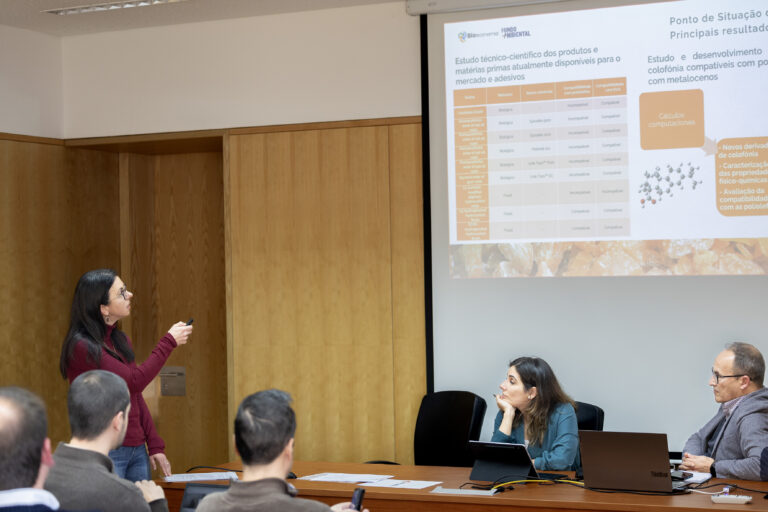
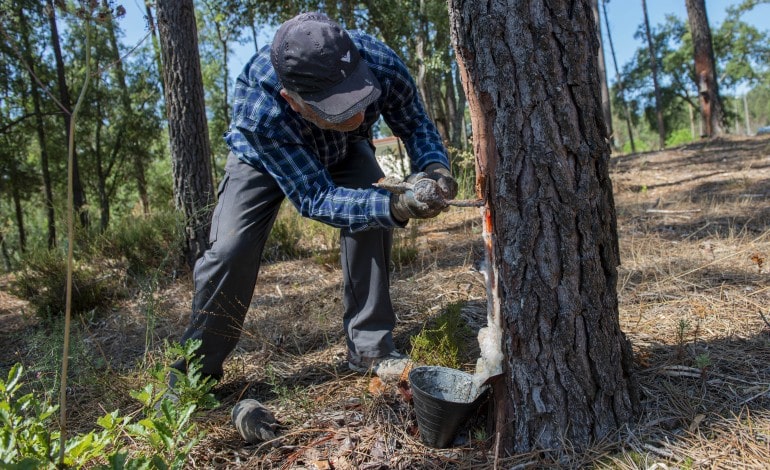
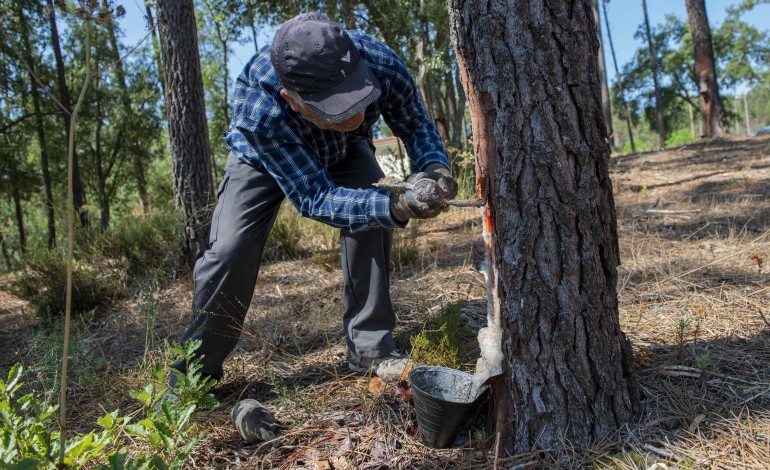
Professionals from the natural resin sector met in Marinha Grande, on March 18, in a workshop of the RN21 Integrated Project, organized by CoLAB ForestWISE, where they expressed their concern about the future MARINHA GRANDE HOSTED MEETING In the 1970s, Portugal became the world’s second largest exporter of resin, but this activity has registered a drastic decline, and there are currently about 500 resin workers in the country, according to Marco Ribeiro, president of the Association of Resin Distillers and Explorers (Resipinus).Among the constraints that the sector faces is the fact that production costs are higher than revenues, along with the “lack of forest management in the national territory, the disorderly growth of the pine forest, the average age of the resin workers, which is 60 years old, and the lack of information on the number of resinhectares in Portugal”.With the RN21 Integrated Project, which brings together, for the first time, the entire value chain of the sector in an integrated and mobilizing research and innovation consortium where the modernization and revitalization of one of the most traditional sectors of the national economy is promoted, the conditions are created to leverage the activity.“This is a key moment to decide what the future is. Whether you want to invest in resin or not”, underlined the president of Resipinus, considering that the way forward involves “genetic improvement, training and professionalization of the resin worker, mechanization of the activity, creation of adapted stimulatingpastes, use of closed containers, remuneration of positive externalities, traceability, certification, valorization of raw material, and implementation of a joint strategy”.Carlos Fonseca, from CoLAB ForestWISE, considered that the RN21 Integrated Project is a “unique opportunity” to make a transformation in the Natural Resin sector in Portugal.It should be noted that natural resin is used in the composition of various products, including paints, varnishes, chewing gum, hot glue, rubber, adhesive tapes, among others. Learn more here

Natural resin sector is experiencing a key moment Read More »

The future of the natural resin sector involves the creation of a cluster

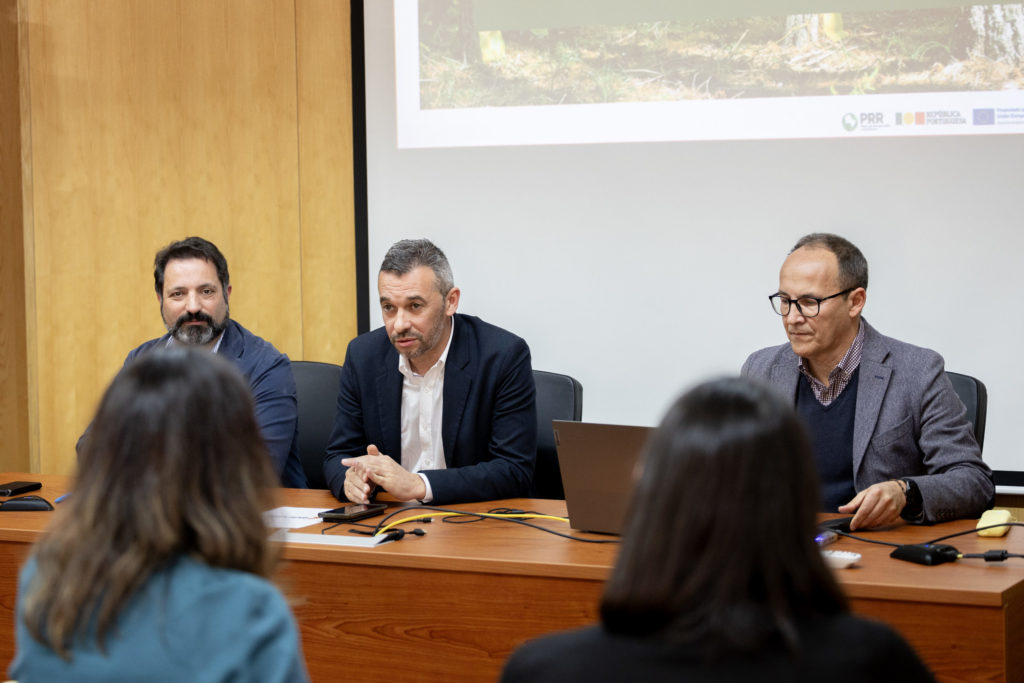
Only the union of the various agents in the country’s natural resin value chain, through a cluster, capable of having a voice with the State, promoting training and competitiveness, will guarantee the continuity of secular activities It is necessary to unite to win. This was the main conclusion reached by many of the agents of the country’s natural resin value chain, who met on Monday at the Resin Building in Marinha Grande, where a workshop was taking place with several partners of the RN21 project.At this event, Carlos Fonseca represented ForestWISE, the collaborative laboratory that leads the RN21 consortium. The project, which has 39 partners, including academia, associations, extraction, first and second processing companies, aims to modernize and make the production of natural resin more sustainable in Portugal, covering the entire value chain, from the forest to the final consumer, counting, for this purpose, with around 17 million incentives from the RRP.Carlos Fonseca challenged the sector so that the RN21 project not only results in new products, but also culminates in the creation of a cluster that better represents the sector. It is necessary that the agents “organize themselves to continue this opportunity”, overcoming the problems that the sector has been experiencing.Marco Ribeiro, president of the Association of Resin Distillers and Explorers (Resipinus), also considered that this is the “key moment” to act. Without a doubt that resin is an activity that contributes to environmental and social sustainability, the president of Resipinus regrets that it is no longer profitable.And he pointed out reasons. Some stages are not productive; lack of forest management in the country; lack of manpower (there will be no more than 500 resin workers in the whole country, most of them on the verge of retirement); absence of a strategy with defined goals and indicators; lack of information about the reality of the sector (hectares exploited, productivity, etc.). In this context, Marco Ribeiro proposes paths: genetic improvement of trees; training and professionalization of the resin worker; remuneration for additional services (such as surveillance and fire protection); creation of stimulants adapted to the characteristics of the plots; closed resin collectioncontainers; traceability; valorization of raw materials and implementation of a joint strategy. He challenged the first and second industrialization industries to evaluate whether or not they are committed to the use of national resin.Firmino Rocha, representing Kemi-Pine Rosins (second processing industry) also said he was “adept at creating a cluster”.Finland, where farms are small but work in an integrated way, should be an example for Portugal, Armando Silvestre, from the University of Aveiro, also pointed out. Development of stimulants, optimization of processes, and investment in different markets, such as pharmaceuticals, cosmetics, and animal feed, can be ways to promote the sector, which can use national raw materials, if they have them, he noted.In the audience, Hilário Costa, former president of Resipinus, argued that the objectives of RN21 will only be achieved if the second processing industries buy Portuguese natural resin. João Mendes expressed an identical position. The manager questioned whether the second transformation, also integrated in the RN21, felt any ethical commitment to the Portuguese resin workers.But both João Serrano, from Pino Pipe, and Firmino Rocha recalled that the prices of Portuguese natural resin are not competitive, especially when applied to increasingly standardized products.Noting “tension” between several links in this value chain, Paulo Batista dos Santos, from CIMRL, preferred to recall the advantages achieved with the constitution of other clusters in this territory, such as molds or plastics. There are only about 500 resin workers left in the whole countryMarinha Grande proposes a phased project of two million euros to rehabilitate Parque do Engenho Approved 25 years ago, without having left the paper, Aurélio Ferreira has already made it known to the Government that he has projects for the implementation of the National Forest Museum, to be built in Parque do Engenho, for which funding will be needed. On the sidelines of Monday’s workshop, the mayor of Marinha Grande explained to our newspaper that, within Parque do Engenho, the Revive Nature Fund has enough space to create a hotel. The municipality presented to the fund two alternative projects for the future unit, which Revive will then put on the market. The remaining buildings available have a rehabilitation cost, and to recover the various properties and the outdoor area, the municipality needs, at an initial stage, two million euros. The best way to move the “elephant” forward is to “present it in slices”, he proposes, since the intervention as a whole will cost around 10 million euros, estimates the mayor. Aurélio Ferreira believes that it will be interesting if the resin sector moves forward with the Resin Academy, an investment of 350 euros, also in this park, which thus combines training and museology. Learn more here

The future of the natural resin sector involves the creation of a cluster Read More »

The future of the natural resin sector involves the creation of a cluster

Only the union of the various agents in the country’s natural resin value chain, through a cluster, capable of having a voice with the State, promoting training and competitiveness, will guarantee the continuity of secular activities There are only about 500 resin workers left in the entire country It is necessary to unite to win. This was the main conclusion reached by many of the agents of the country’s natural resin value chain, who met on Monday at the Resin Building in Marinha Grande, where a workshop was taking place with several partners of the RN21 project. At this event, Carlos Fonseca represented ForestWISE, the collaborative laboratory that leads the RN21 consortium. The project, which has 39 partners, including academia, associations, extraction, first and second processing companies, aims to modernize and make the production of natural resin more sustainable in Portugal, covering the entire value chain, from the forest to the final consumer, counting, for this purpose, with around 17 million incentives from the RRP. Learn more here

The future of the natural resin sector involves the creation of a cluster Read More »

The Natural Resin Sector Faces a Pivotal Moment

If no changes are made in the Natural Resin sector, it runs the risk of becoming residual in the near future. Professionals believe that this is the key moment to decide whether to make a serious bet on the sector or if everything continues as it is. Professionals from the Natural Resin sector met this afternoon in a workshop of the RN21 Integrated Project, organized by CoLAB ForestWISE®, where concern for the future was expressed, and several measures to develop this area were pointed out. In the 70s, Portugal became the world’s second-largest exporter of resin. Since then, this activity has registered a drastic decline, and there are currently about 500 resin workers in the country, according to Marco Ribeiro, president of Resipinus – Association of Resin Distillers and Explorers, one of the partners of this consortium. This sector is struggling with several constraints, namely the fact that production costs are higher than revenue, the lack of forest management in the national territory, the disorderly growth of the pine forest, the average age of resin workers, which is 60 years old, and the lack of information on the number of resin hectares in Portugal. With the RN21 Integrated Project, which brings together for the first time the entire value chain of the country’s Natural Resin sector, in an integrated and mobilizing research and innovation consortium where the modernization and revitalization of one of the most traditional sectors of the national economy is promoted, the conditions are created to leverage this sector. “This is a key moment to decide what the future holds. Whether you want to bet on resin or not”, underlines Marco Ribeiro, president of Resipinus. For the president of Resipinus, the way forward involves genetic improvement, training and professionalization of the resin worker, mechanization of the activity, creation of adapted stimulating pastes, use of closed containers, remuneration of positive externalities, traceability, certification, valorization of raw material, and implementation of a joint strategy. Carlos Fonseca, Chief Technology Officer of CoLAB ForestWISE®, considers that the RN21 Integrated Project is a “unique opportunity” to make a transformation in the Natural Resin sector in Portugal. “It is intended that Natural Resin will once again play a central role in the management of the territories”, he stresses, considering it necessary “for the sector to organize itself so that at the end of this process there is a resin cluster, which represents the sector and can continue this dynamic of the RN21 consortium and enhance everything that this project brings positive to the country”. Natural Resin is used in the composition of various products, including paints, varnishes, chewing gum, hot glue, rubber, adhesive tapes, among others. Learn more here

The Natural Resin Sector Faces a Pivotal Moment Read More »

Guidance and Supervision Council of the RN21 Project met at the Mealhada Innovation Space – Regional Radio Center

The Guidance and Supervision Council of the RN21 Project met at the Mealhada Innovation Space The Guidance and Supervision Council (COF) of the RN21 Integrated Project, the highest body of the consortium structure, met on February 28 at Espaço Inovação Mealhada, to address various issues within the scope of the management of the Integrated Project. CoLAB ForestWISE®, the leader of this aggregating consortium, hosted the meeting in which the first ordinary session of the Advisory Board also took place.Opening the session was the Councilor of the Municipal Executive of Mealhada, Ricardo Santos, the Project Director, Rogério Rodrigues, and the CTO of CoLAB ForestWISE®, Carlos Fonseca, who reinforced the “importance of showing the good that is being done in this consortium that is essential to share with the partners who accompany us”.This was followed by the presentation of more than 20 measures, which are part of the three pillars on which the RN21 Integrated Project is based, namely: the promotion of the production of national natural resin (pillar I); strengthening the sustainability of manufacturing (pillar II); and the positive differentiation of Natural Resin and derived products (pillar III).The “Training and Professionalization of the Resin Worker” was one of the measures presented for Pillar I, which has as its main objective to develop an Academy capable oftraining resin extraction professionals.For Pillar II, one of the measures presented was the “Transition to renewables and efficient use of water and energy”, which aims to prepare a study and Roadmap on best practices in the sustainable use of these resources, with a view to minimizing environmental impacts.At this meeting, the status of the “Creation of a “seal” and the technical dissemination on the entire value chain”, inserted in pillar III, which arose from the need to affirm Natural Resin as a product of renewable origin, which can replace petroleum derivatives and become one of the successful examples of the Bioeconomy in Portugal. The first phase of brand creation began in the last half of 2023, and at the meeting, some of the next steps under this initiative were presented. To promote natural resin to consumers and business decision-makers, communication and marketing actions have been carried out with some already evident results, namely the podcast and the biannual publication of the magazine Resinae®.Also at the meeting, the Interim Technical Monitoring Report of the RN21 | 2023, carried out by the Portuguese Environment Agency,which describes the progress achieved by the Integrated Project in terms of performance indicators – KPIs, and the work carried out in each of the measures defined in the project until the reporting date. From the analysis carried out, it was concluded that the Project is proceeding as planned, taking into account the developments described for the 22 measures contained in the Project.The meeting was attended by the members of the Advisory Board, composed of three external personalities of recognized merit and independent, who will meet annually to comment on the activities developed, propose corrective measures, and promote partnerships. The Advisory Board includes Aida Rodrigues Garcia, currently coordinator of several projects related to non-wood forest products; Álvaro Picardo, Technical Coordinator of the SMURF Horizont Europe project, on “Sustainable Management Models and Value Chains for Forests”; and Rui Miguel Rosmaninho, Director of the Department of Management of Public Forest Areas, of the Institute for Nature Conservation and Forests, IP. Learn more here

Guidance and Supervision Council of the RN21 Project met at the Mealhada Innovation Space – Regional Radio Center Read More »

Guidance and Supervision Council of the RN21 Integrated Project met to present the results of each measure and analyze agenda topics

The Guidance and Supervision Council (COF) of the RN21 Integrated Project, the highest body of the consortium structure, met on February 28 at Espaço Inovação Mealhada, to address several issues within the scope of the management of the Integrated Project. CoLAB ForestWISE®, the leader of this aggregating consortium, hosted the meeting in which the first ordinary session of the Advisory Board also took place. Opening the session was the Councilor of the Municipal Executive of Mealhada, Ricardo Santos, the Project Director, Rogério Rodrigues, and the CTO of CoLAB ForestWISE®, Carlos Fonseca, who reinforced the “importance of showing the good that is being done in this consortium that is essential to share with the partners who accompany us”. This was followed by the presentation of more than 20 measures, which are part of the three pillars on which the RN21 Integrated Project is based, namely: the promotion of the production of national natural resin (pillar I); strengthening the sustainability of manufacturing (pillar II); and the positive differentiation of Natural Resin and derived products (pillar III). The “Training and Professionalization of the Resin Worker” was one of the measures presented for Pillar I, which has as its main objective to develop an Academy capable of training resin extraction professionals. For Pillar II, one of the measures presented was the “Transition to renewables and efficient use of water and energy”, which aims to prepare a study and Roadmap on best practices in the sustainable use of these resources, with a view to minimizing environmental impacts. At this meeting, the status of the “Creation of a “seal” and the technical dissemination on the entire value chain”, inserted in pillar III, which arose from the need to affirm Natural Resin as a product of renewable origin, which can replace petroleum derivatives and become one of the successful examples of the Bioeconomy in Portugal. The first phase of brand creation began in the last half of 2023, and at the meeting, some of the next steps under this initiative were presented. To promote natural resin to consumers and business decision-makers, communication and marketing actions have been carried out with some already evident results, namely the podcast and the biannual publication of the magazine Resinae®. Also at the meeting, the Interim Technical Monitoring Report of the RN21 | 2023, carried out by the Portuguese Environment Agency, describes the progress achieved by the Integrated Project in terms of performance indicators – KPIs, and the work carried out in each of the measures defined in the project up to the reporting date. From the analysis carried out, it was concluded that the Project is proceeding as planned, taking into account the developments described for the 22 measures contained in the Project. The meeting was attended by the members of the Advisory Board, composed of three external personalities of recognized merit and independent, who will meet annually to comment on the activities developed, propose corrective measures, and promote partnerships. The Advisory Board includes Aida Rodrigues Garcia, currently coordinator of several projects related to non-wood forest products; Álvaro Picardo, Technical Coordinator of the SMURF Horizont Europe project, on “Sustainable Management Models and Value Chains for Forests”; and Rui Miguel Rosmaninho, Director of the Department of Management of Public Forest Areas, of the Institute for Nature Conservation and Forests, IP. Learn more here

Guidance and Supervision Council of the RN21 Integrated Project met to present the results of each measure and analyze agenda topics Read More »

Resin value chain is the central theme of the workshop

“The Natural Resin value chain: from the forest to the final consumer” is the theme of a workshop that takes place this Monday, the 18th, at the Resin Building. “The sustainability of the resin sector in Portugal today”, “Pine Resin: from the Forest to the World”, and “Opportunities and challenges of the Natural Resin sector”, will be topics under debate in a session that starts at 2:30 pm. The event takes place within the scope of RN21, a project that aims to bring together the resin sector and is promoted by the Collaborative Laboratory for Integrated Forest and Fire Management. Learn more here

Resin value chain is the central theme of the workshop Read More »

Guidance and Supervision Council of the RN21 Integrated Project met to present the results of each measure and analyze agenda topics

The Guidance and Supervision Council (COF) of the RN21 Integrated Project, the highest body of the consortium structure, met on February 28 at Espaço Inovação Mealhada to address several issues within the scope of the management of the Integrated Project. CoLAB ForestWISE®, the leader of this aggregating consortium, hosted the meeting in which the first ordinary session of the Advisory Board also took place. Opening the session was the Councilor of the Municipal Executive of Mealhada, Ricardo Santos, the Project Director, Rogério Rodrigues, and the CTO of CoLAB ForestWISE®, Carlos Fonseca, who reinforced the “importance of showing the good that is being done in this consortium that is essential to share with the partners who accompany us”. This was followed by the presentation of more than 20 measures, which are part of the three pillars on which the RN21 Integrated Project is based, namely: the promotion of the production of national natural resin (pillar I); strengthening the sustainability of manufacturing (pillar II); and the positive differentiation of Natural Resin and derived products (pillar III). The “Training and Professionalization of the Resin Worker” was one of the measures presented for Pillar I, which has as its main objective to develop an Academy capable of training resin extraction professionals. For Pillar II, one of the measures presented was the “Transition to renewables and efficient use of water and energy”, which aims to prepare a study and Roadmap on best practices in the sustainable use of these resources, with a view to minimizing environmental impacts. At this meeting, the status of the “Creation of a “seal” and the technical dissemination on the entire value chain”, inserted in pillar III, which arose from the need to affirm Natural Resin as a product of renewable origin, which can replace petroleum derivatives and become one of the successful examples of the Bioeconomy in Portugal. The first phase of brand creation began in the last half of 2023, and at the meeting, some of the next steps under this initiative were presented. To promote natural resin to consumers and business decision-makers, communication and marketing actions have been carried out with some already evident results, namely the podcast and the biannual publication of the magazine Resinae®. Also at the meeting, the Interim Technical Monitoring Report of the RN21 | 2023, carried out by the Portuguese Environment Agency, which describes the progress achieved by the Integrated Project in terms of performance indicators – KPIs, and the work carried out in each of the measures defined in the project up to the reporting date. From the analysis carried out, it was concluded that the Project is proceeding as planned, taking into account the developments described for the 22 measures contained in the Project. The meeting was attended by the members of the Advisory Board, composed of three external personalities of recognized merit and independent, who will meet annually to comment on the activities developed, propose corrective measures, and promote partnerships. The Advisory Board includes Aida Rodrigues Garcia, currently coordinator of several projects related to non-wood forest products; Álvaro Picardo, Technical Coordinator of the SMURF Horizont Europe project, on “Sustainable Management Models and Value Chains for Forests”; and Rui Miguel Rosmaninho, Director of the Department of Management of Public Forest Areas, of the Institute for Nature Conservation and Forests, IP. Learn more here

Guidance and Supervision Council of the RN21 Integrated Project met to present the results of each measure and analyze agenda topics Read More »

“We have all the condiments to undertake and investigate” – Interview with Paulo Cadeia

AGRI-FOOD COMPETENCE CENTRE FOR THE MEAT SECTOR CIDADE HOJE (CH) – What importance do you attach to the distinction that VN Famalicão is the target of as a European Entrepreneurial Region? Paulo Cadeia (PC) – It is undoubtedly very important. It is an award in recognition of all the entrepreneurial activity that the region has been developing, and will allow an international projection of entrepreneurship in this region. A projection through the promotion of an agenda of activities and events that will place the region at the level of the most entrepreneurial in Europe.CH – How do Research Centres, such as TEC-MEAT, contribute to the recognition/scientific and technological development of a region?PC – Research centers will not be the only players to contribute to scientific development, but they are, without any doubt, key entities. Endowed with one of the largest European technological centers, CITEVE, with a focus on textiles and clothing, the launch in 2020 of TECMEAT, with a focus on the Meat Industry, is a good demonstration of entrepreneurship in the region. As these are two of the main sectors in the region, both now supported with their technological center, complemented with other entities of the scientific system in the region (such as universities), we have all the conditions to, with the business fabric, continue to undertake research, and develop new products and more innovative processes.CH – Since the presentation of the Center, what steps have been taken towards its full functionality?PC – TECMEAT is the result of a project that began to be executed in 2020, which incorporates the implementation of laboratories anda pilot unit. The first public presentation, in September 2022, with the international conference MEAT MEETINGS’22, made it possible to make this institution known to the business community and the scientific community. The year 2023 was the year of completion of the implementation of its infrastructure and licensing, as well as the hiring of researchers. We are prepared to offer a set of services and activities to companies this year, as well as to develop new lines of research with other entities of the scientific system and companies.CH – How are companies joining?PC – Very positively and, above all, surprised by the potential of our facilities, in particular with the pilot unit. We have, in fact, several companies, both from the meat processing industry and other industries that gravitate around it (e.g., representatives of equipment or condiment suppliers) that in the various visits already made, have been amazed by the installed capacity at TECMEAT. The reception has been so positive that several cooperation protocols are already being outlined for 2024.CH – How are you developing the research work, and what services do you offer to companies?PC – In terms of research, we are in 3 RRP projects, one of them, the Mobilizing Agenda for Agri-Food – VIIAFOOD – where we are responsible for testing and developing 3D meat products. In the other 2 projects, in terms of Bioeconomy, we focus on the industrial symbioses between the meat sector and the textile and clothing sector – the project BE@T, led by CITEVE, and another, in the development and testing of polymeric biofilters for the food sector, led by the Resins Cluster – the RN21 project. In terms of services, TECMEAT is prepared to carry out advanced tests and trials and quality control on the product, to carry out R&D + Innovation aimed at the development of new products and services, and also, for training in a laboratory and business environment.CH – How many researchers work at the centre, and from which universities do they come?PC – We currently have 3 researchers, one PhD and 2 masters in the areas of biotechnology and food. His training comes from the University of Minho and the University of Aveiro. We expect, of course, to grow over the next few years.CH – Do companies show openness to researchers?PC – Companies are increasingly open to working with researchers,particularly researchers from technology centres, universities, or collaborative laboratories. However, having companies open for researchers to incorporate their staff will not be a matter of openness or trust, but of the size of the company. It is very difficult to justify, financially, the incorporation of researchers in micro or small companies, the predominant typology in the meat sector. As for medium and large companies, they already have not only researchers but even departments or units of L&D.CH– What partnerships and collaborations are there with other technological centers?PC – The existing partnerships are indeed a strong point of TECMEAT, starting with its founding partners, as we have technological centers, clusters and associations. For example, in terms of agri-food, TECMEAT has been working closely with the Agri-Food Cluster – Portugalfoods, as well as with Colab4Food in the development ofvarious works. We are studying other partnerships that may be important in terms of technology transfer and/or demonstration actions, such as establishing partnerships with equipment representatives. We cannot fail to highlight all the support and commitment that the Municipality of Vila Nova de Famalicão has shown towards TECMEAT.CH – What challenges does the meat sector face?PC – Many of them are similar to other sectors. Sustainability and circularity, traceability, clean labeling, or even digitalisation. These are areas in which we all try to monitor and implement them. Increasing competitiveness, through technological innovation, reducing production costs, and increasing production efficiency, are also challenges that the sectors seek to respond. In the meat sector, topics such as food fraud and safety, the reduction of sugars and fats, alternative proteins, or even new consumer profiles are particular challenges for the sector.CH – Is the training of employees in companies at the level of the sector’s requirements?PC – The lack of practical training is one of the reasons why TECMEAT was created. The agri-food sector, in particular the meat processing industry, did not have any centre equipped with a pilot unit capable of providing technical and technological means to provide training in a practical context. Currently, the industry is almost always in

“We have all the condiments to undertake and investigate” – Interview with Paulo Cadeia Read More »