Andrew Fernandes

Resinae® – Brand of differentiation and enhancement of the Natural Maritime Pine Resin

Natural Resin has a long tradition in Portugal, having been a resource of great economic and social importance throughout the twentieth century. Thus, Resinae® – Pinaster Natural Resin emerges as a differentiating and innovative system for the valorization of Natural Resin, promoting the quality, traceability, and sustainability of products derived from maritime pine resin (Pinus pinaster). Portugal was once among the world’s leading producers of Natural Resin, with a well-developed first and second processing industry, which supplied both the domestic and international markets. However, globalization and competition from synthetic and imported resins, especially from China and Brazil, have led to a significant reduction in domestic production. Currently, Portugal seeks to revitalize this sector by promoting Natural Resin as a strategic resource for the bioeconomy and industrial sustainability. This revitalization involves not only the modernization of the resin activity but also the development of new extraction technologies and the differentiation of products derived from Portuguese resin, ensuring greater added value and competitiveness in global markets.Thus, Resinae8 – Pinaster Natural Resin emerges as a differentiating and innovative system for the valorization of Natural Resin, promoting the quality, traceability, and sustainability of products derived from maritime pine resin (Pinus pinaster).Developed in the context of the RN21 Integrated Project, this brand aims to strengthen the identity of the Natural Maritime Pine Resin, ensuring its appreciation in the global market and boosting circular economy practices and technological innovation. Based on a commitment to sustainability and innovation, Resinae guarantees that products that adopt this brand comply with strict environmental and social criteria, ensuring transparency and trust throughout the value chain.Resinae® is a registered trademark that authenticates products derived from Pinus pinaster Natural Resin originating in Europe, ensuring that they come from sustainably managed forests and that their transformation follows responsible industrial processes, in line with demanding environmental requirements and high standards of social responsibility. Its implementation is integrated into the principles of the circular bioeconomy and reinforced by international certification (FSC8 and/or PEFC), ensuring that forest production complies with sustainable management practices. In the industrial sector, traceability is ensured by the chain of custody system, controlling all stages of transformation and marketing to ensure that the final products come from certified sources. To ensure compliance with these criteria, the use of the Resinae® brand is regulated by its Brand Use Regulation, which defines the adhesion requirements for the different actors in the value chain, covering forest producers, processing industries, and markets that incorporate Natural Resin derivatives in their products.In addition to the above, the brand introduces a labeling system that identifies the percentage of Natural Pinus pinaster resin incorporated into the final product, divided into four categories: 10%, 40%, 70% and 100%, corresponding to the respective minimum percentage of natural resin present in the product. This categorization allows, in addition to greater transparency for the consumer, to promotion the differentiation of Natural Resin-based products in the market.The focus on traceability aims to strengthen the confidence of consumers and business partners, raising the value of Resinae® products in the global market.This approach drives innovation in the resin sector, promoting the development of more efficient and sustainable resin methods, as well as the recovery of industrial waste for the creation of new products. Innovative applications include bioplastics and eco-friendly packaging as sustainable alternatives to fossil-based polymers, biopolymeric adhesives for the chemical and glue industries, natural bioactives and excipients for the pharmaceutical and cosmetic sectors, and bio-based materials for the automotive and textile industries, reducing the environmental footprint.We believe that the Resinae® brand will encourage the incorporation of Natural Resin in sectors with high added value, promoting its valorization and contributing to reducing dependence on synthetic alternatives of fossil origin. In addition, this boost will strengthen the competitiveness of the Portuguese Natural Resin in the global market.With regard to the Brand’s visual identity, it was strategically defined through a set of graphic elements, such as the logo, colors, and typography. These elements are essential to ensure consistent and effective visual communication, both on the labels of licensed products and in the associated promotional materials. To ensure the coherence of the brand in all media, graphic standards have been defined that regulate the application of the visual identity, establishing clear guidelines for the use of the logo, the specifications of the labels, and the harmonization of visual elements. More than an aesthetic element, Resinae’s® visual identity conveys a message of trust and quality, reinforcing the perception of value and creating an emotional connection between products and consumers.It is expected that, in the long term, the implementation of Resinae® will contribute to the economic valorization of the Natural Maritime Pine Resin, boosting the competitiveness of the resin sector and fostering the growth of national production.This advance will enable the development of new markets and the strengthening of value chains, promoting innovation and differentiation of Natural Resin-based products. In addition to the economic impact, the Resinae® brand also aims to play an essential role in promoting sustainable forest management, promoting the resilience of the activity and territories, encouraging the adoption of new innovative practices in the resin harvesting activity, which increase the efficiency of the sector and ensure its resilience in the face of environmental and economic challenges. This initiative aims to consolidate the Natural Maritime Pine Resin as a strategic resource for Portugal, reinforcing its importance as an engine of sustainability and innovation and ensuring a differentiated positioning in the global market.& Juliana Salvation, Hugo Santos, Joana Rodrigues, Joana Vieira, Marta Martins, Rogério Rodrigues, Carlos FonsecaCoLAB FORESTWISE – Collaborative Laboratory for the Integrated Management of Forest and Fire Learn more here

Resinae® – Brand of differentiation and enhancement of the Natural Maritime Pine Resin Read More »
Science drives maritime pines to be more productive in resin

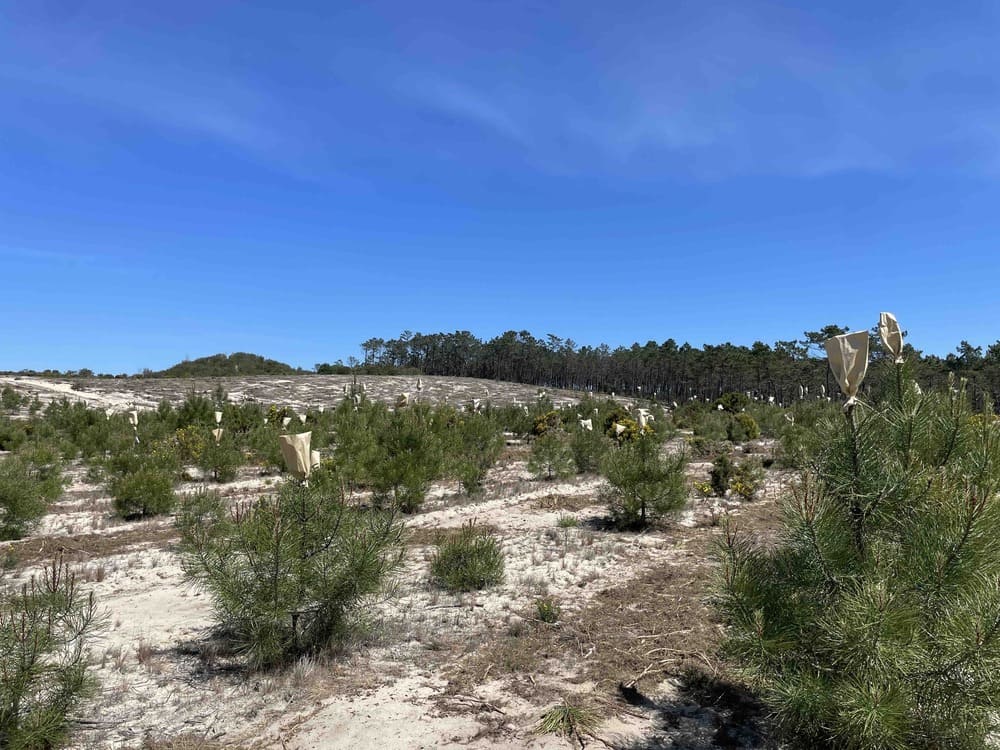
The PINUS Center discloses in a new informative video the new generation of maritime pines that is being born with the genetic improvement program applied to the resin. The RN21 project – Innovation in the Natural Resin Sector to Strengthen the National Bioeconomy – marks a turning point in the history of resin in Portugal. From forest production to transformation, the purpose of this consortium, integrated by the PINUS Centre, is to make this ancestral practice, inseparable from maritime pine, more efficient, innovative, and attractive for the management and enhancement of maritime pine. This PINUS TV followed the first stages of the national genetic improvement program that promises maritime pines to be more productive in resin. The filming follows the grafts started in 2024 for the installation of the clonal assay. This takes place in a 6-hectare maritime pine plantation located in the Alva de Pataias Forest Perimeter, an area provided by the ICNF. The glaciers that reach the field contain the forks (branches) for grafting. These arrive from various regions of maritime pine origin, where more than 400 trees were previously identified and selected by an ESAC team. Researcher Isabel Carrasquinho explains how the multiplication of these trees selected by grafting will make it possible to test the performance of the clones under well-defined conditions and evaluate the genetic gain of resin production. The report also interviews one of APFCAN’s experienced grafting technicians, who demonstrates in the video the “art” of grafting maritime pine, unusual in this forest species and different from that carried out in stone pine. This spring the grafting continued, involved in a complex logistical operation coordinated by the PINUS Center in conjunction with partners, in addition to the continuous dissemination of the activities and evolution of this genetic improvement program. In parallel with the test in Alva de Pataias, the DNA extracted from the needles of the selected trees was analyzed in the laboratory by UTAD researchers. The next updates on this promising topic for the Pine Sector will continue to be disseminated on the communication channels of the PINUS Centre, along with the maritime pine genetic improvement programme for volume and form, also under development, and with the participation of this association.

Science drives maritime pines to be more productive in resin Read More »

Resinae – Brand of differentiation and enhancement of the Natural Maritime Pine Resin

Portugal was once among the world’s leading producers of Natural Resin, with a well-developed first and second processing industry, which supplied both the domestic and international markets. However, globalization and competition from synthetic and imported resins, especially from China and Brazil, have led to a significant reduction in domestic production. Currently, Portugal seeks to revitalize this sector by promoting Natural Resin as a strategic resource for the bioeconomy and industrial sustainability. This revitalization involves not only the modernization of the resin activity but also the development of new extraction technologies and the differentiation of products derived from Portuguese resin, ensuring greater added value and competitiveness in global markets. Thus, Resinae® – Pinaster Natural Resin emerges as a differentiating and innovative system for the valorization of Natural Resin, promoting the quality, traceability, and sustainability of products derived from maritime pine resin (Pinus pinaster). Developed in the context of the RN21 Integrated Project, this brand aims to strengthen the identity of the Natural Maritime Pine Resin, ensuring its appreciation in the global market and boosting circular economy practices and technological innovation. Based on a commitment to sustainability and innovation, Resinae® ensures that the products that adopt this brand comply with strict environmental and social criteria, ensuring transparency and trust throughout the value chain. Resinae® is a registered trademark that authenticates products derived from Pinus pinaster Natural Resin originating in Europe, ensuring that they come from sustainably managed forests and that their transformation follows responsible industrial processes, in line with demanding environmental requirements and high standards of social responsibility. Its implementation is integrated into the principles of the circular bioeconomy and reinforced by international certification (FSC® and/or PEFC), ensuring that forest production complies with sustainable management practices. In the industrial sector, traceability is ensured by the chain of custody system, controlling all stages of transformation and marketing to ensure that the final products come from certified sources. To ensure compliance with these criteria, the use of the Resinae® brand is regulated by its Brand Use Regulation, which defines the adhesion requirements for the different actors in the value chain, covering forest producers, processing industries, and markets that incorporate Natural Resin derivatives in their products. In addition to the above, the brand introduces a labeling system that identifies the percentage of Natural Pinus pinaster resin incorporated into the final product, divided into four categories: 10%, 40%, 70% and 100%, corresponding to the respective minimum percentage of natural resin present in the product. This categorization allows, in addition to greater transparency for the consumer, the promotion of the differentiation of Natural Resin-based products in the market. The focus on traceability aims to strengthen the confidence of consumers and business partners, raising the value of Resinae® products in the global market. This approach drives innovation in the resin sector, promoting the development of more efficient and sustainable resin methods, as well as the recovery of industrial waste for the creation of new products. Innovative applications include bioplastics and eco-friendly packaging as sustainable alternatives to fossil-based polymers, biopolymeric adhesives for the chemical and glue industries, bioactives and natural excipients for the pharmaceutical and cosmetic sectors, and bio-based materials for the automotive and textile industries, reducing the environmental footprint (…). Learn more here

Resinae – Brand of differentiation and enhancement of the Natural Maritime Pine Resin Read More »
Experts analyzed the natural resin value chain

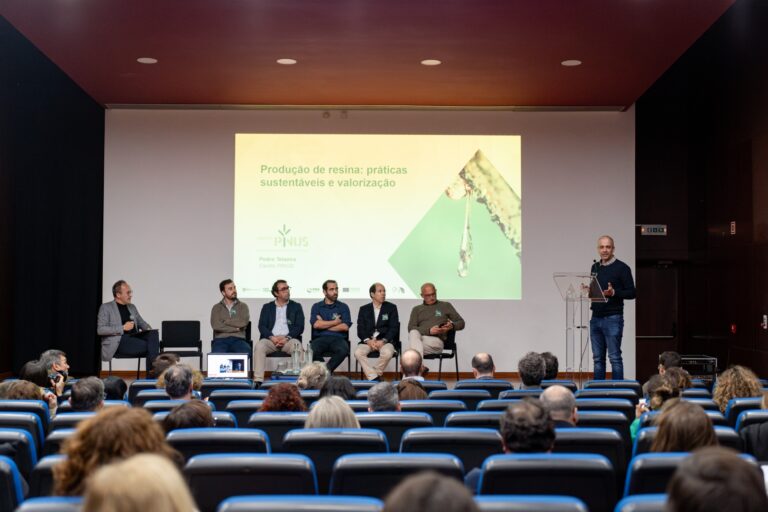
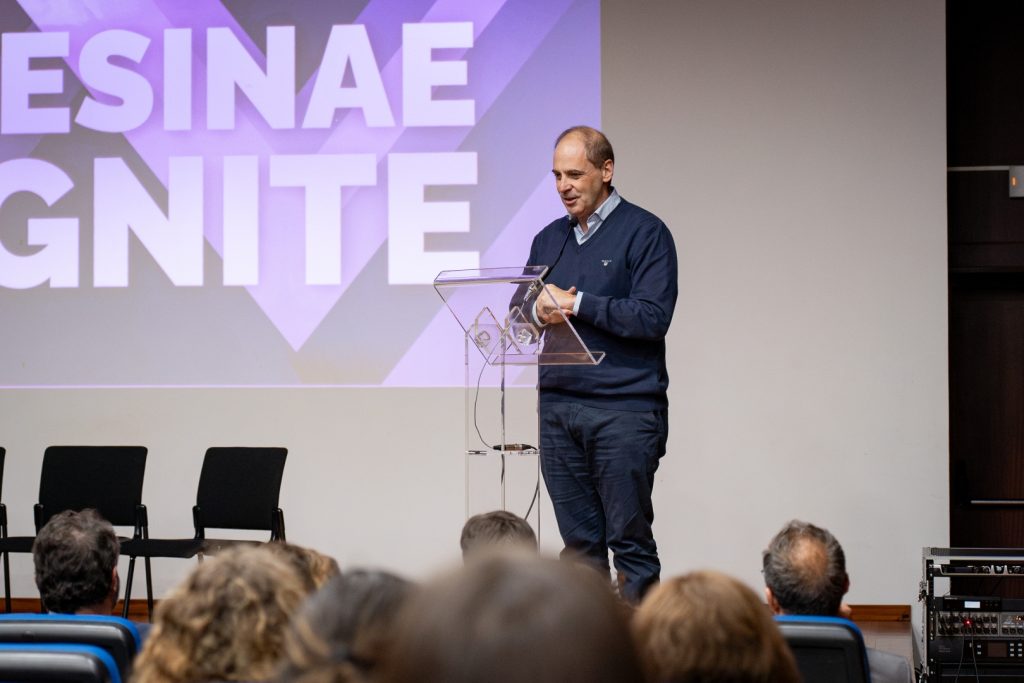
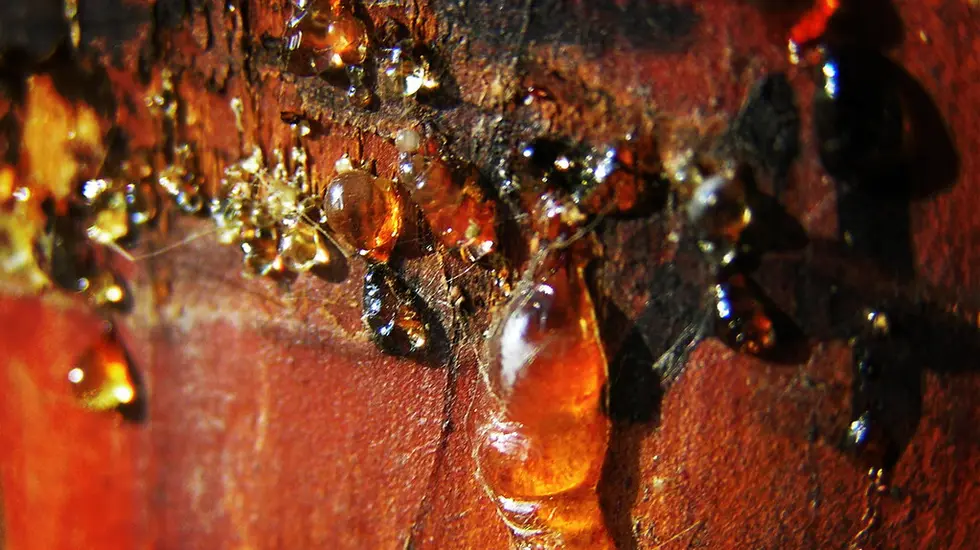
Entrepreneurs, producers, researchers, and institutional representatives were gathered in Pampilhosa da Serra, as part of the Resinae Ignite event, promoted by the RN21 Integrated Project, to explore all links in the value chain of the natural resin sector.In the opening session, the mayor, Jorge Custódio, stressed the relevance of the initiative, highlighting that “it is very important to put the focus back on this activity and work in collaboration with local agents and producers, who continue to play an active role in the development of the region. The success of the resin and the forestry sector is certainly the success of these inland territories”.The event, which was a catalyst for new ideas and initiatives in the sector, was marked by the official launch of the “Resinae” brand, a symbol of quality, traceability, and environmental commitment, which aims to highlight the natural Pinus Pinaster resin in the global market as a product of excellence.The program included interventions and debates on sustainable practices, innovation in production, transformation, and expansion into new markets, promoting a constructive dialogue around viable and sustainable solutions, with the protagonists of the thematic sessions, Pedro Teixeira (Centro Pinus Association), Marco Ribeiro (TheResipinus Distillers and Explorers Association), Ricardo Gomes (Nares company), Pedro Gil (Gum Rosin), João Koehler (Colquímica company), and Jávier Calvo (Cesefor company).The work continued with the debate on “The value chain of natural resin”, “Economic sustainability of resination” and “Challenges and opportunities”, with the participation of Rogério Rodrigues and Joana Vieira, both from CoLAB ForesWISE, and Miguel Freitas, from the University of Algarve. The presentation of the “Resinae” brand was the responsibility of Jani Pires and Juliana Salvation, from CoLAB ForestWISE.It should be recalled that the RN21 Integrated Project – Innovation in the Natural Resin Sector to Strengthenthe National Bioeconomy, led by CoLAB ForestWISE, is a consortium that brings together the entire natural resin value chain in Portugal. The project is committed to the modernization and revitalization of the sector, valuing resin as an ecological product with vast potential for application in the global market.The CoLAB ForestWISE – Collaborative Laboratory for the Integrated Management of Forest and Fire, is an organization that brings together entities linked to research, innovation, and knowledge and technology transfer, which aims to contribute to a more sustainable forest management, valorization of forest products, and reduction of the consequences of large fires. Learn more here

Experts analyzed the natural resin value chain Read More »

Portugal can double the value generated by the resin sector – Resipinus

Portugal may double the current 250 million euros (ME) per year generated by the resin sector in the coming years, said today the president of Resipinus – Association of Resin Distillers and Explorers.“The industry has this capacity to achieve this goal in two or three years, but it needs to have raw materials and to have resinated pine forests,” said Marco Ribeiro, who was speaking to the Lusa agency after the “Resinae Ignite” meeting, which took place this afternoon in Pampilhosa da Serra, as part of the RN21 integrated project.In the initiative, which brought together entrepreneurs, producers, researchers, and institutional representatives, the association leader pointed out that Portugal resin between 20 and 25 thousand hectares of pine forest, when, according to statistics, the country has between “600 and 700 thousand hectares, which gives a large margin”.According to the president of Resipinus, within the scope of the RN21 project, which ends in December, but which can be extended a few more months, new extraction methods are being studied, which are less expensive, since currently the costs of extracting the resin are high.The RN21 project brings together, for the first time, the resin sector in Portugal, in a consortium that aims to invest in research and innovation to modernize and revitalize one of the most traditional sectors of the national economy, in order to value natural resin as a “bio” product.“We are taking the opportunity to develop some modernization, to bring new extraction models, more efficient, with some parts even mechanized, which until now was not possible, so that we can be more efficient in the extraction process,” explained Marco Ribeiro.The objective is to reduce the travel of resin workers to the pine forests and to have an equivalent production, to reduce the necessary labor, increase the quality of the final product, through a container that allows the characteristics of the resin to be maintained, and to train new resin workers with new methods.“The market is demanding, it wants quality products, and we currently, with the traditional method, do not get that product and, therefore, these new methods, which are more attractive, we can bring positive aspects for the future,” he said.For the association leader, if there is no economic valorization of this type of work, it will be difficult to attract “anyone to the sector and, therefore, we have to take this step of modernization”.Also within the scope of the RN21 project, the PINUS Centre – Association for the Enhancement of the Pine Forest, which brings together the main agents in the pine sector, announced today that, together with several partners, it is starting a project to improve the genetic improvement of maritime pine to produce more resin.“It is intended to select the trees that may exist in the country and that are more productive in resin. From a current average of two kilos per pine tree, we have some that produce four kilos, and through a field trial, we intend to test whether this productivity is genetic”, stressed Pedro Teixeira.If the tests confirm that the higher production is associated with a genetic issue, seeds and genetic material will be removed to replicate in new plants “that, from the outset, will be more productive”, which can happen within a decade, being “an advantage for the entire value chain”, explained the technician.At the “Resinae Ignite” meeting, it was officially presented the “Resinae” brand, a symbol of quality, which aims to strengthen the position of the sector and boost natural resin to a level of competitiveness that responds to the demands of a market increasingly focused on sustainability.“The brand turns out to be the culmination of a joint effort to have public recognition and extra appreciation of the natural resin, which is used in a series of products that we use daily”, underlined Rogério Rodrigues, coordinator of the RN21 project, which has an investment of more than 26 million euros and a subsidy of 17.5 million euros, supported by the Recovery and Resilience Plan.The project is led by CoLAB ForestWISE (Collaborative Laboratory for Integrated Forest and Fire Management) and involves 37 entities, which will combine public and private investments, based on three pillars: promotion of the production of national natural resin, strengthening the sustainability of the manufacturing industry, and positive differentiation of natural resin and derived products. Learn more here

Portugal can double the value generated by the resin sector – Resipinus Read More »

Portugal may double the value generated by the resin sector

RN21 Sector project was under discussion at the “Resinae Ignite” meeting, which brought together entrepreneurs, producers, researchers, and institutional representatives yesterday afternoon in Pampilhosa da Serra Portugal, may double the current 250 million euros per year generated by the resin sector in the coming years, said yesterday the president of Resipinus – Association of Resin Distillers and Explorers. “The industry has this capacity to be able to reach this goal in two or three years, but it needs to have raw material and to have resinated pine forests», said Marco Ribeiro, speaking to Lusa after the “Resinae lgnite” meeting, which took place yesterday in Pampilhosa da Serra within the scope of the RN21 integrated project.In the initiative, which brought together entrepreneurs, producers, researchers, and institutional representatives, the association leader pointed out that Portugal resin between 20 and 25 thousand hectares of pine forest, when, according to statistics, the country has between “600 and 700 thousand hectares, which gives a large margin”.According to the president of Resipinus, within the scope of the RN21 project, which ends in December, but which can be extended a few more months, new extraction methods are being studied, which are less expensive, since currently the costs of extracting the resin are high.The RN21 project brings together, for the first time, the resin sector in Portugal, in a consortium that aims to invest in researchand innovation to modernize and revitalize one of the most traditional sectors of the national economy, to value natural resin as a “bio” product. «We are taking the opportunity to develop some modernization, to bring new extraction models, more efficient, with some parts even mechanized, which until now was not possible, so that we can be more efficient in the extraction process», explained Marco Ribeiro.The objective is to reduce the travel of resin workers to the pine forests and have an equivalent production, to reduce the necessary labor, increase the quality of the final product, through a container that allows maintaining the characteristics of the resin, and train new resin workers with new methods. “The market is demanding, it wants quality products, and we currently, with the traditional method, cannot achieve this product and, therefore, these new methods, which are more attractive, can bring positive aspects for the future”, he said.For the association leader, if there is no economic valorization of this type of work, it will be difficult to attract «anyone to the sector and, therefore, we have to take this step of modernization».Also within the scope of the RN21 project, the PINUS Centre – Association for the Enhancement of the Pine Forest, which brings together the main agents in the pine sector, announced yesterday that, together with several partners, it is starting a project for the genetic improvement of the wild pine tree to produce more resin «It is intended to select the trees that may exist in the country and that are more productive in resin From a current average of two kilos per pine we have some that produce four kilos and through a field trial we intend to test whether this productivity is genetic”, stressed Pedro Teixeira.Portugal resin between 20 and 25 thousand hectares of pine forest. The sector currently generates 250 million euros per year If the tests confirm that the higher production is associated with a genetic issue, sSeeds and genetic material will be removed to replicate in new plants «that, from the outset, will be more productive», which can happen within a decade, being «an advantage for the entire value chain», explained the technician.At the opening of the meeting, the Mayor of the Câmara de Pampilhosa da Serra, Jorge Custódio, highlighted the relevance of the initiative, considering it “very important to refocus on this activity and work in collaboration with local agents and producers, who continue to play an active role in the development of the region”. «The success of the resin and the forestry sector is certainly the success of these inland territories», defended the mayor. “Resinae” brand aims to strengthen the sector’s position At the “Resinae Ignite” meeting, the “Resinae” brand was officially presented, a symbol of quality, which aims to strengthen the sector’s position and boost natural resin to a level of competitiveness that responds to the demands of a market increasingly focused on sustainability. «The brand turns out to be the culmination of a joint effortto have public recognition and extra appreciation of the natural resin, which is used in a series of products that we use daily», underlined Rogério Rodrigues, coordinator of the RN21 project, which has an investment of more than 26 million euros and a subsidy of 17.5 million euros, supported by the Recovery and Resilience Plan. The project is led by CoLAB ForestWISE (Collaborative Laboratory for the Integrated Management of Forest and Fire) involves 37 entities, which will combine public and private investments, based on three pillars: promotion of the production of national natural resin, strengthening the sustainability of the manufacturing industry, and positive differentiation of natural resin and derived products. Learn more here

Portugal may double the value generated by the resin sector Read More »

Portugal can double the value generated by the resin sector, says Resipinus

The objective is to reduce the travel of resin workers to the pine forests and have an equivalent production, to reduce the necessary labor, increase the quality of the final product, and train new resin workers. Portugal may double the current 250 million euros per year generated by the resin sector in the coming years, said this Monday the president of Resipinus – Association of Resin Distillers and Explorers. “The industry has this capacity to achieve this goal in two or three years, but it needs to have raw material and to have resinated pine forests,” said Marco Ribeiro, who was speaking to the Lusa agency after the “Resinae Ignite” meeting, which took place this afternoon in Pampilhosa da Serra, in the interior of the district of Coimbra, within the scope of the RN21 integrated project. In the initiative, which brought together entrepreneurs, producers, researchers, and institutional representatives, the association leader pointed out that Portugal resin between 20 and 25 thousand hectares of pine forest, when, according to statistics, the country has between 600 and 700 thousand hectares, which gives a large margin”. According to the president of Resipinus, within the scope of the RN21 project, which ends in December, but which can be extended a few more months, new extraction methods are being studied, less expensive, since currently the costs of extracting the resin are high. The RN21 project brings together, for the first time, the resin sector in Portugal, in a consortium that aims to invest in research and innovation to modernize and revitalize one of the most traditional sectors of the national economy, in order to value natural resin as a “bio” product. “We are taking the opportunity to develop some modernization, to bring new extraction models, more efficient, with some parts even mechanized, which until now was not possible, so that we can be more efficient in the extraction process,” explained Marco Ribeiro. The objective is to reduce the travel of resin workers to the pine forests and have an equivalent production, to reduce the necessary labor, increase the quality of the final product, through a container that allows the characteristics of the resin to be maintained, and to train new resin workers with new methods. “The market is demanding, it wants quality products, and we currently, with the traditional method, cannot achieve this product, and therefore, these new methods, which are more attractive, can bring positive aspects for the future”, he maintained. For the association leader, if there is no economic valorization of this type of work, it will be difficult to attract “anyone to the sector and, therefore, we have to take this step of modernization”. Also within the scope of the RN21 project, the PINUS Center – Association for the Enhancement of the Pine Forest, which brings together the main agents in the pine sector, announced this Monday that, together with several partners, it is starting a project to genetically improve maritime pine to produce more resin. “It is intended to select the trees that may exist in the country and that are more productive in resin. From a current average of two kilos per pine tree, we have some that produce four kilos, and through a field trial, we intend to test whether this productivity is genetic”, stressed Pedro Teixeira. If the tests confirm that the higher production is associated with a genetic issue, seeds and genetic material will be removed to replicate in new plants “that, from the outset, will be more productive”, which can happen within a decade, being “an advantage for the entire value chain”, explained the technician. At the “Resinae Ignite” meeting, the “Resinae” brand was officially presented, a symbol of quality, which aims to strengthen the position of the sector and boost natural resin to a level of competitiveness that responds to the demands of a market increasingly focused on sustainability. “The brand turns out to be the culmination of a joint effort to have public recognition and extra appreciation of the natural resin, which is used in a series of products that we use daily”, underlined Rogério Rodrigues, coordinator of the RN21 project, which has an investment of more than 26 million euros and a subsidy of 17.5 million euros, supported by the Recovery and Resilience Plan. The project is led by CoLAB ForestWISE (Collaborative Laboratory for the Integrated Management of Forest and Fire) and involves 37 entities, which will combine public and private investments, based on three pillars: promotion of the production of national natural resin, strengthening the sustainability of the manufacturing industry, and positive differentiation of natural resin and derived products. Learn more here

Portugal can double the value generated by the resin sector, says Resipinus Read More »

Natural resin value chain analyzed by experts in Pampilhosa da Serra

Entrepreneurs, producers, researchers, and institutional representatives met today in Pampilhosa da Serra, as part of the Resinae Ignite event, promoted by the RN21 Integrated Project, with the aim of exploring all links in the value chain of the natural resin sector. In the opening session, the Mayor of Pampilhosa da Serra, Jorge Custódio, stressed the relevance of the initiative, highlighting that “it is very important to put the focus back on this activity and work in collaboration with local agents and producers, who continue to play an active role in the development of the region”. “The success of the resin and the forestry sector is certainly the success of these inland territories”, he added. The event, which was a catalyst for new ideas and initiatives in the sector, was marked by the official launch of the “Resinae” brand, a symbol of quality, traceability, and environmental commitment, which aims to highlight the natural Pinus Pinaster resin in the global market as a product of excellence. The program included interventions and debates on sustainable practices, innovation in production, transformation, and expansion into new markets, promoting a constructive dialogue around viable and sustainable solutions. Pedro Teixeira (Centro Pinus Association), Marco Ribeiro (Association of Resipinus distillers and explorers), Ricardo Gomes (Nares company), Pedro Gil (Gum Rosin), João Koehler (Colquímica company), Jávier Calvo (Cesefor company), were the protagonists of the thematic sessions. The work continued with the debate on “The value chain of natural resin”, “Economic sustainability of resination”, and “Challenges and opportunities”, with the participation of Rogério Rodrigues and Joana Vieira, both from CoLAB ForesWISE, and Miguel Freitas, from the University of Algarve. The presentation of the “Resinae” brand was the responsibility of Jani Pires and Juliana Salvation, from CoLAB ForestWISE. It should be recalled that the RN21 Integrated Project – Innovation in the Natural Resin Sector to Strengthen the National Bioeconomy -, led by CoLAB ForestWISE, is a consortium that brings together the entire natural resin value chain in Portugal. The project is committed to the modernization and revitalization of the sector, valuing resin as an ecological product with vast potential for application in the global market. The CoLAB ForestWISE – Collaborative Laboratory for the Integrated Management of Forest and Fire, is an organization that brings together entities linked to research, innovation, and knowledge and technology transfer, which aims to contribute to a more sustainable forest management, the valorization of forest products, and the reduction of the consequences of large fires.

Natural resin value chain analyzed by experts in Pampilhosa da Serra Read More »

Altri helps to enhance forests in a sustainable way

Altri joins a pioneering project to implement biomass parks and forest containers for the collection of agricultural and forest leftovers. The Altri Group has partnered with CIM – Coimbra Region to implement a pilot project aimed at installing containers and parks for the collection of agricultural and forestry leftovers. These biomass parks, complemented by forest containers, aim to provide an efficient and environmentally responsible alternative for the treatment and use of forest waste. The initiative aims to improve the management of leftovers from forest exploration and maintenance activities that would often be left on the ground or burned. As a result, it will be possible to reduce the dependence on burning and open burning practices – often done in critical periods – that pose environmental and public health risks. In this way, the leftovers are sent to Greenvolt’s Plants, where they are converted into valuable resources for the production of renewable energy and other sustainable uses. The creation of these infrastructures will also stimulate collaboration with forest owners, resource management companies, and local authorities, promoting innovative solutions to common challenges. “This initiative reflects Altri’s vision of combining economic development with environmental protection, contributing to decarbonisation and mitigating the risks of forest fires,” said Miguel Silveira, Altri’s director for the Forestry area. “With biomass farms, we are creating a value chain that benefits the local community, the industry and the ecosystem.” The signing of the protocol also included a visit to the container installed in the municipality of Mortágua, next to the EN228, in Cruz de Vila Nova, and a brief technical explanation of the project within the scope of the transForm Agenda. The project was created under the transForm Agenda – integrated in the Recovery and Resilience Plan (RRP). The transForm Agenda, led by Altri Florestal and coordinated by CoLAB ForestWISE, is a strategic initiative made up of 56 partners, which aims at the structural transformation of the national forestry sector. With a physical and financial execution rate of 30% so far, the agenda stands out for the collaboration between public and private entities, promoting sustainability and the circular economy. Learn more here

Altri helps to enhance forests in a sustainable way Read More »

Natural resin value chain analyzed by experts in Pampilhosa da Serra – Beira Digital TV

Entrepreneurs, producers, researchers, and institutional representatives met today in Pampilhosa da Serra, as part of the Resinae Ignite event, promoted byThe RN21 Integrated Project, to explore all links in the value chain ofthe natural resin sector. In the opening session, the Mayor of Pampilhosa da Serra, Jorge Custódio, stressed the relevance of the initiative, highlighting that “it is very important to put the focus back on this activity and work in collaboration with local agents and producers, who continue to play an active role in the development of the region”. “The success of the resin and the forestry sector is certainly the success of these inland territories”, he added. The event, which was a catalyst for new ideas and initiatives in the sector, was marked by the official launch of the “Resinae” brand, a symbol of quality, traceability, and environmental commitment, which aims to highlight the natural resin of Pinus Pinaster in the global market as a product of excellence. The program included interventions and debates on sustainable practices, innovation in production, transformation, and expansion into new markets, promoting a constructive dialogue around viable and sustainable solutions. Pedro Teixeira (Centro Pinus Association), Marco Ribeiro (Association of Resipinus distillers andexplorers), Ricardo Gomes (Nares company), Pedro Gil (Gum Rosin), João Koehler (Colquímica company), Jávier Calvo (Cesefor company), were the protagonists of the thematic sessions. The work continued with the debate on “The value chain of natural resin”,“Economic sustainability of resination” and “Challenges and opportunities”, with the participation of Rogério Rodrigues and Joana Vieira, both from CoLAB ForesWISE, and Miguel Freitas, from the University of Algarve. The presentation of the “Resinae” brand was the responsibility of Jani Pires and Juliana Salvation, from CoLAB ForestWISE.It should be recalled that the RN21 Integrated Project – Innovation in the Natural Resin Sector to Strengthen the National Bioeconomy -, led by CoLAB ForestWISE, is a consortium thatbrings together the entire natural resin value chain in Portugal. The project is committed to the modernization and revitalization of the sector, valuing resin as an ecological product with vast potential for application in the global market. The CoLAB ForestWISE – Collaborative Laboratory for the Integrated Management of Forest and Fire, is an organization that brings together entities linked to research, innovation, and knowledge and technology transfer, which aims to contribute to a more sustainable forest management, the valorization of forest products, and the reduction of the consequences of large fires. Learn more here

Natural resin value chain analyzed by experts in Pampilhosa da Serra – Beira Digital TV Read More »