Andrew Fernandes

Carbon Neutrality: Challenges and Opportunities in the Natural Resin sector December 18

The RN21 project holds a webinar that addresses the role of natural resin in the transition to carbon neutrality, the challenges of the industry in adopting more sustainable practices, and the opportunities that arise from innovation and sustainability in the sector. The event has two speakers – Zenaida Mourão, from INESCTEC, and Firmino Rocha, from KEMI – and takes place online, from 14:30 to 16:00, with prior registration required. Learn more here

Carbon Neutrality: Challenges and Opportunities in the Natural Resin sector December 18 Read More »

Interior Days: Role of agriculture, forestry and energy in development

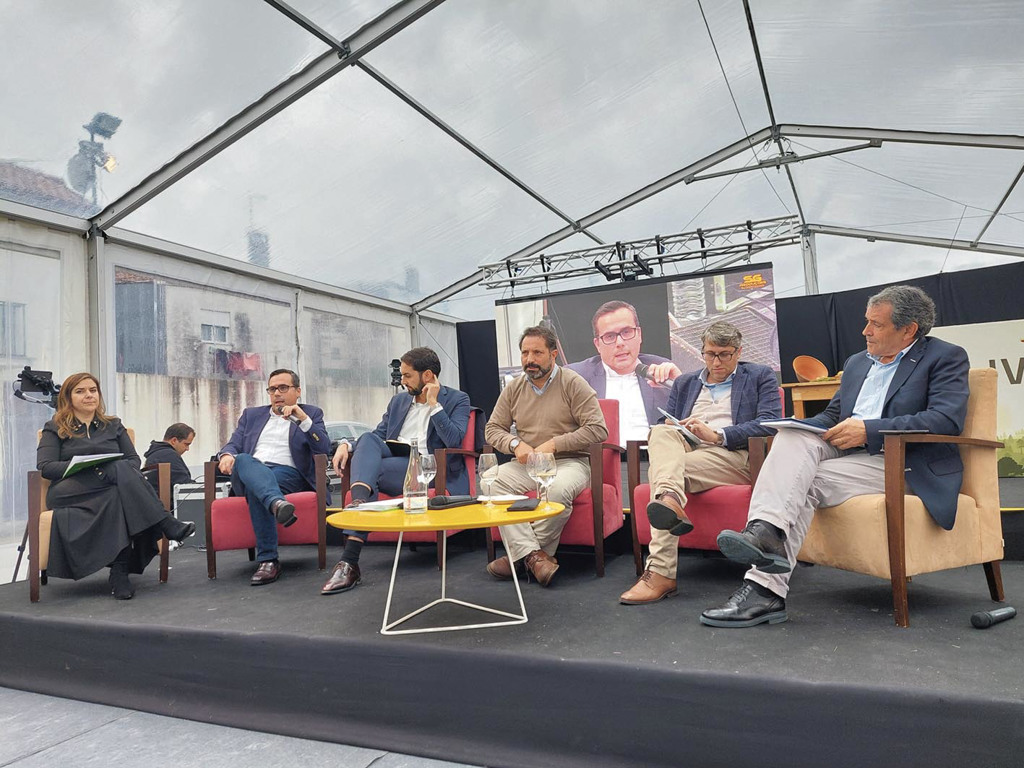
“One of the greatest legacies that JF sustains is that of concern for the region and its future, never resigning itself to accepting, as certain, the weak collective condition as a supposed curse, imposed by interiority”, said Nuno Francisco, director of JF, at the opening of the Beira Interior Days that took place, on the 15th, in Alcaide, integrated in the “Míscaros – Mushroom Festival”, under the theme “Agriculture, Forest and Energy”. Here, there is fertile land to plant the future. There always has been and will continue to be. But for this to happen, we need that driving force that goes through a development strategy for these territories, providing them with conditions so that we can fulfill our obligations”, he added, assuring that the JF “will never give up its DNA, which has made it a reference publication in the Portuguese press”. The Mayor of Fundão, Paulo Fernandes, underlined the interest of the days as “an event for the construction of knowledge and sharing of information” and noted that the Chamber of Fundão is preparing to create a demarcated area of wild mushrooms in Gardunha to preserve and enhance this complement to the income of families, helping, at the same time, to protect the mountain range from fires. Fernando Martins, director of the Agriculture and Fisheries Unit of the Commission for Coordination and Regional Development of the Center (CCDRC), congratulated the JF for honoring the legacy of commitment to the region, promoting these days, then making it known that the CCDRC has at its disposal a set of instruments that will be made available for agricultural production to find the essential financing routes for its modernization. The first panel of the conference was dedicated to “Forest, Profitability and Planning”, and was moderated by Celestino Almeida, coordinating professor of the IPCB Agrarian School. From Pinus Verde, Marisa Monsanto presented the body she chairs, giving an account of the 26 years of life of this non-profit association, which promotes forestry and rural development. “It is a tool at the service of a community and a territory, it promotes the multiple uses of the forest and takes advantage of traditional knowledge, also promoting economic activities”, summarized the leader. Pedro Marques, responsible for the management of easement areas at REN – Rede Elétrica Nacional, spoke of the vast network of infrastructures and the electricity network, corresponding to a motorway, with the profile of the A1, between Lisbon and Dubai. Flávio Massano, mayor of Manteigas, encouraged the inhabitants of the region to be proud of the territory. “We do not resign ourselves and we do not give up”, he emphasized, criticizing that the management of the territory is done 200 or 300 kilometers away and the reigning bureaucracy, translated into programs, programs, acronyms, and separate things that are not understood. “Either we fight for ourselves, or no one cares,” he warned, encouraging joint work. In the same tone was the intervention of Luís Matias, promoter of the Pinhal Interior Revitalization Plan, who brought to mind the “civic shock” caused by the tragedy of the 2017 fires and criticized the Portuguese inability to plan for the future. “We are very good at creating strategic plans, but very bad at planning,” he stressed. “We must demonstrate that we know where we want to go, what we want to do, and how we are going to get there”, he noted, recalling that in Lisbon no one contributes a single euro for the preservation and conservation of environmental conditions or water quality, unlike what the Interior does. Also critical was Carlos Fonseca, a researcher in the area of ecology and conservation and CEO of Colab Forestwise. “The easiest thing is to be disbelievers and not believe in anything else because we can’t change. I am an optimist and I consider that the fact that we are here, at an event on valuing the forest, is proof that we must believe that it is possible”, he concluded. Learn more here

Interior Days: Role of agriculture, forestry and energy in development Read More »

RN21 project workshop shows how natural resin revolutionizes and adds value to various industries

The second workshop of the RN21 Integrated Project will take place on October 21, at the Social and Parish Center of S. Pedro, in Cantanhede, starting at 2:30 pm. The most recent applications and developments of natural resin, as well as innovation, sustainability, and the new opportunities that this raw material is bringing to various industries, will be the main points addressed. Participation is free. This event, part of a set of innovative workshops, will have the theme “We create the future with Natural Resin”, and will explore how this raw material is revolutionizing various industries, from food preservation to fashion, including the automotive and footwear industry, says a press release from ForestWise – Collaborative Laboratory for Integrated Forest and Fire Management (CoLAB), which leads RN21. In addition to the presentation of success stories, there will be interactive thematic stations, which will explore how rosin and its derivatives can revolutionize sustainability in the packaging industry, how rosin biopolymers and additives are revolutionizing the production of automotive components, making them lighter and more sustainable, and also how rosin-based adhesive systems and sole materials are revolutionizing the footwear industry. “The workshop offers a unique opportunity to learn more about innovation, sustainability, and the new opportunities that this raw material can bring”, adds the same note, adding that “this cycle of workshops aims to foster an open debate on the various perspectives of the natural resin value chain, from production to the final application of derived products”. Participation in this workshop is free, but registration is mandatory, here. RN21 Led by CoLAB ForestWISE, RN21 brings together for the first time, the entire value chain of the natural resin sector in Portugal, in an integrated and mobilizing research and innovation Consortium where the modernization and revitalization of one of the most traditional sectors of the national economy is promoted, valuing natural resin as a “bio” product and enhancing the great possibilities of its application in the market. With an investment of more than 26 million euros and a grant of 17 and a half million euros, the project integrates 37 entities, combining public and private investments, creating favorable conditions for collaboration between companies and R&D&I partners, and leveraging the ecological and digital transition. Find out more about RN21 here. Program 2:30 p.m. – Reception and welcome 2:45 p.m. – Opening session 3:00 p.m. – Transformation Processes: from Resin to Final Product António Mendes Ferreira (United Resins) 3:15 p.m. – Introduction of the stations 3:30 p.m. – Theme Stations Natural Preservation (Food Industry – TECMEAT)Innovation on wheels (Automotive Industry – SIMOLDES)Weaving the future (Textile Industry – TINTEX)Sustainable steps (Footwear Industry – CTCP) 4:30 pm – Coffee Break 4:45 pm – Sustainable Innovation with Functional Materials – Anabela Carvalho (CeNTI) 5:15 p.m. – Closing session Agriculture and the Sea Learn more here

RN21 project workshop shows how natural resin revolutionizes and adds value to various industries Read More »

“The sector has great growth potential, as long as it can overcome its challenges in terms of innovation, sustainability and competitiveness” – Interview with Paulo Cadeia

PAULO CADEIA, EXECUTIVE DIRECTOR OF TECMEAT Portugal’s national meat-producing and processing sector can be classified as a strategic and evolving sector, with characteristics that combine tradition, recognized quality, and challenges in terms of innovation, competitiveness, and sustainability. This is how Paulo Cadeia, executive director of TECMEAT, in an interview with iAlimentar magazine, characterizes the sector, who adds that Portugal is known for the production of high-quality meat, especially in the case of pork (including the iconic black pork) or beef through its native breeds. In addition, the executive warns of the need to increase training and continuous qualification in new technological practices, as well as to increase innovation and cooperation activities between companies and scientific entities. What led to the creation of TECMEAT?The creation of the Agri-Food Competence Center with a focus on the Meat Industry (TECMEAT) is essentially due to two points. The first, resulting from the high concentration of the meat processing industry that exists in the region where TECMEAT is implemented; the second, the vision of the Municipality of Vila Nova de Famalicão to verify that there was no competence center at a regional, and even national, level capable of developing innovation activities and technical and practical training activities specifically oriented to the meat processing industry sector. Thus was born TECMEAT, a private and non-profit association, whose mission is to enhance the increase in competitiveness and innovation of producing and processing companies in the meat sector through its scientific and technological development. In which areas does it operate? What services do you provide?Although more broadly, TECMEAT can operate in the entire agri-food sector, its main focus is on the meat sector and its processing. Through its Pilot Unit and its Microbiology Laboratory, TECMEAT can provide a set of services to the industry that includes technical and technological training in a pilot environment, support and consultancy in the development and characterization of new products and new processing techniques, or even in the provision of a wide range of analyses, tests, and quality control trials. In addition to these components, TECMEAT has also acted as a hub for the transfer and demonstration of knowledge to the industry in partnership with new product and process developments obtained from equipment goods companies and suppliers of ingredients and the most diverse consumables. In which research projects does TECMEAT participate? Are there prospects for new products to enter the market? When?Currently, TECMEAT participates in three projects of the RRP (Recovery and Resilience Program). He is actively involved in the VIIAFOOD agenda. led by Sonae, where, together with other entities in the scientific system and a company in the meat sector, we have carried out proofs of concept in the development of innovative products in three different lines. In addition to this, we are also involved in two Bioeconomy projects: the RN21 project where we seek to test the behavior of biofilms and the application of rosin resulting from resins from our forestry industry to replace commercial films of fossil origin; and the BE@T Project in which we seek to find industrial symbioses between the by-products of the textile and clothing sector and the by-products of the meat sector. In all three projects, we already have prototypes of new products with promising results and potentially interesting to enter the market. In addition to these projects in progress, we still have some applications under evaluation with the Association of Limousine Breeders and the Municipality of Fundão in order to provide a set of services in terms of training yield for cutting beef carcasses. How do you classify the national meat-producing and processing sector?Portugal’s national meat-producing and processing sector can be classified as a strategic and evolving sector, with characteristics that combine tradition, recognized quality, and challenges in terms of innovation, competitiveness, and sustainability. In these short four years of TECMEAT’s existence and contacts and partnerships already established, I note that there has been an effort to evolve in terms of the adoption of new practices of innovation activities, both in the productive sector and in the manufacturing sector. We all know that, in general, the meat industry is still known to be closed and reluctant to cooperate in the development of new products and processes. However, I have witnessed during these years the effort that these companies are beginning to make to change this paradigm because they are beginning to realize that their evolution, as well as the possibility of increasing their export quotas, will only be achieved through cooperation, innovation, and, above all, the differentiation of products with higher added value. The sector is indeed dominated by small and medium-sized enterprises (SMEs), both in production and processing, which results in fragmentation that can hinder international competitiveness, facing difficulties in competing with large producers in other countries due to the lack of economies of scale and relatively high production costs and more recently the shortage of skilled labour, But it is also true that the sector has great growth potential, as long as it manages to overcome its challenges in terms of innovation, sustainability and competitiveness. What do you consider to be the strengths (and those to be improved) of the Portuguese meat-producing and processing sector? To what extent can TECMEAT help change the scenario?Undoubtedly, one of the strong points of the sector is the quality of the meat we produce. Portugal is known for the production of high-quality meats, especially in the case of pork (including the iconic black pork) or beef through its native breeds such as Limousine, Barrosã, Arouquesa,… just to mention a few. Many companies have also invested in modern technology in the slaughtering and processing processes, which increases the efficiency andtraceability of products. There has also been a growing focus on the automation (and even robotization) of processes and the innovation of some products. In terms of points to improve, we undoubtedly need to increase training and continuous qualification in new technological practices as well as to increase innovation and cooperation activities between companies and scientific entities. In all

“The sector has great growth potential, as long as it can overcome its challenges in terms of innovation, sustainability and competitiveness” – Interview with Paulo Cadeia Read More »

Tintex participates in a workshop on the potential of natural resin

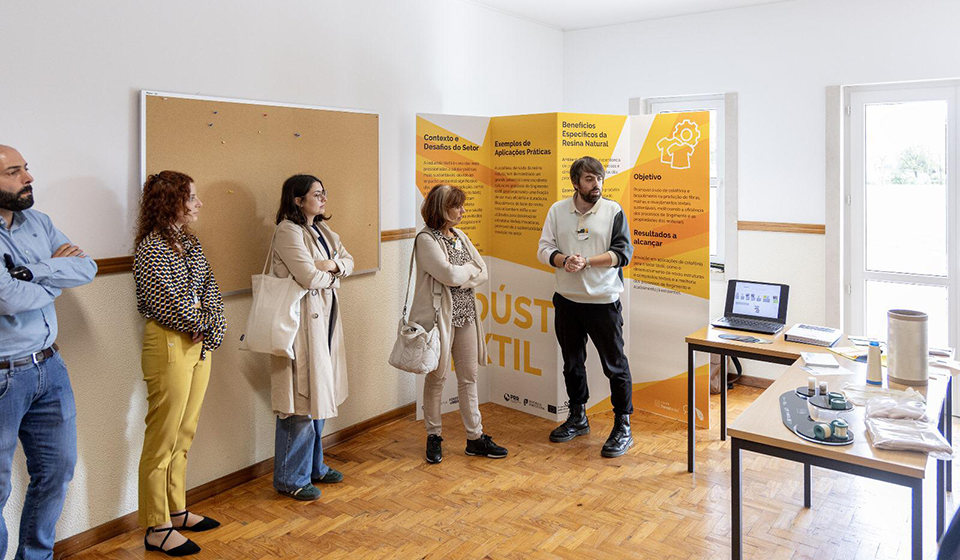
Pedro Magalhães, head of innovation, and Carlos Silva, innovation manager, from Tintex Textiles, headed to Cantanhede to participate in a workshop on Natural Resin applications within the scope of the RN21 project – Innovation in the Natural Resin Sector to Strengthen the National Bioeconomy. “The participants were divided into four groups, which alternately visited four rooms, each corresponding to a different industry, where a presentation was made of the sector, the company, what was being done, and then questions were opened”, says Pedro Magalhães, head of innovation, who guided the textile and clothing room. “The resin can help solve challenges such as sustainability. It helps us to replace synthetic materials with natural ones. In this case, we are working with rosin derivatives (a derivative of the resin resulting from its distillation)” he specifies. These are then used in the creation of new yarns, applied in dyeing and finishing, and in the application of coating and lamination. “The most interesting thing I would say was the pilot we did to improve light fastness in natural dyeing. The results are promising, we want to industrialize”, he said. Learn more here

Tintex participates in a workshop on the potential of natural resin Read More »

Cantanhede hosted the workshop “We Create the Future with Natural Resin”

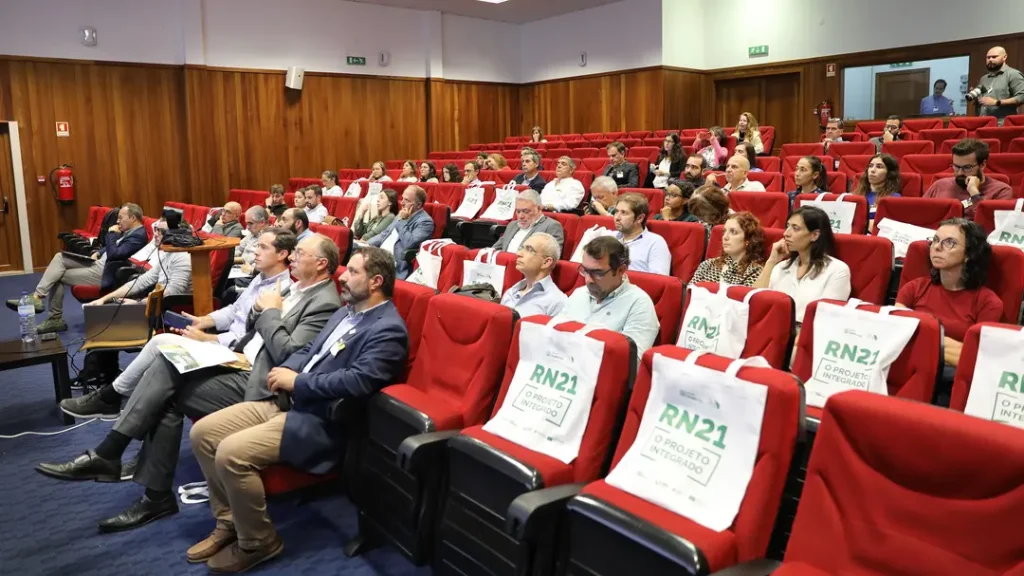
The Social and Parish Center of S. Pedro hosted the workshop “We Create the Future with Natural Resin” on Monday, October 21st. The event showcased the latest innovations and applications of natural resin in the automotive, textile, footwear, and food sectors, highlighting its role in the development of sustainable solutions aligned with the bioeconomy and the commitment to generate a positive impact on communities and local and international value chains. The councilor responsible for Natural Resources, Agricultural and Forestry Development, Adérito Machado, highlighted the choice of the location to hold the workshop as an opportunity to put Cantanhede at the center of sustainable innovations. “It is with great satisfaction that we receive this event, which reinforces our commitment to the bioeconomy and sustainable development. Natural resin is a resource with enormous potential, and this workshop demonstrates how we can boost the regional economy while contributing to the transition to greener, lower-impact solutions for environmental and forest balance. Initiatives like this are key to ensuring that our community is aligned with global demands,” he stressed. Organized by CoLAB ForestWISE, a center specialized in research and knowledge transfer in the areas of forest and fire management, the workshop was part of the RN21 Project. The initiative covers the entire natural resin value chain, from forest production to industrial transformation and the final consumer. The central objective of RN21 is to revitalize the Natural Resin sector in Portugal, developing sustainable technological solutions that boost the bioeconomy and reduce dependence on raw materials of fossil origin, through the development of new products and technological processes with application in various industries. The RN21 consortium is made up of 37 partners, including companies in the resin sector, research and development institutions, universities, and territorial entities, which collaborate in order to explore and maximize the potential of natural resin, meeting the growing environmental and economic demands. Learn more here

Cantanhede hosted the workshop “We Create the Future with Natural Resin” Read More »

Cantanhede hosted the workshop “We Create the Future with Natural Resin”

The Social and Parish Center of S. Pedro hosted the workshop “We Create the Future with Natural Resin” on Monday, October 21st. The event showcased the latest innovations and applications of natural resin in the automotive, textile, footwear, and food sectors, highlighting its role in the development of sustainable solutions aligned with the bioeconomy and the commitment to generate a positive impact on communities and local and international value chains. The councilor responsible for Natural Resources, Agricultural and Forestry Development, Adérito Machado, highlighted the choice of the location to hold the workshop as an opportunity to put Cantanhede at the center of sustainable innovations. “It is with great satisfaction that we receive this event, which reinforces our commitment to the bioeconomy and sustainable development. Natural resin is a resource with enormous potential, and this workshop demonstrates how we can boost the regional economy while contributing to the transition to greener, lower-impact solutions for environmental and forest balance. Initiatives like this are key to ensuring that our community is aligned with global demands,” he stressed. Organized by CoLAB ForestWISE, a center specialized in research and knowledge transfer in the areas of forest and fire management, the workshop was part of the RN21 Project. The initiative covers the entire natural resin value chain, from forest production to industrial transformation and the final consumer. The central objective of RN21 is to revitalize the Natural Resin sector in Portugal, developing sustainable technological solutions that boost the bioeconomy and reduce dependence on raw materials of fossil origin, through the development of new products and technological processes with application in various industries. The RN21 consortium is made up of 37 partners, including companies in the resin sector, research and development institutions, universities, and territorial entities, which collaborate in order to explore and maximize the potential of natural resin, meeting the growing environmental and economic demands. Learn more here

Cantanhede hosted the workshop “We Create the Future with Natural Resin” Read More »

Workshop highlights innovations for sustainability

Diario-de-Coimbra-24-october-1 (1)Download Source: Diário de Coimbra | October 24 Cantanhede hosted the workshop “We Create the Future with Natural Resin” The Social and Parish Center of S. Pedro hosted the workshop “We Create the Future with Natural Resin” on Monday, October 21, according to the statement sent to Central Press. The event showcased the latest innovations and applications of natural resin in the automotive, textile, footwear, and food sectors, highlighting its role in the development of sustainable solutions aligned with the bioeconomy and the commitment to generate a positive impact on communities and local and international value chains. The councilor responsible for Natural Resources, Agricultural and Forestry Development, Adérito Machado, highlighted the choice of the location to hold the workshop as an opportunity to put Cantanhede at the center of sustainable innovations. “It is with great satisfaction that we receive this event, which reinforces our commitment to the bioeconomy and sustainable development. Natural resin is a resource with enormous potential, and this workshop demonstrates how we can boost the regional economy while contributing to the transition to greener, lower-impact solutions for environmental and forest balance. Initiatives like this are key to ensuring that our community is aligned with global demands,” he stressed. Organized by CoLAB ForestWISE, a center specialized in research and knowledge transfer in the areas of forest and fire management, the workshop was part of the RN21 Project. The initiative covers the entire natural resin value chain, from forest production to industrial transformation and the final consumer. The central objective of RN21 is to revitalize the Natural Resin sector in Portugal, developing sustainable technological solutions that boost the bioeconomy and reduce dependence on raw materials of fossil origin, through the development of new products and technological processes with application in various industries. The RN21 consortium is made up of 37 partners, including companies in the resin sector, research and development institutions, universities, and territorial entities, which collaborate in order to explore and maximize the potential of natural resin, meeting the growing environmental and economic demands. Learn more here

Workshop highlights innovations for sustainability Read More »

Workshop highlights innovations for sustainability

Social and Parish Center of S. Pedro hosted the workshop “We Create the Future with Natural Resin”, event which presented the latest innovations and applications of natural resin in the automotive, textile, footwear and food sectors, highlighting its role in the development of sustainable solutions aligned with the bioeconomy and the commitment to generate a positive impact on communities and local and international value chains.Organized by CoLAB ForestWISE, a center specialized in research and knowledge transfer in the areas of forest management and fires, the workshop was part of the RN21 Project. The initiative covers the entire natural resin value chain, from forest production to industrial transformation and the final consumer.The central objective of RN21 is to revitalize the Natural Resin sector in Portugal, developing sustainable technological solutions that boost the bioeconomy and reduce dependence on fossil-based raw materials. Learn more here

Workshop highlights innovations for sustainability Read More »

Workshop highlighted innovations for industrial sustainability. Cantanhede hosted the workshop “We Create the Future with Natural Resin”

The Social and Parish Center of S. Pedro hosted the workshop “We Create the Future with Natural Resin”, on Monday, October 21st. The event showcased the latest innovations and applications of natural resin in the automotive, textile, footwear, and food sectors, highlighting its role in the development of sustainable solutions aligned with the bioeconomy and the commitment to generate a positive impact on communities and local and international value chains. It is with great satisfaction that we receive this event, which reinforces our commitment to the bioeconomy and sustainable development. Natural resin is a resource with enormous potential, and this workshop demonstrates how we can boost the regional economy while contributing to the transition to greener, lower-impact solutions for environmental and forest balance. Initiatives like this are key to ensuring that our community is aligned with global demands,” he stressed. Organized by CoLAB ForestWISE, a center specialized in research and knowledge transfer in the areas of forest and fire management, the workshop was part of the RN21 Project.

Workshop highlighted innovations for industrial sustainability. Cantanhede hosted the workshop “We Create the Future with Natural Resin” Read More »