Andrew Fernandes

Guidance and Supervision Council of the RN21 Integrated Project met to present the results of each measure and analyze agenda topics

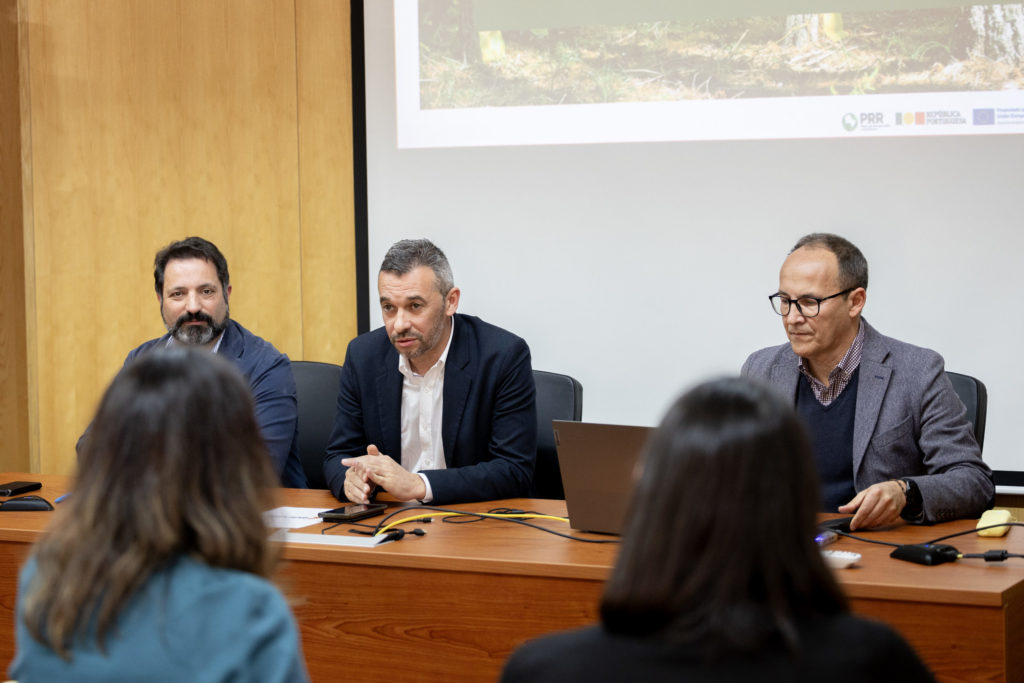
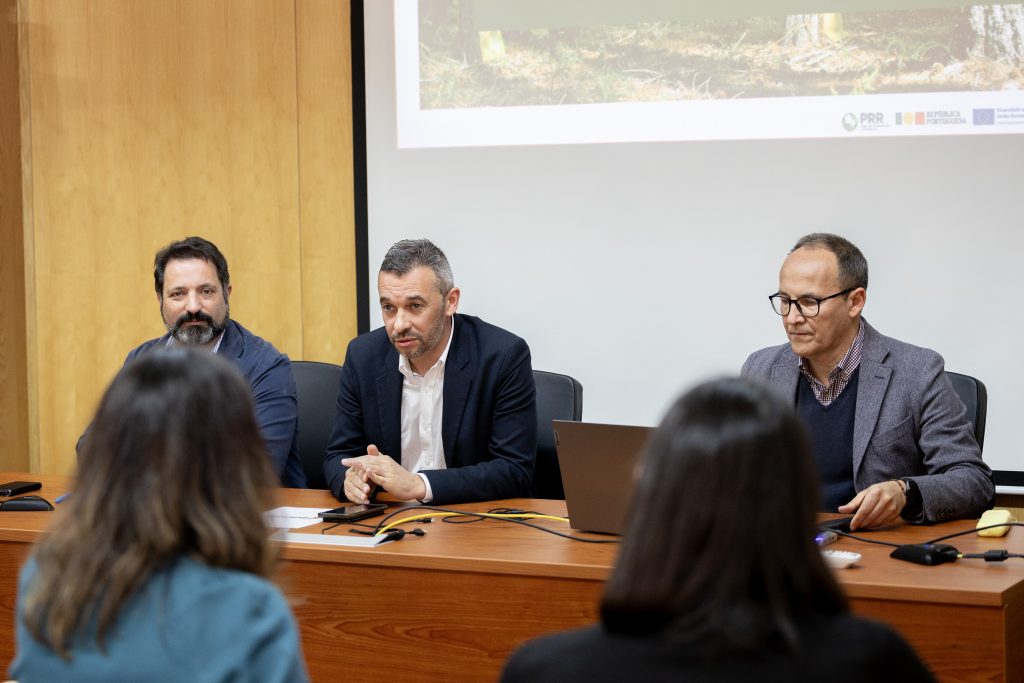
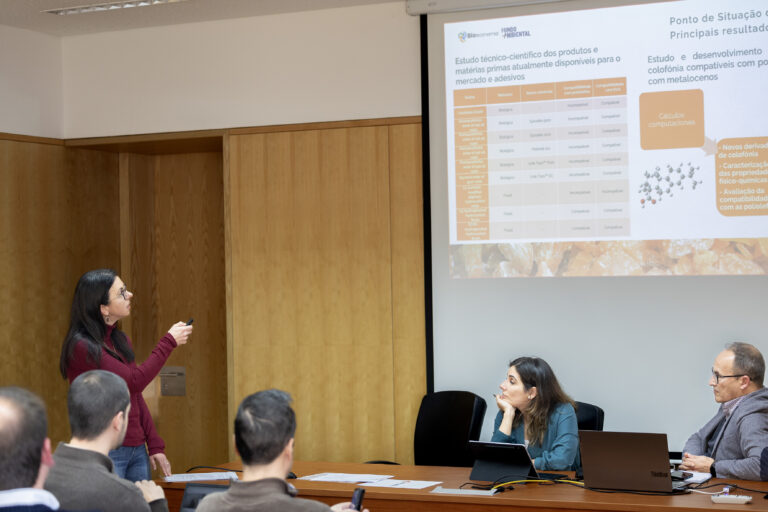
The Guidance and Supervision Council (COF) of the RN21 Integrated Project, the highest body of the consortium structure, met on February 28, at Espaço Inovação Mealhada, to address several issues within the scope of the management of the Integrated Project. CoLAB ForestWISE®, the leader of this aggregating consortium, hosted the meeting in which the first ordinary session of the Advisory Board also took place. Opening the session was the Councilor of the Municipal Executive of Mealhada, Ricardo Santos, the Project Director, Rogério Rodrigues, and the CTO of CoLAB ForestWISE®, Carlos Fonseca, who reinforced the “importance of showing the good that is being done in this consortium that is essential to share with the partners who accompany us”. This was followed by the presentation of more than 20 measures, which are part of the three pillars on which the RN21 Integrated Project is based, namely: the promotion of the production of national natural resin (pillar I); strengthening the sustainability of manufacturing (pillar II); and the positive differentiation of Natural Resin and derived products (pillar III). The “Training and Professionalization of the Resin Worker” was one of the measures presented for Pillar I, which has as its main objective to develop an Academy capable of training resin extraction professionals. For Pillar II, one of the measures presented was the “Transition to renewables and efficient use of water and energy”, which aims to prepare a study and Roadmap on best practices in the sustainable use of these resources, with a view to minimizing environmental impacts. At this meeting, the status of the “Creation of a “seal” and the technical dissemination on the entire value chain”, inserted in pillar III, which arose from the need to affirm Natural Resin as a product of renewable origin, which can replace petroleum derivatives and become one of the successful examples of the Bioeconomy in Portugal. The first phase of brand creation began in the last half of 2023 and at the meeting some of the next steps under this initiative were presented. To promote natural resin to consumers and business decision-makers, communication and marketing actions have been carried out with some already evident results, namely the podcast and the biannual publication of the magazine Resinae®. Also at the meeting, the Interim Technical Monitoring Report of the RN21 | 2023, carried out by the Portuguese Environment Agency, which describes the progress achieved by the Integrated Project in terms of performance indicators – KPIs, and the work carried out in each of the measures defined in the project up to the reporting date. From the analysis carried out, it was concluded that the Project is proceeding as planned, taking into account the developments described for the 22 measures contained in the Project. The meeting was attended by the members of the Advisory Board, composed of three external personalities of recognized merit and independent, which will meet annually to comment on the activities developed, propose corrective measures and promote partnerships. The Advisory Board includes Aida Rodrigues Garcia, currently coordinator of several projects related to non-wood forest products; Álvaro Picardo, Technical Coordinator of the SMURF Horizont Europe project, on “Sustainable Management Models and Value Chains for Forests”; and Rui Miguel Rosmaninho, Director of the Department of Management of Public Forest Areas, of the Institute for Nature Conservation and Forests, IP.

Guidance and Supervision Council of the RN21 Integrated Project met to present the results of each measure and analyze agenda topics Read More »

Natural resin sector is experiencing a key moment

Professionals from the natural resin sector met in Marinha Grande, on March 18, in a workshop of the RN21 Integrated Project, organized by CoLAB ForestWISE, where they expressed their concern about the future MARINHA GRANDE HOSTED MEETING In the 1970s, Portugal became the world’s second largest exporter of resin, but this activity has registered a drastic decline, and there are currently about 500 resin workers in the country, according to Marco Ribeiro, president of the Association of Resin Distillers and Explorers (Resipinus).Among the constraints that the sector faces is the fact that production costs are higher than revenues, along with the “lack of forest management in the national territory, the disorderly growth of the pine forest, the average age of the resin workers, which is 60 years old, and the lack of information on the number of resinhectares in Portugal”.With the RN21 Integrated Project, which brings together, for the first time, the entire value chain of the sector in an integrated and mobilizing research and innovation consortium where the modernization and revitalization of one of the most traditional sectors of the national economy is promoted, the conditions are created to leverage the activity.“This is a key moment to decide what the future is. Whether you want to invest in resin or not”, underlined the president of Resipinus, considering that the way forward involves “genetic improvement, training and professionalization of the resin worker, mechanization of the activity, creation of adapted stimulatingpastes, use of closed containers, remuneration of positive externalities, traceability, certification, valorization of raw material, and implementation of a joint strategy”.Carlos Fonseca, from CoLAB ForestWISE, considered that the RN21 Integrated Project is a “unique opportunity” to make a transformation in the Natural Resin sector in Portugal.It should be noted that natural resin is used in the composition of various products, including paints, varnishes, chewing gum, hot glue, rubber, adhesive tapes, among others. Learn more here

Natural resin sector is experiencing a key moment Read More »

The future of the natural resin sector involves the creation of a cluster

Only the union of the various agents in the country’s natural resin value chain, through a cluster, capable of having a voice with the State, promoting training and competitiveness, will guarantee the continuity of secular activities It is necessary to unite to win. This was the main conclusion reached by many of the agents of the country’s natural resin value chain, who met on Monday at the Resin Building in Marinha Grande, where a workshop was taking place with several partners of the RN21 project.At this event, Carlos Fonseca represented ForestWISE, the collaborative laboratory that leads the RN21 consortium. The project, which has 39 partners, including academia, associations, extraction, first and second processing companies, aims to modernize and make the production of natural resin more sustainable in Portugal, covering the entire value chain, from the forest to the final consumer, counting, for this purpose, with around 17 million incentives from the RRP.Carlos Fonseca challenged the sector so that the RN21 project not only results in new products, but also culminates in the creation of a cluster that better represents the sector. It is necessary that the agents “organize themselves to continue this opportunity”, overcoming the problems that the sector has been experiencing.Marco Ribeiro, president of the Association of Resin Distillers and Explorers (Resipinus), also considered that this is the “key moment” to act. Without a doubt that resin is an activity that contributes to environmental and social sustainability, the president of Resipinus regrets that it is no longer profitable.And he pointed out reasons. Some stages are not productive; lack of forest management in the country; lack of manpower (there will be no more than 500 resin workers in the whole country, most of them on the verge of retirement); absence of a strategy with defined goals and indicators; lack of information about the reality of the sector (hectares exploited, productivity, etc.). In this context, Marco Ribeiro proposes paths: genetic improvement of trees; training and professionalization of the resin worker; remuneration for additional services (such as surveillance and fire protection); creation of stimulants adapted to the characteristics of the plots; closed resin collectioncontainers; traceability; valorization of raw materials and implementation of a joint strategy. He challenged the first and second industrialization industries to evaluate whether or not they are committed to the use of national resin.Firmino Rocha, representing Kemi-Pine Rosins (second processing industry) also said he was “adept at creating a cluster”.Finland, where farms are small but work in an integrated way, should be an example for Portugal, Armando Silvestre, from the University of Aveiro, also pointed out. Development of stimulants, optimization of processes, and investment in different markets, such as pharmaceuticals, cosmetics, and animal feed, can be ways to promote the sector, which can use national raw materials, if they have them, he noted.In the audience, Hilário Costa, former president of Resipinus, argued that the objectives of RN21 will only be achieved if the second processing industries buy Portuguese natural resin. João Mendes expressed an identical position. The manager questioned whether the second transformation, also integrated in the RN21, felt any ethical commitment to the Portuguese resin workers.But both João Serrano, from Pino Pipe, and Firmino Rocha recalled that the prices of Portuguese natural resin are not competitive, especially when applied to increasingly standardized products.Noting “tension” between several links in this value chain, Paulo Batista dos Santos, from CIMRL, preferred to recall the advantages achieved with the constitution of other clusters in this territory, such as molds or plastics. There are only about 500 resin workers left in the whole countryMarinha Grande proposes a phased project of two million euros to rehabilitate Parque do Engenho Approved 25 years ago, without having left the paper, Aurélio Ferreira has already made it known to the Government that he has projects for the implementation of the National Forest Museum, to be built in Parque do Engenho, for which funding will be needed. On the sidelines of Monday’s workshop, the mayor of Marinha Grande explained to our newspaper that, within Parque do Engenho, the Revive Nature Fund has enough space to create a hotel. The municipality presented to the fund two alternative projects for the future unit, which Revive will then put on the market. The remaining buildings available have a rehabilitation cost, and to recover the various properties and the outdoor area, the municipality needs, at an initial stage, two million euros. The best way to move the “elephant” forward is to “present it in slices”, he proposes, since the intervention as a whole will cost around 10 million euros, estimates the mayor. Aurélio Ferreira believes that it will be interesting if the resin sector moves forward with the Resin Academy, an investment of 350 euros, also in this park, which thus combines training and museology. Learn more here

The future of the natural resin sector involves the creation of a cluster Read More »

The future of the natural resin sector involves the creation of a cluster

Only the union of the various agents in the country’s natural resin value chain, through a cluster, capable of having a voice with the State, promoting training and competitiveness, will guarantee the continuity of secular activities There are only about 500 resin workers left in the entire country It is necessary to unite to win. This was the main conclusion reached by many of the agents of the country’s natural resin value chain, who met on Monday at the Resin Building in Marinha Grande, where a workshop was taking place with several partners of the RN21 project. At this event, Carlos Fonseca represented ForestWISE, the collaborative laboratory that leads the RN21 consortium. The project, which has 39 partners, including academia, associations, extraction, first and second processing companies, aims to modernize and make the production of natural resin more sustainable in Portugal, covering the entire value chain, from the forest to the final consumer, counting, for this purpose, with around 17 million incentives from the RRP. Learn more here

The future of the natural resin sector involves the creation of a cluster Read More »

The Natural Resin Sector Faces a Pivotal Moment

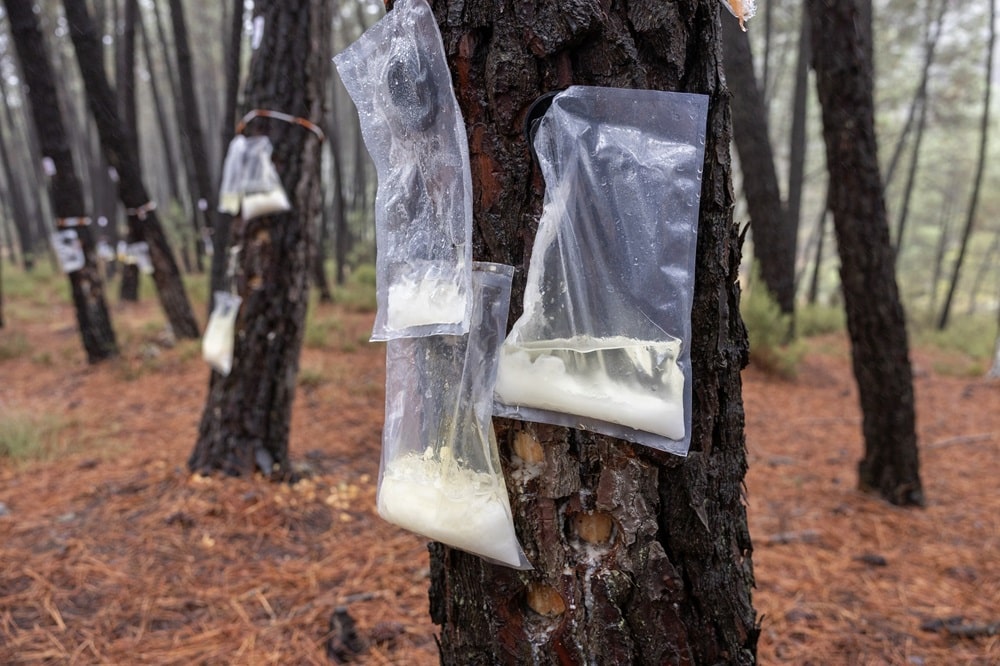
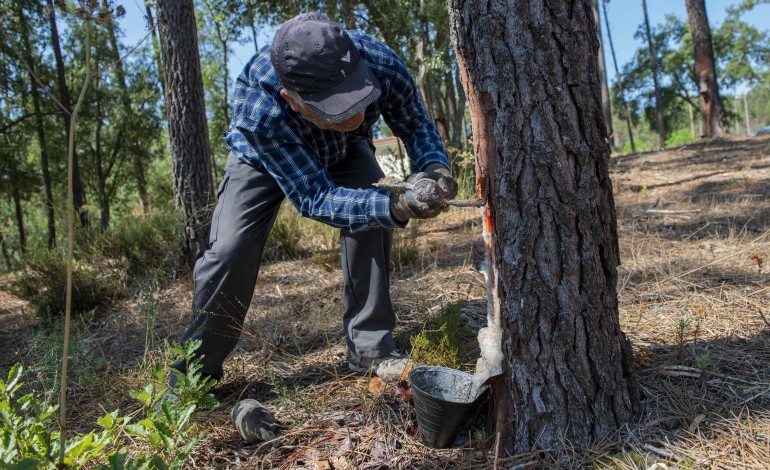
If no changes are made in the Natural Resin sector, it runs the risk of becoming residual in the near future. Professionals believe that this is the key moment to decide whether to make a serious bet on the sector or if everything continues as it is. Professionals from the Natural Resin sector met this afternoon in a workshop of the RN21 Integrated Project, organized by CoLAB ForestWISE®, where concern for the future was expressed, and several measures to develop this area were pointed out. In the 70s, Portugal became the world’s second-largest exporter of resin. Since then, this activity has registered a drastic decline, and there are currently about 500 resin workers in the country, according to Marco Ribeiro, president of Resipinus – Association of Resin Distillers and Explorers, one of the partners of this consortium. This sector is struggling with several constraints, namely the fact that production costs are higher than revenue, the lack of forest management in the national territory, the disorderly growth of the pine forest, the average age of resin workers, which is 60 years old, and the lack of information on the number of resin hectares in Portugal. With the RN21 Integrated Project, which brings together for the first time the entire value chain of the country’s Natural Resin sector, in an integrated and mobilizing research and innovation consortium where the modernization and revitalization of one of the most traditional sectors of the national economy is promoted, the conditions are created to leverage this sector. “This is a key moment to decide what the future holds. Whether you want to bet on resin or not”, underlines Marco Ribeiro, president of Resipinus. For the president of Resipinus, the way forward involves genetic improvement, training and professionalization of the resin worker, mechanization of the activity, creation of adapted stimulating pastes, use of closed containers, remuneration of positive externalities, traceability, certification, valorization of raw material, and implementation of a joint strategy. Carlos Fonseca, Chief Technology Officer of CoLAB ForestWISE®, considers that the RN21 Integrated Project is a “unique opportunity” to make a transformation in the Natural Resin sector in Portugal. “It is intended that Natural Resin will once again play a central role in the management of the territories”, he stresses, considering it necessary “for the sector to organize itself so that at the end of this process there is a resin cluster, which represents the sector and can continue this dynamic of the RN21 consortium and enhance everything that this project brings positive to the country”. Natural Resin is used in the composition of various products, including paints, varnishes, chewing gum, hot glue, rubber, adhesive tapes, among others. Learn more here

The Natural Resin Sector Faces a Pivotal Moment Read More »

Guidance and Supervision Council of the RN21 Project met at the Mealhada Innovation Space – Regional Radio Center

The Guidance and Supervision Council of the RN21 Project met at the Mealhada Innovation Space The Guidance and Supervision Council (COF) of the RN21 Integrated Project, the highest body of the consortium structure, met on February 28 at Espaço Inovação Mealhada, to address various issues within the scope of the management of the Integrated Project. CoLAB ForestWISE®, the leader of this aggregating consortium, hosted the meeting in which the first ordinary session of the Advisory Board also took place.Opening the session was the Councilor of the Municipal Executive of Mealhada, Ricardo Santos, the Project Director, Rogério Rodrigues, and the CTO of CoLAB ForestWISE®, Carlos Fonseca, who reinforced the “importance of showing the good that is being done in this consortium that is essential to share with the partners who accompany us”.This was followed by the presentation of more than 20 measures, which are part of the three pillars on which the RN21 Integrated Project is based, namely: the promotion of the production of national natural resin (pillar I); strengthening the sustainability of manufacturing (pillar II); and the positive differentiation of Natural Resin and derived products (pillar III).The “Training and Professionalization of the Resin Worker” was one of the measures presented for Pillar I, which has as its main objective to develop an Academy capable oftraining resin extraction professionals.For Pillar II, one of the measures presented was the “Transition to renewables and efficient use of water and energy”, which aims to prepare a study and Roadmap on best practices in the sustainable use of these resources, with a view to minimizing environmental impacts.At this meeting, the status of the “Creation of a “seal” and the technical dissemination on the entire value chain”, inserted in pillar III, which arose from the need to affirm Natural Resin as a product of renewable origin, which can replace petroleum derivatives and become one of the successful examples of the Bioeconomy in Portugal. The first phase of brand creation began in the last half of 2023, and at the meeting, some of the next steps under this initiative were presented. To promote natural resin to consumers and business decision-makers, communication and marketing actions have been carried out with some already evident results, namely the podcast and the biannual publication of the magazine Resinae®.Also at the meeting, the Interim Technical Monitoring Report of the RN21 | 2023, carried out by the Portuguese Environment Agency,which describes the progress achieved by the Integrated Project in terms of performance indicators – KPIs, and the work carried out in each of the measures defined in the project until the reporting date. From the analysis carried out, it was concluded that the Project is proceeding as planned, taking into account the developments described for the 22 measures contained in the Project.The meeting was attended by the members of the Advisory Board, composed of three external personalities of recognized merit and independent, who will meet annually to comment on the activities developed, propose corrective measures, and promote partnerships. The Advisory Board includes Aida Rodrigues Garcia, currently coordinator of several projects related to non-wood forest products; Álvaro Picardo, Technical Coordinator of the SMURF Horizont Europe project, on “Sustainable Management Models and Value Chains for Forests”; and Rui Miguel Rosmaninho, Director of the Department of Management of Public Forest Areas, of the Institute for Nature Conservation and Forests, IP. Learn more here
Guidance and Supervision Council of the RN21 Project met at the Mealhada Innovation Space – Regional Radio Center Read More »

Guidance and Supervision Council of the RN21 Integrated Project met to present the results of each measure and analyze agenda topics

The Guidance and Supervision Council (COF) of the RN21 Integrated Project, the highest body of the consortium structure, met on February 28 at Espaço Inovação Mealhada, to address several issues within the scope of the management of the Integrated Project. CoLAB ForestWISE®, the leader of this aggregating consortium, hosted the meeting in which the first ordinary session of the Advisory Board also took place. Opening the session was the Councilor of the Municipal Executive of Mealhada, Ricardo Santos, the Project Director, Rogério Rodrigues, and the CTO of CoLAB ForestWISE®, Carlos Fonseca, who reinforced the “importance of showing the good that is being done in this consortium that is essential to share with the partners who accompany us”. This was followed by the presentation of more than 20 measures, which are part of the three pillars on which the RN21 Integrated Project is based, namely: the promotion of the production of national natural resin (pillar I); strengthening the sustainability of manufacturing (pillar II); and the positive differentiation of Natural Resin and derived products (pillar III). The “Training and Professionalization of the Resin Worker” was one of the measures presented for Pillar I, which has as its main objective to develop an Academy capable of training resin extraction professionals. For Pillar II, one of the measures presented was the “Transition to renewables and efficient use of water and energy”, which aims to prepare a study and Roadmap on best practices in the sustainable use of these resources, with a view to minimizing environmental impacts. At this meeting, the status of the “Creation of a “seal” and the technical dissemination on the entire value chain”, inserted in pillar III, which arose from the need to affirm Natural Resin as a product of renewable origin, which can replace petroleum derivatives and become one of the successful examples of the Bioeconomy in Portugal. The first phase of brand creation began in the last half of 2023, and at the meeting, some of the next steps under this initiative were presented. To promote natural resin to consumers and business decision-makers, communication and marketing actions have been carried out with some already evident results, namely the podcast and the biannual publication of the magazine Resinae®. Also at the meeting, the Interim Technical Monitoring Report of the RN21 | 2023, carried out by the Portuguese Environment Agency, describes the progress achieved by the Integrated Project in terms of performance indicators – KPIs, and the work carried out in each of the measures defined in the project up to the reporting date. From the analysis carried out, it was concluded that the Project is proceeding as planned, taking into account the developments described for the 22 measures contained in the Project. The meeting was attended by the members of the Advisory Board, composed of three external personalities of recognized merit and independent, who will meet annually to comment on the activities developed, propose corrective measures, and promote partnerships. The Advisory Board includes Aida Rodrigues Garcia, currently coordinator of several projects related to non-wood forest products; Álvaro Picardo, Technical Coordinator of the SMURF Horizont Europe project, on “Sustainable Management Models and Value Chains for Forests”; and Rui Miguel Rosmaninho, Director of the Department of Management of Public Forest Areas, of the Institute for Nature Conservation and Forests, IP. Learn more here
Guidance and Supervision Council of the RN21 Integrated Project met to present the results of each measure and analyze agenda topics Read More »

Resin value chain is the central theme of the workshop

“The Natural Resin value chain: from the forest to the final consumer” is the theme of a workshop that takes place this Monday, the 18th, at the Resin Building. “The sustainability of the resin sector in Portugal today”, “Pine Resin: from the Forest to the World”, and “Opportunities and challenges of the Natural Resin sector”, will be topics under debate in a session that starts at 2:30 pm. The event takes place within the scope of RN21, a project that aims to bring together the resin sector and is promoted by the Collaborative Laboratory for Integrated Forest and Fire Management. Learn more here

Resin value chain is the central theme of the workshop Read More »

RN21 Integrated Project promotes workshop dedicated to the Natural Resin value chain[RL1]

Mar 8, 2024 Vila Real, March 08, 2024 – The Integrated Project [RL1] RN21 will hold a set of innovative workshops dedicated to the exploration of Natural Resin, starting with “The Natural Resin value chain: from the forest to the final consumer”, which will take place on March 18, at the Resinagem Building, in Marinha Grande. To promote dialogue and collaboration between the different stakeholders of the Natural Resin value chain, this initiative aims not only to share knowledge and experiences but also to identify joint strategies that can boost the Natural Resin industry in Portugal, promoting more sustainable and innovative practices. It is a catalyzing event for future collaborations and projects, contributing significantly to the sustainable development of the sector and to the enhancement of the pine forest, as a vital resource for the national bioeconomy. In addition to this, three more workshops will be held, each focused on different crucial aspects of this sustainable raw material and its industrial applications. This cycle of workshops aims to foster an open debate on the various perspectives of the natural resin value chain, from production to the final application of derived products. The second workshop, “The versatility of Natural Resin and its derivatives”, will take place at the University of Trás-os-Montes and Alto Douro, in Vila Real, and will focus on the quality criteria of Natural Resin and its impact on multiple industrial applications. This is followed by the third workshop on \”The certification of Natural Resin\”, to be held at the Exploratory/Science Museum, in Coimbra. This meeting will be dedicated to discussing the procedures and criteria necessary for the certification of products derived from Natural Resin. Finally, “Natural Resin: Challenges and Future Perspectives – New Markets” will mark the closing of this series at the Forest Museum in Proença-a-Nova, where the challenges and future perspectives of the industry will be addressed, with a special focus on new markets and technological innovations. Each of these workshops has been carefully planned to contribute to a deeper understanding of Natural Resin and its entire value chain, highlighting its crucial role in environmental sustainability and economic development. With this initiative, the RN21 Integrated Project reinforces its commitment to promoting the transition to greener and more sustainable practices, opening new paths for the bioeconomy and innovation in the sector. Led by the ForestWISE CoLAB®, RN21 brings together for the first time, the entire value chain of the Natural Resin sector in Portugal, in an integrated and mobilizing research and innovation Consortium where the modernization and revitalization of one of the most traditional sectors of the national economy is promoted, valuing Natural Resin as a “bio” product and enhancing the great possibilities of its application in the market. With an investment of more than 26 million euros and a grant of 17 and a half million euros, the project integrates 37 entities, combining public and private investments, creating favorable conditions for collaboration between companies and R&D&I partners, and leveraging the ecological and digital transition. Program: MARCH 18 Resin Building – Marinha Grande 2:00 p.m. – Reception of guests 2:30 p.m. – Opening session 14:45 – The sustainability of the resin sector in Portugal today Marco Ribeiro, RESIPINUS 3:15 p.m. – Pine Resin: from the Forest to the World João Serrano, PinoPine 3:45 p.m. – Coffee break 4:00 p.m. – Round Table | Opportunities and challenges of the Natural Resin sector Moderator: CoLAB ForestWISE® – Carlos Fonseca   . KEMI – Pine Rosins – Firmino Rocha . University of Aveiro – Armando Silvestre . Intermunicipal Community of Leiria – Paulo Santos 5:00 p.m. – Closing Aurélio Ferreira, Mayor of Marinha Grande About ForestWISE CoLAB® The CoLAB ForestWISE® – Collaborative Laboratory for Integrated Forest and Fire Management is a private, non-profit association with legal personality. It aims to promote the integrated management of forest and fire through (co)research, innovation and knowledge and technology transfer activities with a view to contributing to a more sustainable forest management in Portugal, the valorization of forest products and services, the reduction of the negative consequences of large rural fires, the increase in the competitiveness of the Portuguese forestry sector, the promotion of sustainable development in low-density territories and the promotion of scientific employment. The ForestWISE CoLAB acts as a unifying element between industry, academia, and public administration, leveraging the existing knowledge in the knowledge centers and applying it to solve concrete, current, and emerging problems of companies and the fields of forest and fire, meeting the great societal challenges. www.forestwise.pt    About RN21: The RN21 Project – Innovation in the Natural Resin Sector to strengthen the National Bioeconomy is supported by Component 12 – Sustainable Bioeconomy of the Recovery and Resilience Plan and aims to support the modernization and consolidation of the industry through the creation of new value chains and greener industrial processes in the Natural Resin sector in Portugal, accelerating the production of high value-added products from biological resources as an alternative to fossil-based materials. The RN21 Integrated Project – Innovation in the Natural Resin Sector to Strengthen the National Bioeconomy, is co-financed by the Environmental Fund through Component 12 – Promotion of Sustainable Bioeconomy (Investment TC-C12-i01 – Sustainable Bioeconomy No. 02/C12- i01/202), of the European funds allocated to Portugal by the Recovery and Resilience Plan (RRP), under the Recovery and Resilience Facility (RRF) of the European Union (EU), within the framework of Next Generation EU, for the period 2021 – 2026.

RN21 Integrated Project promotes workshop dedicated to the Natural Resin value chain[RL1] Read More »